




|
The Awards for Excellence in Health Care Journalism has been revamped to reflect the changing nature of media, the Association of Health Care Journalists announced. The contest categories will revolve around story topics more than traditional media platforms.
Investigative articles, consumer pieces, business stories and other work will compete head-to-head, whether they appeared in magazines, in newspapers, on radio, on television or through websites. Several of these platform-neutral categories will be divided by size, in recognition of the resources different newsrooms can bring to a story.
Entries must be received no later than Feb. 3. Read how to enter.
|
• Preliminary conference program now available
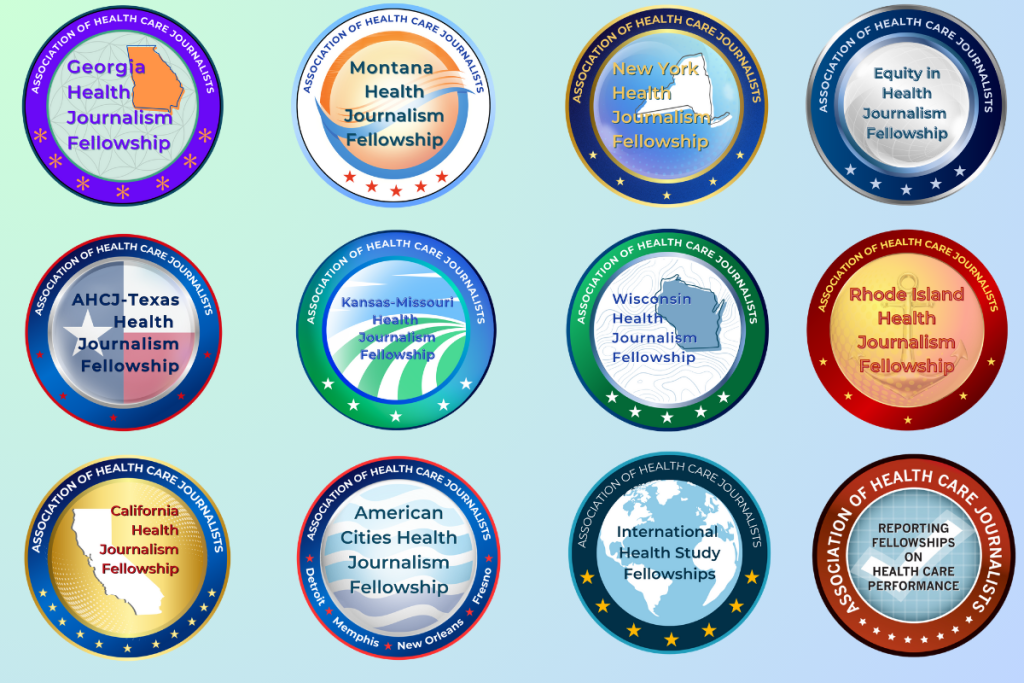
Fellowships are available to journalists in several states, as well as those who cover rural areas, those who work in the ethnic media and even for journalists who don't cover health but understand the need to cover health angles on other beats. Fellowship applications must be received by Feb. 27.
Former President Jimmy Carter and first lady Rosalynn Carter will kick off the conference with a discussion on issues in global health and mental health. Other speakers will include David Satcher, M.D., Ph.D., former director of the CDC and 16th U.S. surgeon general, talking about the future of primary care, and former Olympic runner Jeff Galloway, who will lead a run downtown, followed by a discussion about health and fitness.
Health Journalism 2012 – the 14th annual conference of the Association of Health Care Journalists – is set for April 19-22 at the Sheraton Atlanta Hotel. Join more than 500 other journalists as they take part in skill-building workshops, sit in on panel discussions and visit area research sites. The conference, produced by the association’s Center for Excellence in Health Care Journalism, features world-class speakers, important news briefings and helpful sessions all aimed at aiding reporters, editors and news producers in better covering the latest health issues. Join us in Atlanta!
|
The Association of Health Care Journalists has rolled out another Core Curriculum topic on its website. “Aging” is the second in a series of core topic subject areas making up the curriculum. Aging is one of at least a dozen key subject areas the organization believes today’s health journalists will need to master to cover the beat well.
Colorado-based writer Judith Graham is AHCJ’s topic leader on aging. She produces reporting guides, seeks out reliable resources, assigns stories and blogs regularly. She works with Pia Christensen, AHCJ’s managing editor/online services, to find the latest material, edit contributions and make the site as easy to navigate as possible.
Sacramento Bee reporter Marjie Lundstrom recently wrote a two-part series on the falsification of patient records in nursing homes. Her investigation turned up a narrow aspect of nursing home care that has gotten little public attention.
|

AHCJ has asked Chief Justice John G. Roberts of the U.S. Supreme Court to permit live audio and video coverage of the oral arguments next March in the case challenging congressional authority to mandate health insurance coverage and other provisions of the Affordable Care Act.
In the Nov. 18 letter to Roberts, AHCJ contends that traditional provisions are inadequate for such a historic case with potentially sweeping impact on the health care system and millions of Americans. “The case before the Court has ramifications for these and many other aspects of health care in America, however it is decided,” says the letter.
|
|
How often does your state medical board search doctors in the National Practitioner Data Bank? Surprisingly not often, according to data provided to AHCJ by the U.S. Health Resources and Services Administration, which runs the data bank.
AHCJ and other media groups have been pushing the government to restore unfettered access to the Public Use File of the data bank, citing important stories that journalists have written about lax oversight of doctors by state medical boards.
AHCJ requested data from HRSA so reporters could see how often their states check the backgrounds of medical doctors and osteopaths, as well as interns and residents. The numbers are available in two spreadsheets for reporters to download and use for stories.
|
 Los Angeles Times reporter Noam Levey appeared on camera for an episode of AHCJ's "Talking Health" webcast.
As our media world changes, journalists who have traditionally worked for print outlets are finding themselves with the opportunity to appear on television or the radio to help explain complex health issues to a different audience.
Bruce Japsen, a longtime Chicago Tribune reporter who now contributes to The New York Times, has some tips to help his fellow ink-stained journalists best convey their information and even embrace appearing on on other outlets.
|
Oct. 27 & 28 • San Francisco
Health care in a community drives jobs and billions of dollars, crossing the traditional beats of health, business and government. Experts discussed how to cover this tremendous economic engine beyond the routine stories, with story ideas and tools to find essential information your audiences need.
The spotlight speaker, Ian Morrison, is an internationally known author, consultant, and futurist who specializes in long-term forecasting and planning with particular emphasis on health care and the changing business environment.
Presentations and handouts from the workshop are now available.
|
| |
|
Some publishers and media outlets don't provide liability coverage for freelance writers' articles, and freelancers may blog or publish their own material, leaving many troubled by their exposure to possible legal problems – and the resulting financial impact.
Separate media liability coverage is available for writers, with policies covering libel, trademark/copyright infringement, defamation, invasion of privacy, and errors and omissions. But most writers don't buy it because coverage can be expensive, ranging from $500 a year to more than $1,500.
Independent journalist Andy Miller has some tips to consider if you are looking into your insurance options.
|
Evaluate, report on quality of hospitals in your area
AHCJ offers hospital mortality and readmission data, which will allow you to tell your audience whether a hospital's rates are in line with national averages, significantly better or significantly worse. A special AHCJ webinar provided an introduction to this data, including ideas on how to use the data in your own area.
The federal survey that reflects patients' perspectives of hospital care has been updated on the AHCJ website. The spreadsheets that AHCJ offers allow you to analyze the top-rated hospitals — or lowest-rated hospitals — in your area.
Need help analyzing data? AHCJ has tip sheets to help, including "Finding patterns and trends in health data: Pivot tables in spreadsheets" and "Intro to investigating health data using spreadsheets." Links to the data and the relevant tip sheets are all on the Data page.
|
|
|
|
|
|
|
|
|
|
|
• Covering Medical Research • Covering the Health of Local Nursing Homes • Navigating the CDC: A Journalist’s Guide to the CDC Web Site • Covering Obesity: A Guide for Reporters • Covering Hospitals: Using Tools on the Web
|
|
Covering Health

With state funds gone, Okla. dental programs still serve needy
Writing for the local NPR StateImpact outlet, Logan Layden looks at how dental programs for the needy are coping in the absence of state funding. In ...
Survivor goes undercover in Tijuana cancer clinics
Reporting for Al Jazeera English's People & Power, Sarah Macdonald tells how her own battle with breast cancer led her to shave her head, hide a ...
Share your thoughts on database design for tracking pharma payments to doctors
Curtis Brainard of Columbia Journalism Review reminds reporters that their input is needed on the design of a federal database that will track ...
PLoS Medicine article advocates using legal system to stem ghostwriting
An essay published by PLoS Medicine makes the case that the "guest" authors of ghostwritten articles – typically academic researchers who provide ...
Web outlet pumps out dozens of stories on prescription drug abuse
In partnership with USC’s Annenberg School for Communication & Journalism and a number of other organizations, Santa Barbara online news outfit ...


|