Reporter looks at black infant mortality in Wis.

Jan. 28th, 2011 by Andrew Van Dam · 2 Comments
Filed under: Children, Health data, Hot Health Headline 

The Milwaukee Journal Sentinel’s Crocker Stephenson took a look at disparities in infant mortality in that area and explored both their cases and ramifications. In Wisconsin, black babies die at twice the rate of white babies, a finding which may just be the tip of the iceberg. For national and international comparisons, see the companion infographic. According to Stephenson, infant mortality rates are an early indicator of a community’s degeneration. When mortality rises, so do other dire indicators.

The bottom third - the group of ZIP codes with the most poverty and lowest college graduation rates - had the highest infant mortality rate.

It also had the highest premature death rate, chlamydia rate, HIV rate and teen birthrate.

It had the greatest percentage of low birth weights; preterm births; uninsured adults; people who hadn’t seen a dentist in a year; births to mothers who received no prenatal care during their first trimester; smokers; pregnant smokers; obesity; violent assaults within the past year; single-parent households; and children who tested positive for lead poisoning.

Milwaukee’s health commissioner called it a “crisis,” one that Stephenson found is as much a social matter as it is one of access to proper care. For more, see the “Problem Areas” section of the story.

More antipsychotics prescribed to foster children

Need To Know, the PBS newsmagazine, recently took a look at the use of antipsychotics in foster children. Shoshana Guy’s piece opens with an anecdote about one 10-year-old foster child (now adopted) in Texas and expands from there. In nine years as a ward of the state, the boy was prescribed 20 different drugs by nine different doctors. After his adoption, a new, private physician diagnosed him only with ADHD, treatable with a single medication.

Antipsychotics are designed primarily to treat bipolar disorder and schizophrenia, diseases which affect about 3 percent of the population. Yet somehow, they’re the top selling class of drugs in the United States with $14.6 billion in sales in 2009.

Specific numbers on foster children are hard to come by, but the 2010 paper cited in the broadcast, Antipsychotic Medication use in Medicaid Children and Adolescents (48-page PDF), is a good start. Broader forces, such as pharmaceutical marketing and the increasing frequency of mental illness diagnoses for children are at work here, Guy found, but that doesn’t mean that the foster care environment itself isn’t also a factor. It’s a system in which people are frequently looking for ways to “manage” problematic children. Judging by a companion post on Need to Know, this sounds like a story that will develop significantly in the coming year.

…foster care children are prescribed drugs at a rate much greater than that of other kids. Concern over their well-being — not to mention the amount it costs to treat them — has prompted the Government Accountability Office to investigate potentially abusive prescribing practices in America’s state foster care systems. The GAO findings are expected to come out later this year.

Watch the full episode. See more Need To Know.

You can find Need to Know’s health stories on this landing page, but as of yet I haven’t been able to find a health-specific RSS feed.

Program for disabled kids has unintended effects

Jan. 21st, 2011 by Pia Christensen · 1 Comment
Filed under: Children, Hot Health Headline 

Patricia Wen, of The Boston Globe, examines the Supplemental Security Income (SSI) program for children and finds the program “has gone seriously astray” and describes it as “a fast-growing alternative welfare system.”

And once a family gets on SSI, it can be very hard to let go. The attraction of up to $700 a month in payments, and the near-automatic Medicaid coverage that comes with SSI approval, leads some families to count on a child’s remaining classified as disabled, even as his or her condition may be improving.globe-ssi

Wen found that the program, which was intended to serve children with severe physical disabilities, now mainly serves children with behavioral, learning and mental conditions and carries financial incentives to put children on psychotropic drugs. She writes that preschoolers are the fastest-growing group to qualify for SSI, “largely because of a 12-fold spike in cases of speech delay. The government is aggressively trying to help these young children, but spends little time to see if they’re getting any better.”

Another, unintended, effect of the program is that teenagers on the program are declining to take part-time jobs despite their desire to start careers and not be dependent on the government. Wen explains “they fear working will jeopardize their disability checks. Their families are poor and need the money.”

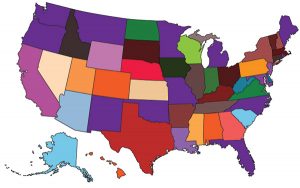
Of interest to reporters interested in localizing the story, the package contains a data-driven interactive map that shows how many children in each state are receiving SSI assistance, the percentage who became eligible because of mental disabilities and the top five diagnostic categories.

Researchers examine long-term effects of vitamins, vaccines on children’s immune systems

For a 40-minute documentary broadcast on BBC Radio 4 and produced by Anthony Baxter, reporter Richard Phinney visited a small, long-running public health outpost in Guinea Bissau where a team of Danish and African researchers has studied the long-term effects of vaccines and vitamin supplements on the immune systems of children. The team has published reams of research and influenced WHO policy, but Phinney focuses on what he calls their most “explosive” findings.

They show that the world’s most commonly used vaccines can strengthen - or weaken - a child’s immune system in the long term, and affect their ability to fight off disease. The results directly challenge the WHO’s global health advice, followed by most countries in the developing world, and could mean that thousands of young lives, in Africa and beyond, are needlessly at risk.

Programming note: The program will only be available to download worldwide for a few more days.

Update: The audio is no longer available at the earlier link but it is available, in two parts, on this page. Search the page or scroll down for “Vaccine Detectives.”

BMJ: Wakefield’s vaccine-autism study fraudulent

The Internet and other media are abuzz with the news, published by BMJ yesterday, that the study published in The Lancet in 1998 by Dr. Andrew Wakefield linking autism to the MMR vaccine was fraudulent. The study of 12 children is frequently cited as proof that vaccines cause autism or play a part in the disorder, despite the fact that it was retracted. The BMJ calls the study “fatally flawed both scientifically and ethically” in a new editorial.

Covering Health has compiled some links to interesting reading on this subject, much of it specifically for journalists.

Ivan Oransky, on Embargo Watch, looks at an entirely different facet of the news with “Does a tweet break an embargo? A case study involving the BMJ, autism, vaccines, and an alleged hoax.”

Meanwhile, Gary Schwitzer, publisher of HealthNewsReview.org, writes that the Wakefield MMR/autism dismantling demonstrates what a difference one journalist can make.

CNN’s Anderson Cooper interviewed Andrew Wakefield last night about the charges that his study was flawed. And Brian Deer, the investigative journalist who reported the BMJ story, was interviewed on CNN’s World Report.

Update: Seth Mnookin, who has spent two years looking into vaccine scares, has written an interesting post about the topic, including his view that BMJ over-hyped its story, which almost certainly helped drive media coverage. Mnookin also appeared on CNN.

By sending out breathless press releases and prepping the worldwide media for a series of bombshell stories, the BMJ created the impression that this was fundamentally new news – and it wasn’t. We knew that Wakefield’s work wasn’t reliable or accurate on January 3 – and we still know that today. The stories that are currently running are not really all that different in tone or content than the stories that ran almost exactly a year ago, when a UK medical panel found there was sufficient evidence to justify stripping Wakefield of his right to practice medicine.

Covering Health posts

Tip sheets

  • Background on autism from Pauline A. Filipek M.D., director of the Autism Program for OC Kids Neurodevelopmental Center and associate professor of clinical pediatrics and neurology at the University of California, Irvine, School of Medicine.
  • Investigating alternative treatments for autism: Trish Callahan & Trine Tsouderos, of the Chicago Tribune, wrote “Dubious Medicine,” a look at the world of alternative treatments for autism, treatments that are often risky and unproven.

Contest entries

Covering Medical Research

Covering Medical Research

Learn how to analyze and write about health and medical research studies with AHCJ’s latest slim guide. It offers advice on recognizing and reporting the problems, limitations and backstory of a study, as well as publication biases in medical journals and it includes 10 questions you should answer to produce a meaningful and appropriately skeptical report. This guide, supported by the Robert Wood Johnson Foundation, will be a road map to help you do a better job of explaining research results for your audience.

Ind. station runs ‘canned’ story about Fla. boy

Dec. 13th, 2010 by Pia Christensen · Leave a Comment
Filed under: Children, Health journalism 

Jeremy Cox, medical reporter for the Jacksonville (Fla.) Times-Union, calls our attention to a television report about a boy who suffered a stroke and needed a rare surgery to save his life.

The report, which aired Thursday on WNDU-South Bend, Ind., was produced by Ivanhoe Broadcast News, a media company based in the Orlando, Fla., area.

Cox reports that the story, as aired on WNDU, “features the station’s health logo, ‘Maureen’s Medical Moment,’ along with an introduction and voice-over by the reporter Maureen McFadden.”

Critics have raised questions about these so-called “canned” reports in the past, as Cox points out:

Eric Deggans, the television and media critic for the St. Petersburg Times, asked a poignant question about health journalism a couple years ago. Two, actually.

“As a TV viewer, how do you know when reporters are presenting their own work? And does it matter if the format subtly encourages the audience to think a journalist has done work he has not?” he inquired.

Those questions topped a column about local television news reporters’ habit of presenting health stories produced by someone else as their own work. Without giving credit to that “someone else.”

In a 2009 blog post, Gary Schwitzer, an AHCJ member and publisher of HealthNewsReview.org, says that often stories produced in this way are “almost always about a single idea with one spokesman touting it.”

Certainly stories with a single source that lack independent analysis do not meet the standards set forth in AHCJ’s statement of principles, which calls for vigilance in selecting sources, recognition that most stories involve a degree of nuance and complexity that no single source could provide and seek out independent experts.

California law re-seals some child abuse autopsies

On the California Watch blog, Ryan Gabrielson reports that the state has partially reversed a SB 39, the 2008 ruling that made public the autopsy reports of all children who died from abuse.
autopsy-description-sheet

The measure, nearly unopposed in the state Assembly and Senate, empowers the parent (biological, legal, or by marriage) of a child who died as a result of a crime to have the autopsy report sealed.

The San Diego County District Attorney’s Office initiated the legislation. But unlike many similar exemptions to the state public records law, the child autopsy bill is not driven by law enforcement concern about undermining criminal investigation.

Instead, Gabrielson writes, the law was passed so that families aren’t “victimized a second time” by media coverage of the autopsy reports. Gabrielson seems to find this logic curious, as “the opening section of SB 39 two years ago specifically discussed information dissemination as critical to advancing public safety.”

Gabrielson also notes that the new law comes less than a month after The Los Angeles Times reported that L.A. County failed to make dozens of child abuse deaths public.

Full coverage of the legislation, from The Reporters Committee for Freedom of the Press, can be found here.

Related

Project offers guide on access to autopsy records

School lunches, obesity and causality

Miller-McCune magazine’s Washington correspondent Emily Badger explains how a study found that the National School Lunch program is linked to youth obesity.

ozPhoto by bookgrl via Flickr

Badger takes great pains to put that finding into context, and doesn’t put forth the key causal relationship until the tenth paragraph. In the interim, she talks about the correlation between weight and school lunches, and about the methods the researchers used to tease out causation – namely, the kids’ birth weights and the type of meals they likely received at home. Only then does she deliver the kicker.

Controlling for those two factors, they found that children who participate in the school lunch program are more likely to become obese than those who don’t. In a surprising twist, though, the federally subsidized School Breakfast Program has the opposite effect. (And children who eat both school breakfast and lunch are less heavy than those who participate in neither program.)

That said, and with the caveats already out of the way before the key paragraph, Badger then explores the backwards incentives of the a la carte ice cream sandwich and why a school benefits financially from selling piecemeal junk food.

Miller McCune magazine is an effort of the nonprofit Miller-McCune Center and is dedicated to long-form, in-depth reporting on academic research.

Related

Covering Obesity: A Guide for Reporters

Covering ObesityThe prospect of covering such a broad, engaging and important topic as obesity can be overwhelming. This guide, supported by the Robert Wood Johnson Foundation, is designed to help journalists cover a wide range of stories, whether writing on deadline or researching a multipart series. It offers assistance on calculating body mass index, finding obesity statistics on the state level, gauging the quality of school district wellness policies, finding innovative school nutrition policies and much more.

As school starts, so do youth sports injuries

The University of Michigan’s new Michigan NeuroSport Concussion Program seems to be cropping up everywhere, and as far as I can tell, it’s all part of a coordinated effort by the University. They already claim to have one of the only pediatric sport programs in the country, and now they’re expanding it with a clinical and research focus on “neurological sports injuries.”

In related news, the latest CDC Morbidity & Mortality Weekly Report includes an analysis of the numbers for “Heat Illness Among High School Athletes” from 2005 to 2009. The study examined 100 schools and nine sports, and found that heat-related illness was most common in football, and that August was the worst month for such afflictions.

AHCJ has a rich pool of resources for journalists looking to report beyond the press releases on stories like these, including:

Tip sheets
Concussions in young athletes
Reporting on sports injuries in school-age children
Health and education: Two intersecting beats
Health and education: Reporting resources
Blog posts
Tougher concussion rules from high school assn.
GAO evaluates youth concussion databases
Concussion more likely when hit is unexpected (Youth hockey study)
Attention focuses on football’s neurological effects
AP story: Hundreds of PTSD soldiers likely misdiagnosed

Report looks at oil-spill fallout for children, families

Aug. 10th, 2010 by Andrew Van Dam · Leave a Comment
Filed under: Children, Hot Health Headline, Studies 

As the gulf oil spill dragged on, coverage of its psychological and economic aftermath gained momentum. Now, Poynter’s Al Tompkins has spotlighted coverage of what is sure to be a flood of follow-up reports and post-mortems. Based on research conducted from July 19 through 25 (the well has been effectively capped since July 15), the National Center for Disaster Preparedness at Columbia University has released its “Impact on Children and Families of the Deepwater Horizon Oil Spill,” subtitled “Preliminary Findings of the Coastal Population Impact Study.”

spill

Photo by kk+ via Flickr

As Tompkins points out, the study has already pulled in significant media coverage. Shaila Dewan’s story in The New York Times, for example, covered both specifics and context:

“There’s been a very overt effort by BP and the Coast Guard to project a sense that the crisis is over, but this is far from the case,” said Dr. Irwin Redlener, the director of the center and president of the Children’s Health Fund, a sponsor of the survey. “Our survey shows a persistent and overwhelming level of anxiety among families living near the coast, driven by both medical symptoms in their children as well as a substantial level of psychological stress.”

The survey included 1,200 coastal residents in Louisiana and Mississippi, most of whom live within 10 miles of the ocean.

One in five reported that their household income had dropped since the spill. Forty-three percent said they had been directly exposed to oil, either at beaches, on their property or in helping with the cleanup. Those who had been exposed were more than twice as likely to report that their children had developed physical or mental health problems since the spill. Also, families that had more concerns about their children’s mental health were more likely to report that they are considering moving.

Related

« Previous PageNext Page »