Seattle hospitals love building costly ERs
The Puget Sound emergency room construction boom is in full swing, and Seattle Times reporter Carol Ostrom has taken a pointed look at the cost-related consequences of local hospital expansion.
She examines why hospitals are opting for more and glitzier ERs over lower-cost alternatives such as clinics and urgent care facilities. She also considers why state efforts to guide hospitals toward more efficient spending have failed, and explains how hospitals justify their actions. If you don’t have time for the full story, here’s a relatively tame excerpt:
The ER building boom has prompted a backlash from some lawmakers and advocates of affordable health care, who complain that nearly all Washington hospitals get substantial tax breaks and construction financing through tax-exempt bonds.
Free-standing ERs, these critics charge, are cash cows for hospitals, strategically built in affluent areas to lure busy, well-insured patients and collect fat reimbursements.
KevinMD: Media is key to curbing MRI overuse
Filed under: Conflicts of interest, Health journalism, Health policy, Hospitals
On the MedPage Today outlet KevinMD.com, Dr. Kevin Pho himself writes that media coverage of the overuse of certain screening procedures is “long overdue,” and praises The New York Times‘ recent coverage of a study showing that in some cases MRIs can lead to more harm than good.
In the Times, reporter Gina Kolata explained, when unleashed upon the throwing shoulders of 31 healthy professional baseball pitchers, “M.R.I.’s found abnormal shoulder cartilage in 90 percent of them and abnormal rotator cuff tendons in 87 percent.” It’s a result, Kolata wrote, that shows that MRIs are “easily misinterpreted and can result in misdiagnoses leading to unnecessary or even harmful treatments.”
Back at his web portal, Pho writes that there are two steps that need to be taken to curb the overuse of the MRI. The first is cracking down on physicians who own their own MRI machines or otherwise profit from the tests, and the second is what he calls “adjusting patient expectations.” That’s where, he says, the media comes in.
there are some, but not all, patients who expect a scan and equate an MRI with “being thorough.” In fact, when orthopedic fellows cited in the Times story suggest that patients may not need a scan, patients “look at them like, ‘You don’t know what you’re doing.’”
Doctors can help educate patients away from the mythical benefits of overtesting. But the most effective teacher is the media, which wields significantly more influence. That’s why a story like this in the Times should be applauded, and promoted.
A fun aside? The study was conducted by none other than Dr. James Andrews, whose name will be familiar to anyone with even a passing familiarity with the sports pages.
Ohio’s hospital transparency law under fire
Filed under: Aging, Conflicts of interest, Europe, Government, Health care reform, Health data, Health journalism, Health policy, Hospitals, Hot Health Headline, Member news, Public records, Studies, Tools
Thanks are due to blogger and one-time hospital executive Paul Levy for drawing our attention to the Ohio hospital industry’s recent push to overturn much of the state’s recently passed transparency legislation.
The law required hospitals to post performance data, such as infection rates and patient satisfaction, on the Ohio Hospital Compare site.
According to Brandon Glenn’s report in the MedCity News, the hospital industry opposes the site, online since Jan. 1, 2010, because it serves the same purpose as the federal Hospital Compare site.
The OHA supports the new legislation… because it wants to remove “duplicative” reporting requirements on the state’s hospitals. Ohio hospitals already report the same data to a federal Hospital Compare website maintained for the public by the Centers for Medicare & Medicaid Services, said OHA spokeswoman Tiffany Himmelreich.
The new legislation “doesn’t reduce reporting. It just eliminates reporting the same information to two different places,” she said. “We don’t want the public to feel that this is taking a step backwards in terms of data availability.”
For their part, consumer advocates say website maintenance is not an onerous burden, and that the hospital association’s push is part of a larger, statewide antitransparency trend.
As an interesting side note, Glenn found the Ohio Hospital Compare site to be rendered inoperable by apparent bugs on an initial visit but discovered that, after his inquiries to the state health department, the site was put into working order.
Public hospitals, not nonprofits, shoulder burden of charity care
Filed under: Health data, Health journalism, Hospitals, Hot Health Headline, Member news, Public records
Writing in the Contra Costa Times, Sandy Kleffman reports that while nonprofit hospitals in the East Bay are given millions in tax breaks, “The responsibility of caring for the indigent falls largely on the region’s public hospitals.”
Kleffman’s findings are based on her analysis of publicly available California Office of Statewide Health Planning and Development reports, documents which she learned to access and process at a September webinar led by AHCJ board president and ProPublica senior reporter Charles Ornstein.
Her analysis revealed a substantial imbalance in the numbers, especially between public hospitals and nonprofits. For example, Contra Costa’s county hospital provided more than three quarters of the total amount of charity care given in the country in 2010, while the six nonprofits together accounted for just under 23 percent.
For their part, representatives of nonprofit hospitals protested that the numbers do not take into account the other community benefits they provide, nor are they adjusted to compensate for the differences in demographics across each institution’s patient pool.
For more on what went into Kleffman’s report, see her sidebar on “How we made comparisons.”
Texas psych clinics take Medicare’s millions without oversight
Filed under: Health care reform, Health data, Health policy, Hospitals, Hot Health Headline
The Houston Chronicle’s Terri Langford reports that for-profit outpatient psychiatric clinics in the state, most located around Houston, are collecting millions in Medicare dollars yet “require no license to operate in Texas.”
She writes that, despite access to significant federal funds, the clinics are subject to little oversight from any level of government, especially when it comes to patient care.
…other than a one time inspection conducted by Medicare when clinics start operating - these programs have no detailed standards or “conditions of participation,” that must be met before filing claims and collecting taxpayer money.
…
The U.S. Department of Health and Human Services flagged the problem earlier this year, saying “no regulatory basis exists to ensure basic levels of quality and safety” for CMHC care.
The loopholes, including the lack of an established means to kick poorly performing centers out of the medicare system, apply nationwide, but their exploitation remains localized.
Records show that in 2009, Medicare paid $287 million on these programs nationwide, 74 percent of them located in the three states that have no state licensing requirements: Florida, Louisiana and Texas.
Reporters uncover Calif. chain’s systematic upcoding
Filed under: Government, Health data, Health journalism, Hospitals, Hot Health Headline, Public records
In a follow-up to their lengthy California Watch investigation into sketchy billing practices at the state’s Prime Healthcare chain, Christina Jewett and Stephen Doig looked at newly released data and found that “Prime Healthcare Services bills Medicare for a variety of unusual ailments – among them a brain disease and a condition causing eyes to bleed – that can generate lucrative payments to the chain.”
For this piece, the reporters reviewed hundreds of pages from five related court cases and talked to a number of former Prime employees who protested the hospital’s billing practices — many of which they say were mandated directly by the company’s owner. Doig and Jewett then returned to the data and found that, as the 14-hospital chain’s leadership pushed providers to bill for a certain lucrative condition, instances of that condition just happened to rise in Prime hospitals.
Jewett and Doig even analyzed medical codes to estimate how much the alleged upcoding could have earned Prime hospitals.
It is not possible to pinpoint how much additional revenue Prime earned when documenting the unusual conditions, because each patient may have numerous diagnoses. But it is clear that conditions reported in outsized rates at Prime hospitals can bring in an additional $3,000 to $7,000, compared with similar but less serious conditions.
Taken together, the report stands out for its deft integration data, court records and interviews into a cohesive investigation.
Quake damage could cripple Calif. hospitals
Filed under: Health policy, Hospitals, Hot Health Headline
In her series on earthquake preparedness at California hospitals, California HealthCare Foundation Center for Health Reporting senior reporter Deborah Schoch look at what she calls the “Achilles heel” of hospitals in earthquake territory: internal damage to pipes and equipment.
While much of the legislative focus has been on preventing structural damage, Schoch writes that recent seismic disasters in places such as Chile and Japan have demonstrated that a broken water pipe or sprinkler system can shut down a hospital every bit as effectively as a crumbled wall.
To better avoid internal damage, Schoch writes, hospitals need to bolt down equipment, anchor water tanks and set up back-up generators. According to Schoch, “Many facilities locally and statewide are still years or decades away from making those non-structural internal fixes, even though they are required under California law.” This is largely thanks to a variety of deadline extensions and loopholes requested by cash-strapped hospitals which refer to the law as the largest unfunded mandate in state history.
As of 2009, fully 1,357 hospital buildings statewide had not made fixes that should have been finished at the start of 2002, according to a December 2009 report from state regulators.
Another 1,233 buildings, or 95 percent of buildings statewide, had not yet done improvements that were due Jan. 1, 2013, according to the report. State officials caution that some hospitals may have completed upgrades, but they do not have up-to-date statistics.
In the second installment of the series, Schoch uses state records to show that more than 40 hospitals close to the fault are rated at high risk of collapse in a major earthquake.
California hospitals were supposed to have fixed hospitals by 2008 or the state would shut them down. But that deadline has been pushed back multiple times: “Championing the delays, the state Legislature repeatedly extended the 2008 deadline to 2013, 2015, even 2020, under pressure from hospitals that said they can’t afford the fixes.”
Rising medical debt spawns problems, fosters solutions
Filed under: Government, Health policy, Hospitals
Kelley Weiss, of the California HealthCare Foundation’s Center for Health Reporting, dug deep into the rising mountain of medical debt accumulating around American patients. Her package includes four pieces (one an extended forum, embedded below) on KQED as well as numerous companion stories online. Her stories consider both the causes of and solutions to medical debt, an issue which plagues hospitals as much as it does patients.
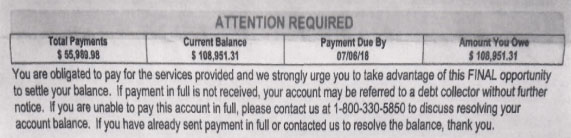
In her first piece, Weiss lays out the simple formula driving all that indebtedness: It’s “because health care costs continue to rise at the same time people are losing their jobs and health coverage.” She uses the story of an unfortunate, unemployed motorcyclist to show how the American billing, credit and insurance systems can quickly add debt to injury.
In the second piece, she looks at the debt from the other side, exploring the massive and largely ineffective lengths hospitals go to in order to collect what they’re owed. Since the recession began, even the most successful collections agencies have only been able to collect about 12 percent, one hospital official said. Confronted with this fact, Weiss asked the obvious question.
So why even bother, if you get such a low return? Maybe they could give those financially squeezed patients with no other options a break. Well, to a certain extent they can, and charity care is on the upswing.
But it turns out there are statutes in place that require hospitals to make collection efforts. Medicare is one of the biggest payers to hospitals and it says that hospitals must try to collect money from every patient. And if they don’t? Medicare won’t pay off its bills. Todd Nelson with the Healthcare Financial Management Association said that leaves hospitals in a tough spot.
As wallets remain tight and debt collection becomes increasingly difficult, both hospitals and patients are starting to take steps to become more up front about exactly how much their care is going to cost, Weiss writes in her third installment. Finally, when all else fails, Weiss finds in her fourth installment, patients can turn to California’s Hospital Fair Pricing Act, which “says hospitals must give patients who are at 350 percent of the Federal Poverty Level a discount on their bills if they’re uninsured or underinsured.”
String of errors made Stanford patient data public
Filed under: Health data, Hospitals, Hot Health Headline, Public records
In The New York Times, Kevin Sack traces the series of errors and lapses in judgement that led to a large-scale data breach at Stanford Hospital, one which went unnoticed for almost a year. Sack’s lead paragraph neatly encapsulates the whole story.
Private medical data for nearly 20,000 emergency room patients at California’s prestigious Stanford Hospital were exposed to public view for nearly a year because a billing contractor’s marketing agent sent the electronic spreadsheet to a job prospect as part of a skills test, the hospital and contractors confirmed this week. The applicant then sought help by unwittingly posting the confidential data on a tutoring Web site.
Since 2009, when federal law began requiring disclosure of medical data breaches involving more than 500 people, Sack reports that about 330 incidents have been reported on an HHS website. A CSV file of the data is available.
Patient gets billed $58k for a dubious airlift
Reporting for WCNC-Charlotte , Stuart Watson starts with a $58,477 air ambulance-related bill and works backward to determine the bewildering market forces that conspired to push a rural stroke victim’s bill into the stratosphere.
After reading or watching his story, most will agree with Watson’s assertion that “The details of Pridmore’s flight from Piedmont Medical to MUSC raise questions about whether the intense competition for patients and their health care dollars infects the decision of where patients are treated and whether they are flown to that treatment.”
The most baffling part of the whole story? That the patient in question was initially transported to a certified stroke center by ambulance, and the flight itself was only spurred by the dire proclamations of a remote doctor speaking over a webcam.
Almost as ridiculous? That the helicopter used for the flight came from 140 miles away and had to refuel en route, when there was another chopper hanging out on standby just 20 minutes from the patient. The final indignity? The patient was stuck with the bill for all these aerial shenanigans because his insurer reckons the flight wasn’t medically necessary.