South African academic: Conflict of interest went unnoticed in obesity stories
Filed under: Conflicts of interest, Health journalism
In a column for South Africa’s The Media magazine, Harry Dugmore, MTN Chair of Media and Mobile Communication at the School of Journalism and Media Studies at Rhodes University, tries to figure out why it is so difficult to produce good journalism. Yes, he writes, it has something to do with the need for constant devotion to the facts and numbers and science, but that’s true of many beats.
For health, he writes, there are simply deeper forces at work. They relate to the sky-high stakes that come with health care’s status as a multibillion-dollar, life-and-death industry, but run deeper (emphasis mine):
What might be different in health journalism is that there are additional scientific and technical challenges. And, beyond these, there are also all sorts of biases and beliefs (both of journalist and audiences) that have to be unpacked and often confronted. Our existential duel with our own mortality; our views on what makes us ill and what gets us better, are ingrained in cultural practice, power relations, and ideological positioning.
Nothing is uncontested.
To illustrate his point, Dugmore examines a recent set of headlines that mushroomed across the country detailing the nation’s obesity. The stories all reported on a well-known phenomenon and had the ring of truth, but neglected to mention that they were based on the results of a 500-person survey conducted by GlaxoSmithKline to coincide with the new availability of the South African equivalent of Alli as an over-the-counter drug.
What’s scary is that no journalist at all looked at the now freely available weight-loss drug, its purported efficacy, its side effects and real dangers, and the international controversy over its shift from prescription to non-prescription status. Arguably, that is neither GlaxoSmithKline’s nor its public relations company Magna Carta’s fault. They were, after all, just doing their jobs.
For more on the center which employs Dugmore, which he concedes is not without its own conflicts of interest, see our coverage of the work of his colleague, Guy Berger.
How South Africa rations dialysis
ProPublica’s Sheri Fink, M.D., went to South Africa, where panels in hospitals still decide which patients deserve the scarce dialysis treatments and which must be left with failing, untreated kidneys. Fink was in the room as the assembled physicians gave the final approval or denial, and when they expressed their bitterness that hospital executives required folks on the medical side to make what were, essentially, cost-control decisions. The costs, after all, are not negligible.
In South Africa, only the roughly one out of five patients who have a form of health insurance or the small proportion of patients who can afford pay are able to get dialysis at private clinics or hospitals based on medical need alone. The cost of paying out of pocket—about $20,000 per year— is nearly double the gross domestic product per capita.
…
Probably in the middle of the last decade we were turning away 50 percent of the patients,” said Dr. Rafique Moosa, a kidney specialist at Tygerberg Hospital and head of the Department of Medicine at the University of Stellenbosch. According to him, as of August they were turning away 80 percent, and in November, only two out of 20 patients were accepted. “We just don’t have the resources to deal with the patients,” Moosa said..
Until relatively recently, there weren’t any formal guidelines for rationing dialysis care, an omission which opened the door for broad racial disparities.
The new general guidelines were drawn up by medical ethicists and emphasize medical criteria, which Fink reports on. It’s a carefully chosen set of criteria, but the enormity of the medical shortage gets in the way of neat formulae like those, Fink writes.
The problem is, few actually are able to get transplants. There are far more good medical candidates than there are dialysis slots. Therefore, the committee falls back on subjective criteria—does the patient seem motivated? Does he or she have a good social support network?
Researchers examine long-term effects of vitamins, vaccines on children’s immune systems
Filed under: Children, Europe, Hot Health Headline, Public health
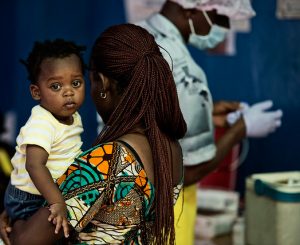
For a 40-minute documentary broadcast on BBC Radio 4 and produced by Anthony Baxter, reporter Richard Phinney visited a small, long-running public health outpost in Guinea Bissau where a team of Danish and African researchers has studied the long-term effects of vaccines and vitamin supplements on the immune systems of children. The team has published reams of research and influenced WHO policy, but Phinney focuses on what he calls their most “explosive” findings.
They show that the world’s most commonly used vaccines can strengthen - or weaken - a child’s immune system in the long term, and affect their ability to fight off disease. The results directly challenge the WHO’s global health advice, followed by most countries in the developing world, and could mean that thousands of young lives, in Africa and beyond, are needlessly at risk.
Programming note: The program will only be available to download worldwide for a few more days.
Update: The audio is no longer available at the earlier link but it is available, in two parts, on this page. Search the page or scroll down for “Vaccine Detectives.”
Professor: Research, training can improve South African health journalism
In discussing a large grant his university has received and the center for health journalism that it will fund, South African professor Guy Berger (bio) has unleashed a scathing critique of African health journalism, and of the profession as a whole.
Berger says South African health journalists don’t look hard enough for real news, don’t know enough about health care, and aren’t even that good at telling the stories that they do uncover.
It’s a dire picture, of course, but Berger’s overall message is one of hope. He implies that there’s a lot of great work to be done on health and the health care industry in in South Africa and the new center, he says, could help make health journalism the “healthiest trend-setter for the whole family of journalism.”
The “Discovery Centre for Health Journalism” will be funded by a $2 million grant from South African insurer Discovery Health. It will offer an honors program, six annual scholarships and an “annual symposium for working health journalists and stakeholders.” Berger also writes that it will “enjoy full academic freedom.”
For more on the center and African health journalism, see Issa Sikiti da Silva’s related post on bizcommunity.com.
UN: Africa plagued by counterfeit malaria/HIV pills
Filed under: Hot Health Headline, Public health, Studies
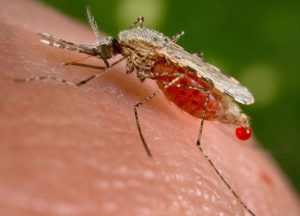
A recent assessment by the United Nations Office on Drugs and Crime found that weak and or/useless drugs have proliferated across Africa and Asia, with malaria-ridden West Africa being the hardest hit (102-page PDF). Smugglers, organized criminals and shady manufacturers in more developed countries are getting rich at the expense of individuals and countries with little capacity to distinguish between fraudulent pharmaceuticals and the real thing.
From the accompanying press release:
As much as 50-60 per cent of anti-infective medicines tested in Asia and Africa have been found to have insufficient amounts of the active ingredients. Medicines with low levels of active ingredients pose a greater hazard than those with none, because substandard antibiotics and anti-malarial drugs can promote the development of drug resistant strains, or “super bugs” that can spread beyond the region.
The UN report calls for immediate action, including the naming, shaming and banning of companies producing the faux pills and stronger government regulatory efforts.