Navratilova, GMA uncritically push screening
In February, Martina Navratilova was diagnosed with ductal carcinoma in situ, the most common form of breast cancer. She has since had a lumpectomy and says she’s doing well and doesn’t expect the cancer to return. But in an interview with Good Morning America during which she announced her diagnosis and surgery, the tennis star stepped beyond the world of sport and into the world of medicine. And there she made the sort of missteps she’s known for avoiding on the court.
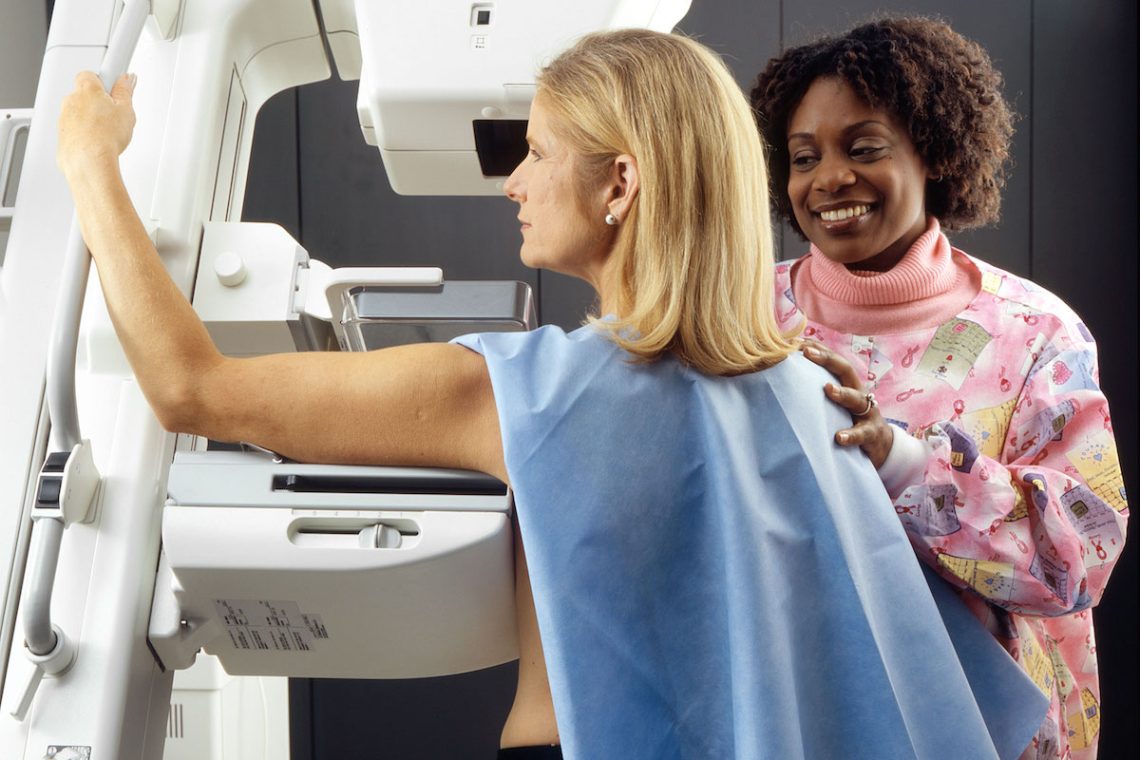
“The reason I wanted to speak about this is to encourage these woman to have mammograms,” (Navratilova) said. “I just want to encourage women to have that yearly check-up.”
…
Navratilova said she doesn’t agree with recent recommendations that women between the ages of 40 and 49 should not necessarily get regular breast cancer screenings.“The cancer knows that you’re not 50 yet?” she said. “I can’t speak for the doctors, but in my personal case I’m so glad that I did it.”
In her blog “A Healthy Piece of My Mind,” writer and PR rep Eve Harris pointed out the fallacies lurking in the tennis star’s screening recommendations, beyond the obvious age-related concerns.
First, Harris said, Navratilova exhorts women to scrape together the money to pay for screenings, yet doesn’t mention the many programs available to help uninsured and underinsured women pay for mammograms.
Second, Navratilova claims that she was lucky, and would have been in serious trouble had she not detected the cancer when she did. In fact, Harris writes, there is not enough information about the natural progression of such cancers to make that declaration.
GMA correspondent Robin Roberts, who also has battled breast cancer, failed to point out any of that and, in fact, offered a very simplified interpretation of what the new breast cancer screening recommendations say.
(Hat tip to @lauranewmanny)
KQED profiles those who live with disease, injury
This month’s edition of Health Dialogues, part of KQED’s California Report, focuses on living with disease. In the report, KQED reporters talk to folks living with chronic disease, the effects of traumatic injury and other conditions that can have lasting effects on a person’s quality of life.
To provide insight into the life and routine of someone coping with chronic disease, reporters profile a music programmer ‘coping’ with diabetes, an activist who stumbled upon a forgotten childhood diagnosis of hepatitis B and a cellist with multiple sclerosis. They also talk to a couple dealing with cancer and two sisters on opposite ends of an organ donation chain.
In addition to cancer and disease, KQED reporters also explore how the lasting effects of traumatic injury can shape your life. Pieces include a KPBS reporter talking about his own traumatic brain injury and the story of a surfing-based physical therapy program for veterans.
ECRI reviews prostate cancer research
Filed under: Health data, Hot Health Headline, Studies, Tools, Uncategorized
The ECRI Institute’s new review of recent research on the utility of off-label prescription of Finasteride in the prevention of prostate cancer (PDF) presents research and clinical guidelines. Its bibliography and research review may be useful for anyone considering a follow-up to Gina Kolata’s recent New York Times piece on cancer prevention. Finasteride blocks an enzyme that aids the proliferation of prostate cancer cells. It’s used to reduce the size of enlarged prostates and, under the name Propecia, to treat male pattern baldness.
A large trial on finasteride, known as the Prostate Cancer Prevention Trial (PCPT), was published in 2003. The 18,882 men (asymptomatic, with normal PSA levels, 55 years of age or older) enrolled in the trial were randomly assigned to receive either finasteride or placebo for 7 years. … The authors of the trial reported that finasteride reduced the incidence of prostate cancer from 24.4% to 18.4%; however, the incidence of high-grade prostate cancers was 25.6% higher in the finasteride group than the placebo group. The clinical significance of these findings is unclear and has been widely debated.
The impact of prophylactic finasteride on long-term mortality and quality of life was not reported by the PCPT. Two models forecasting the impact of finasteride on mortality in participants in the PCPT were published. Grover et al. predicted that for every 1,000 men treated with finasteride, a total of 20 life-years (0.02 years per individual) would be saved, and Lotan et al. predicted that men treated with finasteride would, on average, gain 1.7 months of life.
The ECRI release was prompted by Kolata’s piece in The New York Times which questions why drugs that have been proven to prevent cancer are not being taken while many potentially harmful (and useless) supplements are. Kolata mentioned the Finasteride case in addition to similar examples involving breast cancer prevention drugs.
According to its Web site, the nonprofit ECRI Institute “dedicates itself to bringing the discipline of applied scientific research to healthcare to discover which medical procedures, devices, drugs, and processes are best to enable improved patient care.” The acronym ECRI has been adopted as the organization’s full name, but used to stand for “Emergency Care Research Institute.”
Prof: Mammogram debate is data vs. anecdotes
When it comes to the recent news that a government task force opposes routine mammograms for women under 50, the public must balance research with anecdotal evidence, according to a professor who studies how breast cancer is portrayed in the media.
Cynthia Ryan, Ph.D., an associate professor of English at the University of Alabama at Birmingham, says the media is doing a “decent” job of covering the debate between the new guidelines from the U.S. Preventive Services Task Force and individuals who are advising that women continue to start having mammograms at age 40.
The professor, who has a book coming out about “the rhetoric of breast cancer in popular women’s magazines,” explains why consumers are torn:
Ryan says that when confronted with extreme representations, there is a part of the human brain that wants to go with scientific study “because we figure it must be credible and rational,” she says. “But another part of our brain embraces anecdotal advice that links the message with a face.
Times crafts strong reminder of screening’s dangers
Filed under: Europe, Health policy, Hot Health Headline
Sarah-Kate Templeton, in The Times of London, tells the story of one victim of medical screening and overtreatment, wrapping that story in the larger debate about unnecessary medical screening and finally caps it all off with the news of a “Making Sense of Screening” guide, produced for the charity Sense About Science by a group of British scientists and doctors.
Templeton’s story provides a forceful reminder of the dangers of some early screening and aggressive treatment, all in the words of a 56-year-old math teacher who was diagnosed with a dormant form of breast cancer, and whose doctors recommended radical treatment.
The National Health Service has had to rewrite its advice to include warnings about potential harm caused by the screening process “after research showed that thousands of women have been misled into having unnecessary surgery.”
Parikh: HuffPo + Northrup = half-baked story
Filed under: Health journalism, Hot Health Headline
In a continuation of his critique of the Huffington Post’s health coverage, Dr. Rahul Parikh chastises the online news outlet and Oprah Winfrey favorite Dr. Christiane Northrup for a story Northrup posted trumpeting the “paradigm shift” brought about by the “exciting new” findings of what seems to be a 2006 study that showed large doses of vitamin D might decrease the risk of developing breast cancer. She called the study “preventative medicine at its finest.”
Parikh notes that while the study cited by Northrup does appear to support her claims, it was an observational study inconsistent with later research. Furthermore, the doses of vitamin D given in the study were twice the recommended allowance, thus increasing the risk of kidney-and-bone-damaging overdoses.
Parikh also questions Northrup’s recommendation that women “can even visit a tanning salon that offers UVB tanning rays,” for reasons which should be all too obvious.
Columnist blogs about her breast cancer
Filed under: Health journalism, Hot Health Headline
NJ.com columnist Kathleen O’Brien has been blogging her breast cancer treatment experience from the beginning.
O’Brien’s posts address a mixture of big-picture issues (like avoiding a negative perspective and whether or not to participate in a clinical trial) and illuminating little anecdotes that show the subtle changes in daily life that accompany a cancer diagnosis and impending treatment (like saying goodbye to the hairdresser she won’t need now that she’s going to start chemotherapy). Her writing helps the reader gain a better understanding of the emotional and physical roller coaster upon which cancer patients are trapped.
Organization: Teen breast tests wasteful, harmful
Jeff Baillon of KMSP in Minnesota’s Twin Cities reports that the National Breast Cancer Coalition (a nonprofit grassroots advocacy and fundraising organization) opposes Sen. Amy Klobuchar and Rep. Debbie Wasserman Schultz’s proposed education program pushing for breast cancer screening in girls as young as 15.
The coalition’s president called the bill a “waste of taxpayer dollars,” saying that it could actually “harm young women,” Baillon reported.
In the piece, oncologist Barry Kramer, who leads the Office of Disease Prevention at the National Institutes of Health, sayys there is no evidence that early screening is beneficial to young women, and some that it may even harm them through unnecessary biopsies that may then impede detection later in life when the risks are much higher.
Related
- Experts question early breast cancer screening push
- Cancer Screening: The Clash between Intuition and Science
Kramer, who spoke at Health Journalism 2008, made this presentation on the panel “Lies, damned lies and medical statistics: How to interpret the evidence” at Health Journalism 2008.
Experts question early breast cancer screening push
Debbie Wasserman Schultz, a 42-year-old Democratic representative from Florida, is advocating legislation pushing for early detection and breast cancer screening for women between the ages of 15 and 40. Her proposals come on the heels of the dramatic revelation that she spent the past year struggling with and defeating breast cancer. However, her proposal has met with resistance from the scientific community on the grounds that no reliable form of early detection exists for the age group in question, according to Lesley Clark of McClatchy Newspapers.
The Cancer Letter’s Paul Goldberg has chronicled the controversy, detailing expert efforts to educate Wasserman Schultz and co-sponsor Sen. Amy Klobuchar (D-Minn.) on the limitations and dangers of early screening (subscription needed).
In recent weeks, several prominent scientists and public health experts attempted to explain to Rep. Debbie Wasserman Schultz (D-Fla.) and Sen. Amy Klobuchar (D-Minn.) that their bill to introduce breast cancer screening in junior high school could do more harm than good.
These experts included the chief physician of the American Cancer Society, an NIH cancer prevention expert, and a prominent breast cancer epidemiologist, who attempted to acquaint these lawmakers and their staff members with the fundamentals of epidemiology.
For the McClatchy story, Clark spoke with experts who picked the bill apart, disputing everything from current knowledge of breast-cancer risk factors in younger women to the effectiveness of self-examinations in that age group.
In a March press release, Wasserman Schultz laid out her views on the importance of screening:
“Some people might say I was lucky. While I certainly was fortunate enough to have access to good health care, I didn’t find my tumor early because of luck. I found my tumor early because of knowledge and awareness. I knew that I should perform breast self-exams, and I was aware of what my body was supposed to feel like. We need to ensure that every young woman in America can rely on more than luck. Their survival depends on it.”
Wasserman Schultz may want to consider the expert input, keeping in mind what she said after the Terri Schiavo controversy (from Jewish Times of South Jersey): “The Congress is not an objective body. It is a partisan, political body. Our members are not doctors or bioethicists. We are elected officials.”