Health officials clashed over alerting public to fungal infection in wake of Joplin tornado
Filed under: Health journalism, Hospitals, Hot Health Headline, Public records
Following the devastating tornado in Joplin, Mo., county public health officials found themselves in conflict with state officials about alerting the public to an aggressive fungal infection that was showing up in people who were injured in the storm and its aftermath.
According to emails obtained by Sarah Okeson of the Springfield, Mo., News-Leader, state officials were concerned about panicking the public and declined to issue the alert.
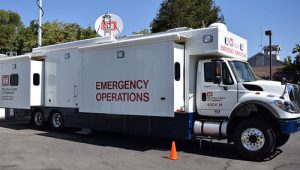
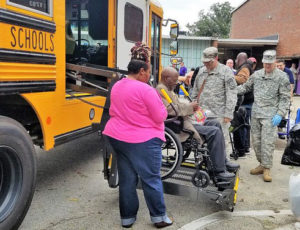
Photo by Red Cross: Carl Manning GKCARC via Flickr
Local officials, on the other hand, say they wanted to “ensure that any hospital/health care provider would recognize the illness in a timely manner and begin aggressive anti-fungal treatment.” Faced with a denial from the state, the local officials issued a limited alert to 43 health care contacts and to health care providers.
A week after the county’s request – and two days after the News-Leader ran a story written by Okeson about the fungal infections – the state issued a health advisory.
The infections drew the interest of federal officials, including Benjamin Park, who leads an epidemiology team at the U.S. Centers for Disease Control. Park repeatedly emailed acting state epidemiologist Dr. George Turabelidze offering assistance and emphasizing that “There could be some important public health information that is obtained from this (risk factors, exposures, environmental sampling?) that would be important for future disaster events.” In one email, Park refers to receiving “inquiries all the way up to HHS secretary about this.”
Guidance for releasing information in a public health crisis
The Association of Health Care Journalists recently worked with the Association of State and Territorial Health Officials (ASTHO) and the National Association of County and City Health Officials (NACCHO) to develop guidelines for releasing information in a public health crisis.
“Stories like these raise questions about how public health agencies respond to outbreaks,” said Charles Ornstein, president of AHCJ’s board of directors. “That’s why I’m particularly glad that AHCJ has worked alongside ASTHO and NACCHO to come up with guidance about the type of information that should be released in public health emergencies. Working collaboratively, journalists and public health officials can improve the information shared during outbreaks and earn the public’s trust.”
The guidelines include advice to health official to consider publicizing an illness or death when “A major epidemic or novel illness is emerging, or a natural disaster or other major event affecting public health has occurred or is anticipated.”
The guidance emphasizes the importance of openness, stating that information should be withheld only when there is a clearly justified reason.
Related
- Joplin hospital staff took action during disaster
- Doctors operated by flashlight, workers scrambled in tornado-ravaged hospital
- Health officials, journalists agree on standards
- Guidance on the release of information concerning deaths, epidemics or emerging diseases
- CDC: Rare fungus risk in future tornadoes
- CDC releases report about Joplin fungus
- Fungus infects tornado victim
- Woman who survived Joplin tornado dies with rare fungus
Doctors operated by flashlight, workers scrambled in tornado-ravaged hospital
As you probably know, St. John’s Regional Medical Center in Joplin, Mo., sustained serious damage in the May 22 tornado that struck that town. Stories about what happened inside the hospital in that 45 seconds and the ensuing moments have started to emerge.
An emergency room doctor writes about diving for cover and then treating injured patients with limited supplies and only light from a flashlight he held in his mouth as he worked. Photo galleries on Flickr have images showing the damage inside and outside the hospital, as well as the MASH unit that was set up.
Outpatient Surgery Magazine has the tale of an orthopedic surgeon who was in the middle of surgery when the tornado hit. He and his team finished the surgery with a flashlight and while standing in several inches of water. “The doctor who trained me thought it was important to know how to do surgery the way they used to, with manual instruments,” said Dr. Smith. “That should be a part of everybody’s training.” (Hat tip to @JJacksonJr for pointing this piece out.)
Courtney Hutchison, of the ABC News Medical Unit, looks at tornado preparedness for hospitals, especially the failure of the backup generator. As one expert points out, generators need adequate ventilation, which means they are usually near an exterior wall and vulnerable to tornadoes.
A New York Times story describes the frantic race to move patients before the tornado struck and then the aftermath, which included treating patients in the parking lot and using a bus and the beds of pickup trucks to take patients to other hospitals.
St. Johns’ Med Flight manager was briefly sucked out of the hospital:
Suddenly, the glass doors he was holding onto – the ones with the 100-pound magnet to keep them locked – were pulled open. [Rod] Pace was sucked outside briefly and then pushed back in like a rag doll but held on to the handles.
Engineers have started examining the hospital to decide whether it can be salvaged.
In the St. Louis Post-Dispatch, Blythe Bernhard tells the story of a St. Louis doctor, Brian Froelke, who is chief medical officer for the Missouri disaster medical team. That team, of about 40 health care providers, set up a 30-bed tent to serve as a replacement emergency department. Listen to Froelke discuss his experience treating tornado-related injuries. One doctor who was in the hospital when it was hit compared the scene to Haiti after last year’s earthquake.
Thomas Burton of The Wall Street Journal writes about the chaos that the town’s other hospital experienced. It was thrown into darkness and inundated with patients.
Joy Robertson of KOLR-Springfield, Mo., served as a member of the Federal Disaster Mortuary Response Team for several years and responded to the World Trade Center after 9/11. She explains (about halfway through the story) how the morgue operations work in mass fatality disasters and how victims are identified.
Journalist makes case against sanitizing disaster coverage
At a time when the ethics of anecdotal and emotion-heavy disaster coverage have come into question, as they tend to do in the wake of events such as the earthquakes in Japan and New Zealand and the upheavals in the Middle East, it’s worth looking back on commentary from Donna Rosene Leff, Ph.D., titled “In Defense of Appealing to Emotions in Media Coverage of Catastrophe,” published last year in Virtual Mentor, the American Medical Association’s online journal about ethics.
Leff builds her case around a few key examples, most notably the collective decision not to air or publish images of men and women jumping from the twin towers on Sept. 11, 2001 – a decision she questions with some help from Tom Junod. It centers on the idea that journalists ought not withhold their most intense images and stories, because they can “put viewers in touch with what” victims experienced.
Sanitized stories about groups of victims or general circumstances may inform to a degree, but they also allow us to avoid experiencing the true devastation occurring on the ground. Emotional appeals—and disturbing images of disaster victims are the very epitome of emotional appeal—illuminate the reality of the situation in ways that mere facts cannot.
After all, Leff concludes, “journalists’ moral responsibility isn’t to elicit a particular reaction or outcome; their responsibility is to bring home the truth.” Though that conclusion leads to a few questions, the most salient being one she alludes to earlier in the piece. In modern disasters, from the Indian Ocean tsunami to the Haiti earthquake, news coverage hasn’t just brought home the truth, it also has home billions upon billions of dollars in donations. Disaster journalism seems to be a major driver of relief dollars, dollars that are often given in response to the most emotional coverage.
For AHCJ’s guidance regarding disaster coverage and aid to victims, see our relevant statement.
Debate over M.D. reporters in Haiti continues
Discussion and debate continues about the ethics of reporters also serving as doctors in Haiti. [Earlier post]
The Washington Post’s Paul Farhi spoke to some network officials - including Paul Friedman, executive vice president of CBS News, who “says that competitive issues have factored in boosting [Dr. Jennifer] Ashton’s role since [CNN's Dr. Sanjay] Gupta became a star.”
In Baltimore, The Sun’s Kelly Brewington posted the question of whether doctors can also be reporters to readers in that paper’s “Picture of Health” blog.. Curtis Brainerd, on the Columbia Journalism Review’s Web site, wrote about the concerns being raised over the dual roles doctor/reporters are serving in.
Last week, the Society of Professional Journalists released a statement cautioning journalists to not become part of the story. When some people, including new media professor and blogger Jeff Jarvis, interpreted that to mean reporter/doctors should not treat patients, the discussion became more heated. Blogger Tyler Dukes took on Jarvis’ denigration of SPJ’s statement, saying that Jarvis “chose to argue his points with hyperbole and distortion.”
The Canadian Broadcasting Corporation discussed the issue on the Jan. 21 edition of its “As it Happens” show. [Listen]
On Jan. 27, National Public Radio’s media correspondent David Folkenflik appeared on New Hampshire Public Radio’s Word of Mouth and talked about how much of a role should a reporter perform in the midst of a story.
Folkenflik, who has spoken to ABC’s Dr. Richard Besser and NBC’s Dr. Nancy Snyderman, says, “The real question is ‘Is it required for them to tell those stories through their own experiences? Are they somehow diverting attention from those who might need it most by focusing their camera and their aid on these, these people and are they in some ways subtley changing the nature of outcomes there?”
Folkenflik says, “Nobody’s saying these people shouldn’t help” but that “The question is ‘Is there any need to keep the camera rolling while they do it?’ I think that’s fundamentally the issue.”
NPR’s On the Media delved into the topic on Jan. 22, with Neal Shapiro, president of WNET Public Television in New York and former president of NBC News; AHCJ member Gary Schwitzer, of the University of Minnesota and publisher of Health News Review; Bob Steele, a journalism ethicist at DePaul University and member of the Poynter Institute’s faculty; and Dr. Bob Arnot, former chief medical correspondent for NBC News.
Arnot, who has intervened medically while on assignment - without the cameras rolling - pinpointed some of the concerns of performing medical procedures on camera:
DR. BOB ARNOT: Look, the real risk is here that your producer calls up and says, hey we just saw the other network’s doctor deliver a baby, could you do an amputation. There’s a real risk that doctors could be pushed into things they shouldn’t be doing because of the pressure of the suits or the producers, to just get better ratings.
BOB GARFIELD: Things they shouldn’t do, he says, such as treating somebody in the street who can just as easily and more safely be attended to at a clinic or hospital, and such as exploiting the pain of an earthquake victim, not to mention the emotions of the audience, for three minutes of drama, genuine or otherwise.
DR. BOB ARNOT: Absolutely, I mean, look-it. If this happened on the streets of New York, do you think you could do that with the current HIPAA regulations? So, sure, you’re potentially exploiting the patient, and you are becoming more of a showman than you are a medical doctor out there.
Doctor or journalist? Roles become blurred in Haiti
As aid flows to Haiti and the full scope of the disaster becomes clear, there is an interesting discussion happening among health journalists about the role of medical correspondents reporting from the scene of such disasters.
Physicians who work for television networks and have been sent to Haiti have been juggling their roles as doctors and reporters:
- CNN’s Dr. Sanjay Gupta examined a 15-day-old baby on the air and did surgery on a girl with a skull fracture. After Belgian doctors dispatched to a field hospital later abandoned their post and patients, Gupta spent the night as the only physician stabilizing patients.
- NBC’s Dr. Nancy Snyderman operated on people in a makeshift clinic.
- ABC’s Dr. Richard Besser, recently acting director of the CDC, helped a woman who had gone into labor.
- Dr. Jennifer Ashton of CBS assisted in surgery on a girl after who had undergone an amputation.
Footage of all of those correspondents treating patients has aired on their networks and Web sites, raising the question of whether “news organizations at some point appear to be capitalizing for promotional reasons on the intervention by journalists,” according to Bob Steele, journalism values scholar at the Poynter Institute.
Matea Gold, of the Los Angeles Times, reported on the topic and has thoughts from Steele, Snyderman, Besser and CNN’s president about the issue.
Gary Schwitzer, of the University of Minnesota’s School of Journalism & Mass Communication and publisher of HealthNewsReview.org, asks “Who teaches journalism ethics to physician-reporters?” and has “An examination of the ethics of MD-reporter involvement in Haiti.”
In an online chat today, three readers asked Washington Post media critic Howard Kurtz about the medical and journalistic ethics of treating patients on camera. Kurtz responded that he has “mixed feelings” about it. Interestingly, on Kurtz’s CNN show, “Reliable Sources,” that aired on Sunday, he used a clip of Gupta examining the 15-day-old baby as an example of how the media is focusing on Haiti’s children but did not comment on the ethical issue of physician-journalists treating patients.
Rahul K. Parikh, M.D., a doctor who regularly writes for Salon.com, writes about Gupta taking responsibility for the patients who were left alone by the Belgian medical team:
Cynics may sneer that Gupta’s decision to stay was a self-promotional act intended to boost ratings and his profile, that his nobility was inspired more by the eye of the camera than the Hippocratic oath. But don’t count me among those skeptics; I believe those lives were, literally, in Gupta’s hands, and he responded.
Update
The Washington Post now has an article about reporters who double as doctors in Haiti that includes comments from the president of CBS News, who says “that competitive issues have factored in boosting Ashton’s role since Gupta became a star,” and from the director of the Center for Journalism Ethics at the University of Wisconsin’s journalism school, who cautions that such coverage can become self-promotional.