NYT series digs into overprescription and developmentally disabled adults

In the series Abused and Used, New York Times reporter Danny Hakim and a host of his colleagues have been investigating how public resources are used to treat developmentally disabled New Yorkers. The series is ongoing, but hit an inflection point with the publication of Hakim’s piece on the few-strings-attached use of very powerful drugs to treat some of the state’s most vulnerable adult residents.

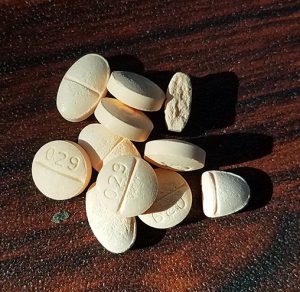
Developmental disabilities, Hakim writes, often manifest themselves in ways that are easily mistaken for mental illness, and these misdiagnoses can lead to unnecessary or improper medication. “In fact,” Hakim writes, “developmentally disabled residents of group homes in New York are more likely to be given Ativan, an anti-anxiety drug that has a tranquilizing effect, than multivitamins, the records show.”

Hakim’s reporting is rich with both anecdotes and data. These paragraphs from the series will give you an idea of how he approached the issue.

Tens of thousands of powerful pills created to treat serious mental illnesses like schizophrenia are given to developmentally disabled people in the care of New York State every day.

…a review by The Times of previously unreleased records, as well as interviews with state employees, clinicians, family members and outside experts, reveals that the psychotropic medications, which alter the brain’s chemistry, are often dispensed sloppily, without rigorous or regular review, by general practitioners with little expertise in the area.

And low-level workers at state group homes are frequently given discretion to increase the medication “as needed,” despite their lack of significant training.

Psychologists who have worked inside the system describe a culture in which the drugs are used to control the disruptive behavior of the developmentally disabled — people with conditions like autism, Down syndrome and cerebral palsy — an approach increasingly discredited in the field.

‘Designer’ drugs easily available, unpredictable

Aug. 12th, 2011 by Pia Christensen · Leave a Comment
Filed under: Hot Health Headline 

The Minneapolis Star Tribune has launched an investigation into synthetic “designer” drugs, finding that they are easy to buy, their legality is murky at best and that often buyers don’t receive the drugs they think they’ve ordered.

An introduction by Star Tribune editor Nancy Barnes says it is “striking” how much “trust buyers put in the notion that it is safe to acquire a synthetic drug over the Internet, from an unproven source.”

In the first installment of the series, reporter Pam Louwagie tells the story of a tragic party in tiny Konawa, Okla., where a college student allegedly ordered a drug over the Internet and, according to court documents, distributed it to party attendees. What he actually received was a different chemical that sickened a number of people and, prosecutors say, led to the death of a 22-year-old.

The story also lists cases in which people using synthetic drugs, such as “bath salts” and “synthetic marijuana,” have been sickened, committed suicide and killed family members.

Who monitors pharmacies’ systems to curb pseudoephedrine sales?

Oct. 19th, 2010 by Pia Christensen · Leave a Comment
Filed under: Health data, Pharmaceuticals 

CVS Pharmacy has been in the news recently after it agreed to pay $75 million in penalties and forfeit $2.6 million in profits made from illegally selling pseudoephedrine. Scott Hensley did a nice job of explaining why the retailer got in trouble, which boils down to a defect in the electronic system the chain used.

As most allergy sufferers know, federal laws (and some state laws) limit how much pseudoephedrine consumers can buy. Retailers are left with the chore of monitoring who buys how much of the drug, which also can be used to make methamphetamine.

As the CVS case seems to show, and my personal experience backs up, retailers apparently can set up their own systems for tracking the sale of pseudoephedrine as long as they meet some basic requirements:

Regulated sellers are required to maintain a logbook, written or electronic, to record sales of products containing ephedrine, pseudoephedrine, or phenylpropanolamine. The seller must enter into the logbook the name of the product, and quantity sold. The customer must write or enter into the logbook their name, address, date, and time of sale. The customer must also sign the logbook. You may not sell the product unless these requirements are met.

What isn’t clear is who is regulating those systems.

If a retailer’s system doesn’t prevent someone from making multiple pseudoephedrine buys and exceeding the federal limit – as happened at CVS – or if a retailer’s computer program mistakenly calculates the wrong amount of pseudoephedrine contained in a medication, then the system is failing. In the case of CVS, the problem happened for more than a year at multiple locations.

Now, for that personal experience I mentioned earlier …

After recently being told I had met my limit of pseudoephedrine at a neighborhood pharmacy, despite the fact that I take less than the maximum dosage to control my allergies, I asked to look at the store’s records.

A sympathetic pharmacist showed me the log of my purchases and I discovered that when I bought a package of 18 pills, the store’s computer recorded it as a package of 18 pills, but it calculated the amount of pseudoephedrine in that package to be the same as what would be in a 36-count package. That amount of pseudoephedrine was what triggered the computer to tell the pharmacy not to sell any more to me.

Once I pointed out the error, the pharmacist got out a calculator and eventually concluded I was right. He was rather incredulous that the error could happen. He tells me that he’s put in a request with the company’s help desk to fix the problem.

However, I’m left wondering whether my name is flagged in a computer database somewhere because of the store’s error and how many other innocent people are also flagged. Not to mention how many allergy sufferers have been left unable to breathe properly because computer systems show they’ve bought more pseudoephedrine than they actually have.

Perhaps more importantly, what about the methamphetamine criminal cases that have been brought as a result of authorities examining these records? There was recently a large raid on meth labs in my area based on pharmacy records and the pharmacist I talked to said he’d been in court testifying recently in meth cases. Could errors in pharmacy records be a defense attorney’s dream?

British skeptics rethink drug policy over a few beers

Dec. 3rd, 2009 by Andrew Van Dam · Leave a Comment
Filed under: Europe, Hot Health Headline 

On BMJ.com, guest blogger Annabel Bentley relates the proceedings of a local chapter of “Skeptics In The Pub” (their Facebook page is here) in which they heard the ex-chairman of the UK government’s Advisory Council on the Misuse of Drugs speak in favor of an evidence-based approach to drug policy.

beer
Photo by sjgardiner via Flickr.

Saying that alcohol is one of that country’s greatest drug problems, the ex-chairman (who lost his job for making similar remarks [PDF]) argued that drugs should be classified based on their relative harms.

Bentley also links to a fun Skeptics in the Pub piece in The Economist, this one about Skeptics coming together in defense of a journalist being sued by the British Chiropractic Association over a piece he did considering the effectiveness of their profession.

Archive offers drug industry documents online

Nov. 25th, 2009 by Pia Christensen · 2 Comments
Filed under: Health data, Pharmaceuticals, Public records 

In correspondence earlier this month, Kim Klausner, of the University of California, San Francisco Library and Center for Knowledge Management, suggested that reporters should be aware of the Drug Industry Document Archive.

Klausner, the industry documents digital library manager, sent a complete guide to what’s available, the history of DIDA and lots of examples of how reporters and others have used DIDA that is available on HealthJournalism.org.

The archive, available to anyone with access to the Internet, contains about 2,500 pharmaceutical industry documents submitted by “lawyers representing people who file law suits against drug companies and Congressional committees investigating the pharmaceutical industry,” according to Klausner.

William Heisel of the Antidote blog is doing a series of posts that show how the archive can be used to research stories. Heisel’s example uses depositions from a case against Wyeth over side effects of its hormone replacement therapy drugs.

Fla. painkiller industry flourishes, supplies nation

Apr. 13th, 2009 by Andrew Van Dam · 1 Comment
Filed under: Hot Health Headline, Pharmaceuticals 

The Miami Herald’s Scott Hiaasen delved into South Florida’s massive painkiller industry, one which, enabled by loose laws and lax oversight, supplies a massive underground distribution network reaching throughout the South and New England. According to Hiaasen, pills flow by the thousands every day through an ever-growing number of clinics offering drugs and prescriptions to walk-in patients at strip malls and nondescript office parks.

In the last six months of 2008, doctors at Broward’s pain clinics handed out more than 6.5 million pills of the potent painkiller oxycodone — almost four pills for every Broward resident, according to federal data compiled by the Broward Sheriff’s Office.

Among Hiaasen’s findings:

  • 45 South Florida doctors sold nearly nine million oxycodone pills in the last six months of 2008.
  • 33 of the top 50 oxycodone-dispensing doctors in the United States practice in Broward County.
  • The number of pain clinics in South Florida grew from 60 to 150 in the past year, the DEA estimates.
  • Overdose deaths in Florida caused by oxycodone rose from 340 in 2005 to 705 in 2007.

In a companion story, Hiaasen looks at the other end of the prescription painkiller pipeline: rural Appalachia.

”We’re inundated with it. Florida is killing us,” said Sheriff Bill Lewis of Lewis County, Ky., population 14,000. “There’s a carload that leaves here so often — hell, every week or so — to go to Florida.”

In February, Lewis’ deputies arrested four people returning to Kentucky with almost 1,000 painkillers prescribed by Florida doctors. And last Thursday, they arrested a suspected oxycodone trafficker carrying the business card of a Hollywood pain doctor in his wallet.

Florida is the largest of the 12 states without a prescription drug monitoring plan, a fact some local lawmakers call “embarrassing.”

N.J. psychiatric hospital botches drugs, doses

Apr. 10th, 2009 by Andrew Van Dam · Leave a Comment
Filed under: Hot Health Headline 

Jean Mikle of the Asbury Park Press chronicled medication errors at Ancora Psychiatric Hospital, New Jersey’s largest such institution. Mikle pored over public records and found that while hospital officials say they are safer than average, “overdoses, adverse reactions to medicines, and wrong doses of powerful drugs have harmed dozens of patients at Ancora since 2006.”

Since December, two Ancora patients have been hospitalized because of “reactions to medications” they received inside the psychiatric hospital, according to Ellen Lovejoy, the spokeswoman for the state Department of Human Services.

Brick resident Derrick Raymond, 28, who has been a patient at Ancora several times since 2002, said he could easily have been given the wrong medication because, he said, patient files were frequently in disarray.

“I’ve had my files mixed with other people’s,” Raymond said. “I could have been given the wrong medication. You start to feel like a guinea pig for medications in there.”

Mikle found cases where patients were given the wrong medication, the wrong amount of medication, no medication when some was needed, expired medication and medication intended for other patients.

Newer technology not always more effective

Joe Rojas-Burke reported in The Oregonian on what he called “a widespread problem in the health care system: the tendency to embrace new technology without waiting for proof that it’s better than older, cheaper, time-tested solutions.”

Some examples from Rojas-Burke’s report:

  • A Duke University study found that men who received robot-assisted prostate surgery experienced about the same rate of harmful side effects as those who went under a traditional surgeon’s knife and that, furthermore, the men who received robotic surgery felt three to four times as much post-surgery regret as those who chose the traditional option, probably due to heightened expectations.
  • Two Finnish researches reported in the British Medical Journal that falling, not osteoporosis, was the greatest risk factor for bone breaks among the elderly, casting doubt on the effectiveness of scanning bone density and prescribing drugs. “By one estimate, more than 80 percent of low-impact fractures occur in those who don’t have osteoporosis, which means that bone-density tests can’t reliably predict which patients are likely to break bones,” Rojas-Burke reports.
  • He cites the use of electronic fetal heart monitoring, computer-aided mammography devices, blockbuster drugs such as Vioxx, Zelnorm and Avandia as other cases in which newer may not be better.

The Columbia Journalism Review’s Trudy Lieberman blogged that Rojas-Burke’s findings are particularly important when considered alongside the government’s proposed stimulus package, the Senate version of which “includes $1 billion for research on the comparative effectiveness of medical treatments.”

Lieberman, president of AHCJ’s board of directors, said the proposed “bill has already sparked concern that some patients may not get expensive treatments that they or their doctors want,” and recounted the cautionary tale of the National Center for Health Care and Technology, created in 1978 with a similar purpose. Lieberman said the center met an early demise during the Reagan administration thanks to the efforts of the American Medical Association and the Health Industry Manufacturers’ Association, which “argued that the Center was redundant because doctors were the ones best equipped to evaluate new technology.”

Reports shed light on FDA oversight problems

Jan. 15th, 2009 by Ed Silverman · Leave a Comment
Filed under: Pharmaceuticals 

When we talk about FDA oversight, what might we mean? Not too much, according to a pair of new reports from the Office of the Inspector General in the Department of Health and Human Services.

One report assessed the process by the FDA’s Center for Drug Evaluation and Research for selecting information technology contractors and monitoring their performance between fiscal years 2004 and 2007. The findings: CDER’s actions demonstrated “limited IT planning and increased risk for the government” by using broad language and relying primarily on acquisition methods that emphasize speed and flexibility over planning. CDER also used quality assurance and monitoring plans inconsistently. For instance, 21 of 28 ‘contract actions’ didn’t have documented quality assurance plans. And of seven contract actions that did include quality assurance plans, three contained identical plans with generic language, no pun intended, for inspections.

A second report, which got some notice earlier this week, found that oversight was lacking of financial conflicts of interest involving clinical trial investigators. For instance, only one percent disclosed at least one financial interest, and this represented 206 of the 29,691 investigators listed in financial interest forms. Of the 206, almost all disclosed only one financial interest, with a few disclosing two or three.

A few other problems - the FDA can’t determine whether sponsors have submitted financial info for all clinical investigators; 42 percent of FDA-approved marketing applications were missing financial info; the FDA didn’t document a review of any financial info for 31 percent of marketing applications, and neither the agency or sponsoring drug makers took action for 20 percent of marketing applications with disclosed financial interests. And when the FDA did action, the agency was inconsistent.

And how did the FDA respond? The agency told the OIG that the extra effort to collect such info “would not be worthwhile because financial interests are only one form of potential bias and not all clinical trials are presented in the marketing applications. That may be true, but the FDA is slow to realize that bias among investigators similarly may pose perceived or real problems.