Old, frail fall through the cracks in Wash. system
In a series of articles, Seattle Times reporter Michael J. Berens looks at Washington’s adult family homes - legally sanctioned facilities in which the state licenses “homeowners to provide spare bedrooms and care for the old or frail who might otherwise have to live in nursing homes.”
These private residences — called adult family homes — were marketed as opportunities for seniors to live in cozy settings and familiar neighborhoods, close to family and friends, with more freedom and superior care.
The owners were given freedom, as well. To encourage this new industry, the state imposed few regulations — no requirements for a minimum level of employees or even, for many years, liability insurance.
Through interviews with more than 250 people, documents obtained through public-records requests and analysis of computer databases and disciplinary actions, Berens found that “thousands of vulnerable adults have been exploited by profiteers or harmed by amateur caregivers” in the state’s 2,843 adult homes.
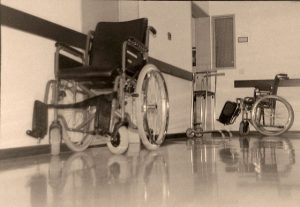
The Times uncovered accounts of elderly victims who were imprisoned in their rooms, roped into their beds at night, strapped to chairs during the day so they wouldn’t wander off, drugged into submission or left without proper medical treatment for weeks.
In part two of the project, Berens reports on one home that was cited for numerous serious violations but remained in business. Part three will be published on Tuesday.
More information about how the series was reported and a list of other people involved in the project is included in the “About the series” sidebar.
The Times posted a searchable database of the state’s adult family homes.
Slim guide:
Covering the Health of Local Nursing Homes
Check out AHCJ’s latest volume in its ongoing Slim Guide series. This reporting guide gives a head start to journalists who want to pursue stories about one of the most vulnerable populations – nursing home residents. It offers advice about Web sites, datasets, research and other resources. After reading this book, journalists can have more confidence in deciphering nursing home inspection reports, interviewing advocacy groups on all sides of an issue, locating key data, and more. The book includes story examples and ideas.
AHCJ publishes these reporting guides, with the support of the Robert Wood Johnson Foundation, to help journalists understand and accurately report on specific subjects.

Other resources
- Aging Nation: Troublesome Health Care Issues
- Headlines an advocate for seniors would like to see
- The impact of aging upon health care
- Covering nursing homes and other issues of aging
- How will retiring boomers affect the national health agenda?
- You Can Run, but You Can’t Hide: Policy and Problems in Long-Term Care
- Biology of Aging: Sources and Resources
Drug data could inform stories about elder care
The 2007 National Home and Hospice Care Survey (NHHCS ) Medication Public-Use File and Documentation are now available for downloading.
One group of researchers used earlier NHHCS data to “examine changes in hospice services over time, as they were collected during the period from 1992 to 2000, paralleling the period of substantial growth in hospice use and spending.”
With recent studies and news about the increase in use of antipsychotics in the elderly, this data might be useful in reporting such stories and documenting the increase, as well as stories about how treatments have changed.
The 2007 NHHCS Medication Public-Use Data File is supported by SAS, SPSS, and STATA input statements. The documentation includes three PDF files: technical notes, a data dictionary, and a PDF file that provides drug name codes, drug estimates and rates, and drug characteristics.
Agency releases latest ‘Profile of Older Americans”
The U.S. Department of Health and Human Services Administration on Aging has released the 2009 version of “A Profile of Older Americans” (PDF), a summary of data taken from the Census and NCHS.
This year’s version focuses heavily on the demographic’s growth, but includes something for everyone.
Skip to page 3 if you’re just looking for the ever-popular list of interesting numbers related to the 65-and-over set, or check the following page for the narrative version. Highlights include a map marking states based on “Persons 65+ as a percentage of total population” (it’s lowest in Alaska and Utah and increasing rapidly throughout the Mountain West), state-by-state 65+ population numbers, and health insurance coverage numbers.
You’ll even find numbers on poverty, caregivers and breakdowns of the numbers of elderly Americans who are limited in walking, eating, bathing, dressing, etc.
In the cold, elderly more likely to break hip
USA Today’s Kim Painter reminds folks, especially the elderly, to practice “defensive walking” during winter months, citing a “decade-long study of 66,346 hip fractures in New York City found that, at least in that city, fracture rates were highest in winter, especially on the coldest and windiest days.”
At the same time, Painter reports, overall fall rates don’t seem to budge to much in the winter, perhaps because folks are more likely to stay inside rather than risk icy steps and walkways. Painter says the increased fracture rates could be because of icy streets, weaker muscles as a result of winter inactivity and even lower vitamin D levels, which have been linked to weak muscles and brittle bones.
Poynter’s Al Tompkins, who first alerted us to this story, also points to CDC resources on the “silent epidemic” of hip fractures in America.
AHCJ on Aging

AHCJ’s Aging in the 21st Century workshop, held Oct. 16 and 17 in Miami, addressed the changing picture of aging Americans and key research and issues related to this growing population. Tip sheets and presentations from that workshop are available to AHCJ members, as are these related tip sheets:
- Aging Nation: Troublesome Health Care Issues
- Headlines an advocate for seniors would like to see
- The impact of aging upon health care
- Covering nursing homes and other issues of aging
- How will retiring boomers affect the national health agenda?
- You Can Run, but You Can’t Hide: Policy and Problems in Long-Term Care
- Biology of Aging: Sources and Resources
Slim guide: Covering the Health of Local Nursing Homes
Check out AHCJ’s latest volume in its ongoing Slim Guide series. This reporting guide gives a head start to journalists who want to pursue stories about one of the most vulnerable populations – nursing home residents. It offers advice about Web sites, datasets, research and other resources. After reading this book, journalists can have more confidence in deciphering nursing home inspection reports, interviewing advocacy groups on all sides of an issue, locating key data, and more. The book includes story examples and ideas.
AHCJ publishes these reporting guides, with the support of the Robert Wood Johnson Foundation, to help journalists understand and accurately report on specific subjects.
Getting patients home safely after a hospital stay
New America Media’s Paul Kleyman explores the effects of hospitals cutting corners when it comes to patient transitions from hospital to home, a problem his sources call one of the biggest gaps in the health care system. Citing a widely reported 2009 New England Journal of Medicine article on preventable rehospitalizations, Kleyman explains why the current transition system is both expensive and broken, then chronicles the efforts of advocates and legislators to change the system or, at the very least, fill in the gaps.
Kleyman on the latest legislative attempt to change the system:
These findings led members of Congress to introduce the Medicare Transitional Care Act of 2009. According to the bill, “Insufficient communication among older adults, family caregivers and health care providers contribute to poor continuity of care, inadequate management of complex health care needs and preventable hospital admissions.” The Act would set up demonstration projects to test ways for improving patients’ continuity of care.
600-plus Ill. patients drugged without consent
After a review of 40,000+ inspection reports for Illinois nursing homes, the Chicago Tribune’s Sam Roe reports that the paper found 1,200 violations (affecting 2,900 patients) involving psychotropic drugs since 2001. More than 600 patients were drugged without their consent. According to Roe, “The actual numbers are likely far higher because regulators inspect some facilities just once every 15 months, and even then they usually check only a small sample of residents for harm.”
The violations, many of which were caused by a desire to make patients easier to deal with, were “for ‘chemical restraint’ and ‘unnecessary drugs’ as well as cases involving dosages that exceeded safety standards or falls in which psychotropics possibly played a role.”
While some nursing home residents suffer from major mental illnesses, such as schizophrenia, the inspection reports show that many patients harmed by antipsychotic drugs had not been diagnosed with psychosis. They were disabled by Alzheimer’s disease, cancer or Parkinson’s disease. Some were blind or so frail that they could not breathe without the aid of an oxygen tank.
In a follow-up story, Roe reveals that doctors responsible for these dubious prescriptions are not held accountable, even when cited by government entities.
The Chicago Tribune’s full series on nursing home safety can be found here.

Recent workshop
AHCJ’s Aging in the 21st Century workshop, held Oct. 16 and 17 in Miami, addressed many topics raised by the Tribune’s reports, as well as the changing picture of aging Americans and key research and issues related to this growing population. Tip sheets and presentations from that workshop are available to AHCJ members.
Related tip sheets
Aging Nation: Troublesome Health Care Issues
Headlines an advocate for seniors would like to see
The impact of aging upon health care
Covering nursing homes and other issues of aging
How will retiring boomers affect the national health agenda?
You Can Run, but You Can’t Hide: Policy and Problems in Long-Term Care
Biology of Aging: Sources and Resources
Workshop explored issues of aging America
More than 70 people attended AHCJ’s Aging in the 21st Century workshop last weekend, where former HHS secretary Donna Shalala discussed the health reform proposals and former FDA commissioner David Kessler discussed the nation’s obesity epidemic.

Sam Grogg, dean of the University of Miami School of Communication, left, moderates a session with Thomas Prohaska of the Center for Research on Health and Aging at the University of Illinois at Chicago and Sara Czaja of the Center on Aging at the University of Miami. (Photo by Carla K. Johnson for AHCJ)
AHCJ treasurer Ivan Oransky live-tweeted from the workshop, which featured panels about the health care workforce, aging in ethnic communities, brain research, elder abuse and more.
Shalala said she is confident that health care reform will pass and that consensus is within reach. She says the biggest issue remains how to pay for reform and bring down health care costs.
The Miami Herald’s John Dorschner reports that “speaker after speaker laid out a grim scenario” for aging in the United States, with a smalller health care workforce available to care for a growing elderly population.
Presentations from the workshop will be available for members on the AHCJ Web site later this week. A slideshow from the event is now online.
Seniors could be reform’s largest wild card
Filed under: Health care reform, Health policy, Hot Health Headline
Michael Booth and Karen E. Crummy of The Denver Post report that, with AARP effectively neutralized by fire from both sides, seniors – who make up a disproportionately large number of voters – are serving as a massive wild card in the health care reform debate.
Almost all of them are pleased as punch with their current Medicare coverage, Booth and Crummy report, and fear that any expansion of care to those younger than themselves will come at Medicare’s expense.
With 40 million members, a hefty budget and more than 50 lobbyists, AARP has the resources to be a power player in the reform battle. So far, though, the organization has (for the most part) sat on the sidelines, making only vague pronouncements about health care for all that doesn’t compromise Medicare coverage.
AARP has, in some ways, become a victim of its own size. It represents such a broad segment of the population that it’s being pulled in all directions by different groups of active members. Some, angry that the lobby is supporting health care at all, have even canceled their memberships. Booth and Crummy write that AARP’s troubles have extended a lifeline to fringe senior groups, at least one of which is expecting significant increases in membership as a result of the behemoth’s recent woes.
Mentally ill patients, elderly mix in nursing homes
Carla K. Johnson of The Associated Press reports that “nursing homes have become dumping grounds for young and middle-age people with mental illness, according to Associated Press interviews and an analysis of data from all 50 states.”
She writes that younger, stronger residents with mental illness are living alongside frail elderly residents, a situation that she calls a “prescription for violence.”
Numbers obtained through the Freedom of Information Act and prepared exclusively for the AP by the Centers for Medicare and Medicaid Services show nearly 125,000 young and middle-aged adults with serious mental illness lived in U.S. nursing homes last year.
Those numbers represent a sharp increase - 41 percent - from 2002.
Trends Johnson identifies as driving the problem:
- The closing of state mental institutions and a shortage of hospital psychiatric beds
- Nursing homes have beds to fill because today’s elderly are healthier than those before them and more likely to stay in their homes.
- Mixing the mentally ill with the elderly makes economic sense for states. As long as a nursing home’s mentally ill population stays under 50 percent, the federal government will help pay for the residents’ care under Medicaid.
Award winner urges coverage of nursing homes
Last summer, Theo Francis, then working for The Wall Street Journal, wrote a compelling report about a disturbing trend in which nursing homes are evicting residents, sometimes because these people are simply too costly or inconvenient. His story noted that residents on Medicaid bring facilities as little as half what they can get from people who pay out of pocket, with private health insurance or through Medicare. Meanwhile, he wrote, formal complaints about nursing-home discharge practices have doubled over a decade, to 8,500 nationally in 2006.
The story has earned Francis, who is an AHCJ member, the Jack Newfield Award for Excellence in Investigative Reporting from FRIA, a New York-based, nonprofit organization that tries to foster dignity and independence of seniors in long term care settings. The goal of the award is to encourage socially conscious reporting on the challenges of elderly life, in general, and especially those related to long-term care. FRIA hopes the award provides incentives to journalists to report on issues important to the nation’s aging population.
“No one tracks nursing-home evictions nationally, and even complaints are tracked inconsistently. Few states go farther,” Francis writes us. “So it took a lot of phone work to confirm and flesh out the pattern of evictions that I had heard about. Moreover, many of those who have been evicted are unaware of their rights under federal law, and may never know they were forced out of their homes improperly. Others are afraid to complain, fearing they may retaliation when they depend on their nursing homes to eat, bathe or use the toilet. And assisted-living facility residents, while more independent, have more to fear in some ways. In many states, they can be evicted for no reason at all. As a result, it was also challenging to find residents and families both able to articulate their experiences and willing to do so publicly.
“As news organizations cut back, investigative reporting is often one of the early casualties. Even so, I want to encourage other reporters to write about nursing homes, assisted-living facilities and their residents, many of whom are among the most vulnerable people in America today. Writing about long-term care can be a real challenge, thanks in part to a byzantine regulatory system, the incredibly decentralized nature of the industry an the anxieties that often surround those living in institutional settings. But it is also incredibly rewarding. For one thing, you meet people who’ve lived long and colorful lives. But beyond that, there are few opportunities for reporters to make more of a concrete difference in their communities and in the lives of individuals.”