GAO: FDA designation doesn’t ensure safety

Mar. 11th, 2010 by Andrew Van Dam · Leave a Comment
Filed under: Government, Hot Health Headline, Studies 
gras
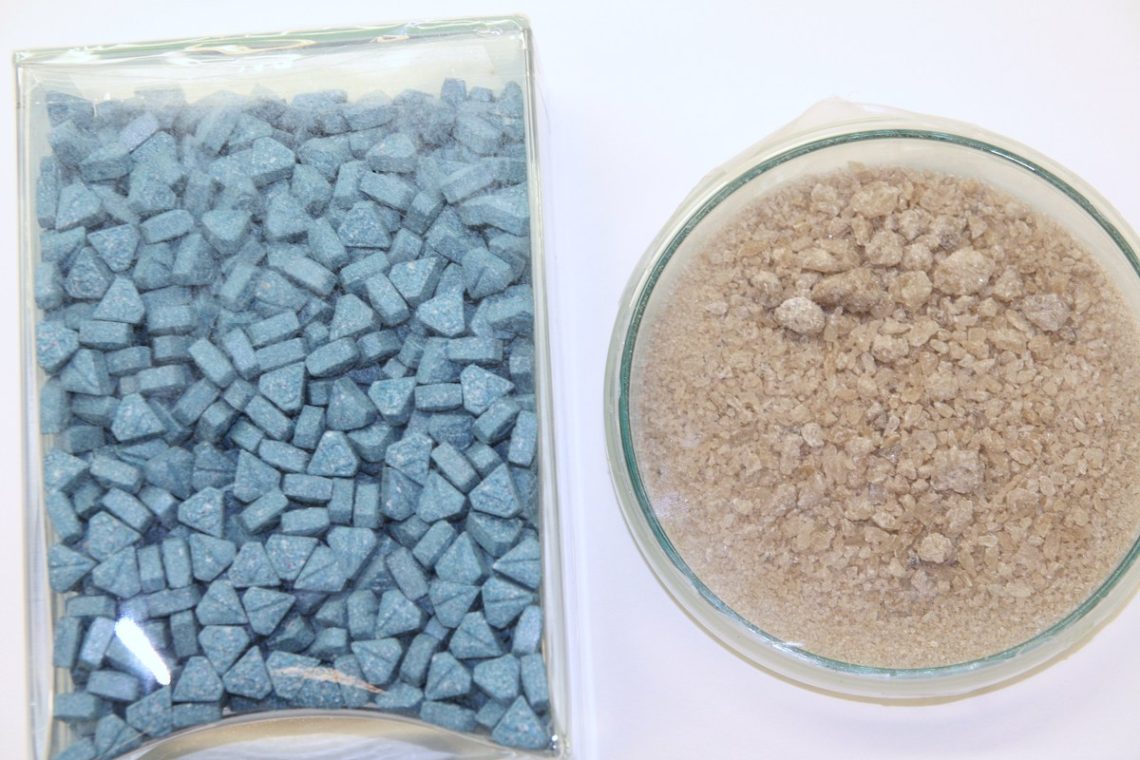
Ammonium Hydroxide and Phosphoric Acid, both GRAS. Photo by Benny BNut via Flickr.

On his blog Cold Truth (and on AOL News), Andrew Schneider brought our attention to the GAO’s recent investigation into the well-known FDA loophole created by the “generally regarded as safe” or GRAS designation.

The GRAS designation is meant to spare manufacturers lengthy and expensive testing that might otherwise slow the flow of new products to market. It’s conferred, Schneider writes, as long as a “scientific panel selected by the manufacturer can rule that no harm will result from the intended use of an additive.”

Schneider’s version of the highlights of the GAO report:

  • The FDA generally doesn’t know about most of these determinations of “generally regarded as safe,” or GRAS, because companies are not required to inform the agency.
  • The FDA has not taken steps that could help ensure the safety of additives listed as GRAS.
  • Food products may contain numerous ingredients, including GRAS substances, making it difficult, if not impossible, for public health authorities to attribute a food safety problem to a specific GRAS additive.
  • The FDA does not systematically reconsider the safety of GRAS substances as new information or new methods for evaluating safety become available.

The GAO said nanomaterials and imported additives were of particular concern.

(Hat tip to OMB Watch in general and Matthew Madia in particular)

Schneider: FDA lacks resources to keep food safe

Mar. 8th, 2010 by Andrew Van Dam · Leave a Comment
Filed under: Hot Health Headline 

Writing for AOL News (and his blog, Cold Truth) Andrew Schneider writes that the hydrolyzed vegetable protein recall reminds us that, no matter what was said in the wake of last year’s peanut butter recall, the FDA still doesn’t have the ability to pay close attention to source foods that are destined to end up in hundreds of different products.

In this most recent case, it was a test by a supplier, not an FDA representative, that caught the contaminated additive.

The FDA conducted an investigation at the company’s Las Vegas facility after a food producer that bought the flavoring from Basic Food Flavors notified federal agents that it had found Salmonella Tennessee in the vegetable protein.

In answer to the criticism about its actions during the peanut episode, FDA officials said they have no way knowing to whom suppliers sell their food products, what those products are and where they’re sold. The FDA says it doesn’t have the personnel or the needed regulations to handle the millions of shipments made within the food industry every week.

But what was seen with the dangerous peanuts, and what we’re beginning to see with the flavoring agent, is that producers of end products — those items that actually reach store and warehouse shelves — are declaring their own voluntary recalls.

FDA warns against promoting unapproved drugs

The New York Times‘ Natasha Singer looked into the FDA’s recent warning of prominent cosmetic doctor Leslie Baumann (bio) for the promotion of an unapproved drug, based on comments she made about Botox-like Dysport (she was an investigator in a trial of the treatment) in outlets such as Allure, Elle and the Today Show. Singer also considered the chilling effect this warning might have on other clinical investigators upon which the media has traditionally relied.

baumann
Dr. Leslie Baumann, from skintypesolutions.com

Now, some industry experts say the F.D.A. warning may curb the media enthusiasm of certain cosmetic doctors who until now have provided scoops about coming medical products — or have talked up the latest unapproved cosmetic uses for drugs and devices that the agency had approved only for other purposes.

“It’s a wake-up call,” said Nancy Behrman, owner of Behrman Communications, a public relations firm in Manhattan. Her firm has represented cosmetic medical companies as well as doctors. “The whole business has spiraled out of control, and we need to step back and slow it down.”

FDA representatives say that there’s a line between scientific discussion and drug promotion, and that investigators are welcome to talk to the media as long as they don’t cross it.

Thomas W. Abrams, director of the agency’s Division of Drug Marketing, Advertising and Communications, said that investigators were free to have scientific conversations about investigational drugs with their peers and with journalists. But an investigator should not promote any unapproved prescription drug — or an unapproved use of an already approved drug — as being safe or effective if the agency has not yet deemed it to be so, he said.

Singer also talks to another of the media’s favorite doctors, dermatologist Fredric S. Brandt, who said that, in future discussions with media he would take care to offer only scientific facts on unapproved drugs, and leave his opinions and recommendations out of the discussion.

FDA launches transparency site with help of tongue depressor

Jan. 15th, 2010 by Andrew Van Dam · Leave a Comment
Filed under: Government, Tools 

In the first step of a planned three-part transparency initiative, the U.S. Food and Drug Administration has rolled out FDA Basics, a tidy little Web portal aimed at helping the public understand exactly what the agency does. And that, according to the page’s centerpiece, is regulate tongue depressors. The goofiness of the example aside, the FDA does use the depressors to make a pretty solid point about device regulation, as you can see below.

fda1

All in all, the FDA manages to pack enough information into the site to educate and even intimidate curious consumers. In addition to the bit about devices, it has dedicated pages to each of its core regulatory missions, stuff like dietary supplements and cosmetics. It also has announced a series of topic-specific Webinars and given the site a hearty sprinkling of suggestion and question submission boxes, as well as contact information.

To announce the site the FDA hosted a Webinar on Tuesday to teach bloggers about the Basics site; a promised recording of the session has yet to materialize.

(Hat tip to Medical Marketing and Media)

FDA documents for most-popular drugs not online

Nancy Watzman, writing for the Sunlight Foundation Reporting Group, has found that, because the Food and Drug Administration only makes approval background documents available for drugs approved after 1997, safety and efficacy information for nine of the 25 most-prescribed drugs is not available online.

The article points out that doctors base their treatment decisions on information in peer-reviewed articles, where drug companies have little incentive to publish negative information. The studies the FDA uses to make approval decisions, however, may have more complete and balanced information that would be useful to doctors and consumers.

Watzman reports that the FDA apparently receives such documents electronically, then prints them out, redacts them by hand (using white out!) and then scans them and saves them as PDF documents that are not searchable.

The report includes a list of the 25 most-prescribed drugs and highlights those for which FDA review documents are available online.

FDA approval causes drug price to skyrocket

In a collaboration between The Philadelphia Inquirer and Kaiser Health News, Harris Meyer looks at the case of colchicine, a drug used to treat gout that has been on the market so long that it predates the FDA approval process, and thus had never been approved.

Like thousands of drugs it existed in a sort of grandfathered generic state. That ended in 2009 when URL Pharma earned FDA approval for a branded version of the drug, which it sells for 50 times more per pill than the generic.

The drug company convinced the FDA that its version was safer than the generic, a claim disputed by many physicians. Now, Meyer reports, it’s likely that the generic colchicine will be forced from the market over the coming months, driving customers of the centuries-old drug (a natural version was first mentioned by the ancient Greeks) into the arms of URL Pharma. According to Meyer, the case is just one of several that have resulted from post-2006 FDA efforts to gain control and approval over all those grandfathered-in unregulated drugs.

OIG: CDC missed most conflicts of interest in 2007

Dec. 21st, 2009 by Andrew Van Dam · Leave a Comment
Filed under: Hot Health Headline, Studies 

The Department of Health and Human Services Office of Inspector General’s latest report covers “CDC’s ethics program for special government employees on federal advisory committees” (53-page PDF), which is significantly more interesting than that sentence makes it sound. For the report, OIG went through conflict-of-interest disclosure forms filed in 2007 for 246 members of FDA advisory committees and found that a striking number of them were incomplete or not properly acted upon. On one hand, “federal bureaucrats are real sticklers when it comes to filing paperwork” is hardly a headline, but on the other hand,the CDC’s ethics agreements are key to preserving the integrity of the committee advisory process.

Here are a few highlights taken from the report:

  • For almost all special Government employees, CDC did not ensure that financial disclosure forms were complete in 2007. CDC certified OGE Forms 450 with at least one omission in 2007 for 97 percent of SGEs. Most of the forms had more than one type of omission.
  • CDC did not identify or resolve potential conflicts of interest for 64 percent of special Government employees in 2007. Sixty-four percent of SGEs had potential conflicts of interest in 2007 that CDC did not identify and/or resolve before it certified their OGE Forms 450.
  • CDC did not ensure that 41 percent of special Government employees received required ethics training in 2007.
  • Fifteen percent of special Government employees did not comply with ethics requirements during committee meetings in 2007.

Auditors found that measurable conflicts of interest existed in many cases (58 percent) that had, nonetheless, been approved unresolved by CDC officials.

FDA’s database of food production sites is lacking

A new HHS inspector general’s report sheds light on problems in the FDA’s Food Facility Registy (PDF), finding that almost half of the facilities in its analysis did not provide accurate information for the registry.

In addition, 7 percent of the facilities either failed to register or failed to cancel their registration with the FDA. The agency uses information from the registry to help track foodborne illnesses, so a lack of correct information could hamper the public health system’s ability to trace an outbreak and remove contaminated products from the food supply.

The registry, officially known as the FDA Unified Registration and Listing System, was instituted in the Public Health Security and Bioterrorism Preparedness and Response Act of 2002 and requires food facilities that manufacture, process, pack, or hold food for consumption to provide reliable information about food facilities.

The report makes a number of recommendations, including “seeking statutory authority to require facilities to reregister on a routine basis.” For its part, the FDA “noted that the study confirms problems that the agency has encountered as well as the need for additional statutory authority.”

It might be interesting for reporters to see what local businesses should be listed in the database but are not or which of them have incorrect or outdated information in the registry. Here is some technical information about the software used for the database.

Related

Lifting the shroud: Using multiple-cause-of-death data
Fatal Food: A study of illness outbreaks

NYT’s Moss continues to follow E. coli story

Dec. 7th, 2009 by Andrew Van Dam · Leave a Comment
Filed under: Hot Health Headline, Public health 

The national gag reflex alert level has slipped back to “yellow” in the months since New York Times reporter Michael Moss’ epic rendering (pun intended) of the journey that meat (and the E. coli that tags along) take on the way to your hamburger patty, but that doesn’t mean Moss has abandoned the issue.

Moss’ latest reports have followed the evolution of the issues raised by his report (and related earlier efforts). Since that first story, Tyson’s started to clean up its act (or at least let others clean that act up for them), the pinpointing of another outbreak ratcheted up the pressure and lawmakers have introduced legislation that would require that ground beef components be tested for E. coli.

Journalism groups demand end to FDA constraints

Dec. 2nd, 2009 by Pia Christensen · 1 Comment
Filed under: Government, Health journalism 

Eleven major journalism organizations, representing thousands of journalists, are demanding the U.S. Food and Drug Administration end requirements that journalists and FDA employees notify or obtain permission from an agency official in order to conduct an interview.

AHCJ, the Society of Professional Journalists, the National Newspaper Association, the Radio Television Digital News Association and several other journalism groups were joined by more than two dozen individual journalists in signing the letter sent to the agency’s Transparency Task Force this week.

“These relatively new practices hinder reporters’ ability to learn the truth by inhibiting and sometimes barring employees from providing essential information,” says the letter.

The journalists also object to public information officers listening in on interviews.

“These restrictions have become increasingly widespread in federal agencies and other organizations,” said Charles Ornstein, president of the Association of Health Care Journalists. Reporters are forced to make an application, usually through the public relations office, for each conversation, however brief, and often must wait days for permission to speak to a staff member, he said. Even then, they sometimes have their requests ignored or denied entirely, he added.

Read more …

Next Page »