Skyrocketing drug price is chance to examine manufacturing, FDA approval process

Mar. 28th, 2011 by Andrew Van Dam · 1 Comment
Filed under: Government, Hot Health Headline 

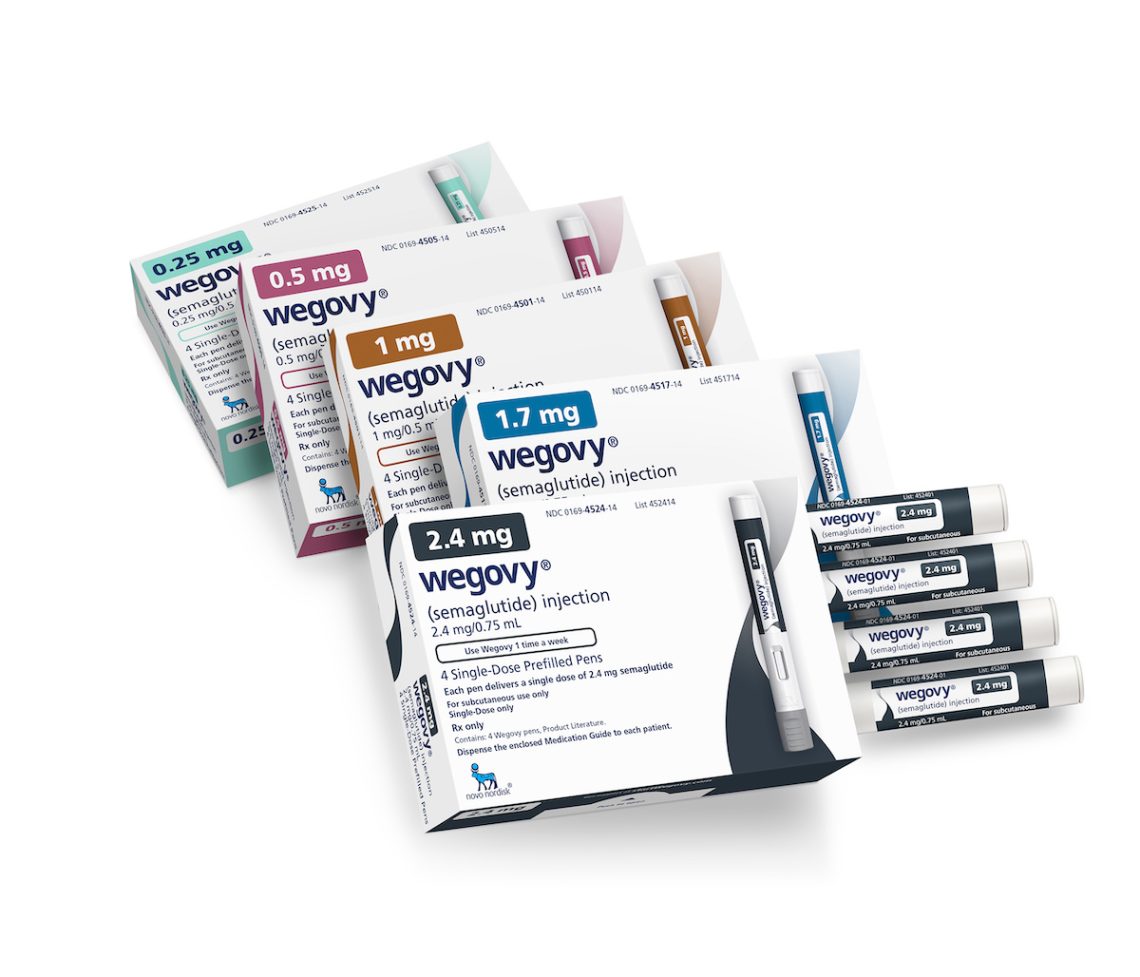
St. Louis Post-Dispatch reporter (and Midwest Health Journalism Program Fellow) Jim Doyle has put together a series of stories on KV Pharmaceuticals that read like a primer on the confounding economics of drug manufacture and FDA approval. In the stories, especially the first and last installments, Doyle presents the big picture and helps readers understand why the systems work they way they do.

The first story shows how FDA approval could end up sending the price of a prenatal drug skyrocketing 16-fold and earn piles of money for a local pharmaceutical company. The second involves a U.S. District judge condemning a former head of that same company for “greed, abuse of power, recklessness.” Finally, he ends his tour of pharmaceutical avarice with a stern warning about the potential longterm costs, both monetary and medical, that could result from the fast-track approval of the drug whose approval formed the basis of the first story. For lots more about KV Pharmaceuticals, be sure to check the “Related Reading” box on this page.

Further reading

If you’re looking for more on KV Pharmaceuticals and the Orphan Drug Act, check out Ed Silverman’s post on Pharmalot. There, he interviews a nonprofit advocate who helps explain how KV’s manipulations were possible, how it could happen again and how the act should be modified.

AHCJ leaders hold series of media access meetings with government officials

AHCJ representatives held a series of meetings in Washington, D.C., last week to press for government openness at the state and federal levels.

AHCJ President Charles Ornstein and board member Felice Freyer (chair of the sunshine-week1organization’s Right to Know Committee) met with representatives of the Health and Human Services Department, the Food and Drug Administration and the Centers for Medicare & Medicaid Services, as well as 12 newly appointed state health directors organized by the Association of State and Territorial Health Officials.

The federal officials professed a commitment to openness, within limits, and promise to look into specific requests to further that goal. The state health officials, who heard a panel presentation about working effectively with reporters, were receptive and eager to talk with AHCJ about building relationships at the state level.

Read more for details from each meeting …

Related

Freyer will moderate a panel on this topic, “Right to know: Getting information from government agencies,” at Health Journalism 2011. The panel features Peter Ashkenaz, director of communications, FDA Office of Regulatory Affairs; Lisa Chedekel, senior writer and co-founder, Connecticut Health I-Team; Lucy A. Dalglish, executive director, Reporters Committee for Freedom of the Press; and Lilian Peake, M.D., M.P.H., director, Thomas Jefferson Health District, Virginia Department of Health.

Series reveals gaps in communication of hospital inspection results

Mar. 14th, 2011 by Sarah Strasburg · 1 Comment
Filed under: Government, Hospitals, Hot Health Headline 

Jodie Jackson Jr. of the Columbia (Mo.) Daily Tribune took an in-depth look at patient safety at University Hospital, part of the University of Missouri Health Care system.

Jackson found that inspections, by CMS and the FDA, have repeatedly turned up systemic practices that compromised patient safety. At the same time, the Joint Commission awarded the hospital a full accreditation, raising questions about why the agencies don’t share information.

In a blog post, Jackson, a Midwest Health Journalism Program Fellow, says he has “examined some 700 pages of documents and have had national infection control leaders examine the reports that formed the basis for the series.”

MSNBC: FDA had concerns 2 years before alcohol wipe outbreak, didn’t act

JoNel Aleccia and the folks at MSNBC.com have dug in deep on news of the FDA’s Jan. 5 recall of tainted alcohol wipes, spurred on by the death of a Texas toddler and complaints from across the country. Aleccia’s findings seem to indicate that, more than a month after the recall, the case of Triad Groups’ trainted products and related failures of FDA oversight may run far deeper than the original notice implied.

Aleccia’s been helped in the follow-up investigation by unofficial access to FDA records, validated by outside sources, that indicate inspectors detected problems in 2009, and again in 2010, but didn’t act until this year’s recall.

Documents show that FDA officials expressed concerns following visits to the Triad plantfrom July 15 to July 17, 2009, and again from April 19 to May 18, 2010. Inspectors reported that the company could not validate the processes used to ensure quality or sterility not only of alcohol prep pads and wipes, but also other products used for intimate care.

The inspection documents, known as FDA Form 483s, were obtained by msnbc.com from a confidential source and confirmed by FDAzilla.com, an independent Web site that monitors the FDA. Copies of the documents were sent to the FDA for review; the agency did not deny their authenticity.

For a thorough roundup of all the points at which warnings surfaced, or at which the FDA could have intervened, check out Aleccia’s full report.

Speaking of FDAzilla.com, it might be a site worth checking out if you’re interested in the FDA’s activities. It’s free and says it has “made millions of pages of FDA data (MAUDE, devices, drugs, 483s listing, FDA employees) more usable and searchable.” The FAQ says most of its data is automatically updated nightly from files posted on FDA.gov.

AHCJ asks FDA to re-evaluate embargo policy

Feb. 14th, 2011 by Pia Christensen · 2 Comments
Filed under: Government, Health journalism, Public records 

The Association of Health Care Journalists has sent a letter to FDA officials asking them to re-examine a policy that prohibits reporters from sharing embargoed materials with sources before the embargo lifts for the purpose of obtaining outside comment and context. As AHCJ notes, this highly unusual policy severely limits the ability of reporters to give readers the full story of a federal agency.

From the letter:

The restriction imposed on the medical-device announcement rewrote a longstanding compact between reporters and various public and scientific organizations. It also hampered or delayed reporters’ ability to fully inform the public about what the FDA is doing with taxpayers’ money. The early reports on the medical device approval process were brief and uninformative as a result.

Read the complete letter.

We will be sure to update readers if AHCJ receives a response from the FDA.

Fauber: FDA to review data on jaw implants

The Milwaukee Journal Sentinel’s reporter John Fauber reports on the FDA’s order to review the long-term performance of certain joint implants. Fauber’s story on the agency’s failure to adequately test and regulate these products came out in late November.

lower-jaw

Photo by Jacob Enos via Flickr

The implants in question treat certain ailments affecting the joint that connects jaw and head, a disorder Fauber says “affects more than 10 million Americans, including a small number who undergo radical surgery to implant an artificial jaw joint.” And those people, Fauber reported and the FDA now acknowledges, have had a rough time in the long term.

Among the medical device reports it has reviewed, 52% of the devices that had to be removed were taken out less than three years after they were implanted, the agency said in an e-mail to the Journal Sentinel.
Device problems included the need for removal or replacement, loosening, difficulty removing, noise, fracture and breaking, the FDA said.
Patient problems included pain, surgical procedure or repeat surgical procedure, additional therapy and nonsurgical treatment or treatment with medication, infection, swelling, hospitalization and headache, it said.

At this point, the FDA isn’t talking about taking the devices off the market, but it is reviewing the existing data and beefing up its repeated requests that device makers supply long-term market data about the implants they’ve sold.

Beginning in 1999, the FDA approved four such devices made by three companies. At the time of approval it ordered the firms to collect the market data it now is reordering.
That data was inadequate, the agency said, noting that it did not show why or how soon the devices were being replaced. In addition, the companies had lost contact with many of the patients who had received the devices.
Without knowing that information, the agency cannot determine the true safety and effectiveness of the products or whether any of them should be removed from the market.

Diana Zuckerman, president of the National Research Center for Women & Families, credited Fauber’s reports in the Journal Sentinel and MedPage Today, a medical news website that partners with the newspaper, with prompting the FDA’s action.

Food safety law boosts tracking technology sector

Feb. 7th, 2011 by Andrew Van Dam · Leave a Comment
Filed under: Hot Health Headline, Public health 

In The Washington Post, reporter Lyndsey Layton digs into the industry spawned by a requirement in last year’s food safety law that producers and processors be able to track food at every step of its journey from farm to supermarket. It applies to everything but meat, poultry and egg products.

Under the law, each business will need to know where the food came from and where it’s going, creating a chain of provenance that the FDA can use to more rapidly trace outbreaks of food-borne illness.

As the September deadline for the launch of the FDA’s first pilot projects looms, Layton writes, no single tracking technology yet predominates. After the pilots, the FDA will report to congress and issue specific rules by 2013.

According to Layton, some food industry segments (not farms or restaurants) have been required to track this data since 2005, “but according to a 2009 investigation by the Department of Health and Human Services inspector general, most food facilities surveyed did not meet those requirements and 25 percent didn’t even know about the law.”

Layton’s story includes a profile of HarvestMark, a company whose barcode sticker is already catching on in some places (Kroger foods has adopted it for store-brand produce, for example). HarvestMark not only allows end consumers to scan their food with a smartphone and figure out where it came from, it also allows them to deliver their feedback to the farmer who produced it.

Barlett & Steele uncover chaos, peril of global drug industry

In Vanity Fair, Donald Barlett and James Steele have devoted more than 6,000 words to chronicling the gaping holes in the global pharmaceutical industry, particularly as pertains to the globalization of clinical trials. Even if you’re familiar with many of the specific incidents covered, their cumulative effect, driven home with forceful and authoritative prose, is brutal. Each paragraph holds another tale of trials gone wrong, children killed and bad results that somehow never came to the attention of American regulators.

globePhoto by amyvdh via Flickr

It used to be that clinical trials were done mostly by academic researchers in universities and teaching hospitals, a system that, however imperfect, generally entailed certain minimum standards. The free market has changed all that. Today it is mainly independent contractors who recruit potential patients both in the U.S. and—increasingly—overseas.

They devise the rules for the clinical trials, conduct the trials themselves, prepare reports on the results, ghostwrite technical articles for medical journals, and create promotional campaigns. The people doing the work on the front lines are not independent scientists. They are wage-earning technicians who are paid to gather a certain number of human beings; sometimes sequester and feed them; administer certain chemical inputs; and collect samples of urine and blood at regular intervals. The work looks like agribusiness, not research.

After neatly setting up each pin with demonstrations of how international the pharmaceutical industry has become, then proceed to knock them all down with examples of industry impunity and FDA weakness.

The F.D.A., the federal agency charged with oversight of the food and drugs that Americans consume, is rife with conflicts of interest. Doctors who insist the drug you take is perfectly safe may be collecting hundreds of thousands of dollars from the company selling the drug. … Quite often, the F.D.A. never bothers to check for interlocking financial interests. In one study, the agency failed to document the financial interests of applicants in 31 percent of applications for new-drug approval. Even when the agency or the company knew of a potential conflict of interest, neither acted to guard against bias in the test results.

Related

WikiLeaks cables: Pfizer used dirty tricks to avoid clinical trial payout in Nigeria

Age cited as reason for ‘purge’ in FDA press office

Dec. 7th, 2010 by Pia Christensen · 1 Comment
Filed under: Government, Health journalism 

Jim Dickinson of Dickinson’s FDA WebView (paid subscription) writes that some recently ousted FDA public affairs officers claim their terminations appear related to their age. The target of their ire is Beth Martino, appointed FDA associate commissioner for external affairs in March.

Beth Martino

Beth Martino

According to Dickinson, Martino “has conducted an unprecedented purge of senior specialists, all aged over 50, in her office and in the Press Office.” Martino was an aide to Kathleen Sebelius when the HHS secretary was governor of Kansas. Dickinson says his sources allege the removals were made to make room for younger people closer to Martino’s own age, which he cited as 31. “She’s uncomfortable with people who know more than she does,” he quoted some of them as saying.

Ira Allen, who was hired in November 2009 as an FDA press officer, writes about his recent experience; he was told to choose between termination and resignation from the job.

The FDA has been under fire on several fronts over the past several years, including a report that concluded the agency “suffers from serious scientific deficiencies and is not positioned to meet current or emerging regulatory responsibilities,” allegations that the agency ignores whistleblowers and requirements that journalists and FDA employees notify or obtain permission from an agency official to conduct an interview.

Covering Health has sent an e-mail requesting comment to Martino and will share any response.

(H/T to GoozNews)

13 years of warnings, FDA inaction behind seizure

U.S. marshals seized a number of drug products from a small New Jersey pharmaceutical manufacturer called Tri-Med laboratories earlier this month. It doesn’t sound like much, and there hasn’t really been any coverage beyond a press release, but Pharmalot’s Ed Silverman has the whole story, one that chronicles 13 years of failed inspections and FDA inaction.

You’d do best to just read Silverman’s post, “Thirteen Years Later, The Feds Seize Some Meds,” but here’s a summary:

In 1997, the FDA inspected and warned TriMed. Seven years later, they did it again. In 2009, it was time for yet another encore. Finally, this month, they took action and seized a few drugs, stating in the release that, as Silverman writes, “Tri-Med has been making and distributing unapproved, misbranded and adulterated drugs with significant manufacturing violations since 1997.” And it only took them several failed inspections (and a recall along the way) to realize it.

« Previous PageNext Page »