Food makes up a quarter of Calif. household waste
California Watch wraps up its three-part series on hunger in that state with a look at how much food is wasted and why.
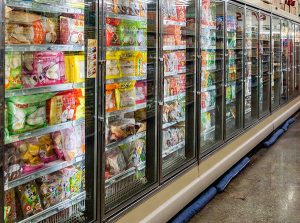
Reporters found that tons of food goes to waste when restaurants dump it rather than donate it to distribution centers, when farmers plow over fruits and and vegetables in the fields and when grocery stores throw away food.
Discarded food represents a quarter of all waste tossed away by California households.
The project, in collaboration with the Annenberg School for Communication and Journalism at USC, includes a look at the five largest food retailers and whether they donate to food banks and other distribution centers.
Collaboration brings Calif. hunger into focus
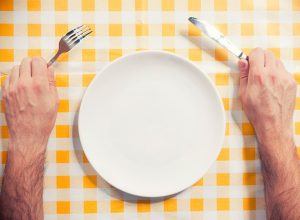
Food insecurity is on the rise throughout the country, with the U.S. Department of Agriculture estimating that one of every seven American households struggled to put food on the table last year.
A 20-part, multimedia series from the University of Southern California Annenberg School for Communication and Journalism, in collaboration with California Watch, looks at the problem in that state, finding that the numbers of Californians who are struggling to have enough food is rising at an unprecedented rate.
The stories look at food deserts, how a lack of food affects children’s learning ability, struggling food banks, what it takes to eat on a “food stamp budget,” how food is wasted in restaurants, the difficulties of distributing food to those who need it and much more.
The project was produced over several months by 13 graduate students with contributions from members of the California Watch staff, Annenberg professors and staff, and staff from the Los Angeles Times and KQED’s The California Report.
CDC assembles rogues gallery of food bugs
The Centers for Disease Control and Prevention can use as much Latin as it wants to put a fancy face on the bugs wreaking havoc on our food supply, but Campylobacter, Bacillus cereus and Listeria monocytogenes are nothing but nasty in our book.
Just take a look at the CDC’s first roundup of foodborne disease outbreaks. Nearly 28,000 people were sickened in 1,270 outbreaks in 2006. Eleven people died. The most common troublemakers were norovirus, which causes the so-called stomach flu, and Salmonella, the culprit in the recent peanut butter contamination that sickened hundreds.
The most cases (1,355) of food poisoning came from contaminated poultry. But don’t smirk, vegetarians. Leafy vegetables were the next biggest category (1,081 cases), followed by fruits and nuts (1,021 cases).
In fact, Caroline Smith DeWaal, food safety guru at the Center for Science in the Public Interest, pointed out to The New York Times, that if CDC had combined all produce categories, outbreaks associated with vegetables would have dwarfed those from feathered creatures. Yuck!
Bad Bug Bonus: We kid you not. The FDA has an online resource called The Bad Bug Book for those of you hungry for the lowdown on these microscopic pests.
FDA chides Cheerios maker for drug claims
If you’re concerned about your health, avoid foods that make health claims. That’s the tart, counterintuitive advice from the thoughtful journalist and food thinker Michael Pollan.
How come? A health claim on a product, he says,”is a good indication that it’s not really food, and food is what you want to eat.” The problem for shoppers is that makers of processed food barrage consumers with promises of health tied to eating this product or that.
Enter Cheerios, a staple of breakfasts for generations. In recent years, General Mills, the cereal’s maker, has taken to marketing the toasted oat cereal as if it were the simple solution for managing high cholesterol and heart disease. The Cheerios box chirps: “Did you know that in just 6 weeks Cheerios can reduce bad cholesterol by an average of 4 percent?”
Well, the marketing claims for the little O’s sounded so much like a direct-to-consumer drug ad that FDA just slapped the company with a warning letter that said drop the hype or prove the cereal affects disease, just the way drugmakers have to.
General Mills stands behind the Cheerios box, saying in a statement, “The science is not in question.”
Smuggled honey may contain dangerous antibiotics
Filed under: Hot Health Headline, Pharmaceuticals
Andrew Schneider of the Seattle Post-Intelligencer spent five months investigating “honey laundering,” the practice of smuggling Chinese honey into the United States via intermediary countries like Vietnam and Russia to avoid heavy tariffs. The laundered honey may contain the toxic antibiotic chloramphenicol and other antibiotics or even be adulterated with corn or cane sugar.
Schneider also reveals that labels like “Organic,” “Grade-A” and “100% Pure” are neither standardized nor enforced, and don’t always provide meaningful guidance. Honey grown in the United States is seldom truly organic, even if advertised as such, Schneider says. This is because beekeepers can only control the hive and immediate environs, while bees forage in a much larger area where they may encounter pesticides and toxins.