Project follows the race to make bagged salad safer
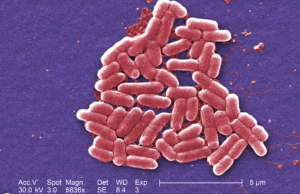
The latest investigation by California HealthCare Foundation Center for Health Reporting’s Deborah Schoch will make you think twice before ripping into a sack of spring mix, but her work about the myriad food safety challenges posed by bagged salads examines the industry’s struggle to develop technology powerful enough to overcome the existential threat posed by E. coli and friends.
The industry has made great strides since a 2006 outbreak linked to tainted spinach, she writes, but “It’s impossible to stop all pathogens from landing on lettuce and spinach leaves.” And once they’re on the leaves, it seems as if their spread is almost inevitable. They hide in gooey biofilms and resist powerful washes.
Thousands upon thousands of salad leaves are taken to a central plant, washed together, bagged and shipped. Even if only a few leaves are tainted, harmful pathogens can spread in the wash water — the modern salad version of the old adage that one bad apple spoils the whole barrel.
“I would think of it as swimming in a swimming pool in Las Vegas with a thousand people I didn’t know,” said William Marler, a prominent Seattle-based food safety attorney.
Plenty of public and industry money has been aimed at the problem, Schoch writes. “The Center for Produce Safety at UC Davis, founded in response to the spinach outbreak as an industry-public partnership, has pumped more than $9 million into 54 research projects at 18 universities.”
Even the best research can’t reduce the risk of contaminated greens by 100%, scientists said. At Earthbound, Daniels says the ultimate goal is to achieve what scientists call a “5 log reduction,” the equivalent of pasteurizing milk. In short, if an unwashed lettuce contained 100,000 pathogens, the perfect wash system would knock off five “0s” and reduce the pathogen count to 1.
An added bonus? Schoch’s column on whether she (and the experts she talked to) feel like it’s important, or even salutary, to wash their bagged greens.
New stats: 1 in 6 get foodborne illnesses each year
More precise estimates than previously available find that one in six Americans suffer foodborne illnesses annually and that 3,000 die of such diseases.
The CDC says the newly released reports are the most accurate to date. They are “the first comprehensive estimates since 1999 and are CDC’s first to estimate illnesses caused solely by foods eaten in the United States.” According to the CDC’s release, these estimates are lower than those in the 1999 report, largely because of “improvements in the quality and quantity of the data used and new methods used to estimate foodborne-disease. ”
The articles are in the January 2011 issue of Emerging Infectious Diseases:
• Foodborne Illness Acquired in the United States—Major Pathogens (PDF)
• Foodborne Illness Acquired in the United States—Unspecified Agents (PDF)
Other findings:
- Salmonella was the leading cause of estimated hospitalizations and deaths
- About 90 percent of estimated illnesses, hospitalizations, and deaths were due to seven pathogens: Salmonella, norovirus, Campylobacter, Toxoplasma, E.coli O157, Listeria and Clostridium perfringens.
- Nearly 60 percent of estimated illnesses, but a much smaller proportion of severe illness, was caused by norovirus.
The reports were the subject of a telebriefing this morning; the transcript should be available later.
Additional resources
- Fatal Food: A study of illness outbreaks
- Lifting the shroud: Using multiple-cause-of-death data
- FDA Reform: The Time Has Come (Nancy Donley presentation)
- Why Is It So Difficult to Prevent Foodborne Illnesses? (Michael Doyle presentation)
- Reporting on the intersection of health and the environment
- Center for Infectious Disease Research & Policy
- Outbreak Alert! Database
Investigating, localizing salmonella outbreak
Filed under: Health data, Health journalism, Hot Health Headline
As some of you may have noticed, there’s an egg recall going on. It all began when the CDC’s PulseNet monitoring program noticed a fourfold jump in the number of salmonella cases being reported, which spurred investigations around the country. This jump is evident in the graph below. Don’t be fooled by the dropoff at the end, it has more to do with the reporting process than with an actual decrease in the number of salmonella cases (which clearly isn’t happening).
Health officials then traced it all back to a man outlets love to describe as a sort of rogue Iowa egg magnate and his Wright Country Eggs (satellite view?).
As we stand now, the tainted eggs could have been distributed through any number of channels, but constitute a tiny fraction of the national egg supply.
For reporters digging into this national recall story, or looking to localize it to their coverage area, AHCJ has a strong archive of foodborne illness resources.
Start with a classic, the AHCJ article “Fatal Food: A study of illness outbreaks ,” in which Thomas Hargrove details SHNS’ massive investigation into the nation’s food safety monitoring system. Not only is Hargrove’s how-to instructive, his actual findings are useful examinations of state and local food safety systems around the country.
For your own investigation, look at Mining NLM databases: PubMed, Medline and more and the rich set of resources in the sidebar to Hargrove’s story.
If you’re looking for solid numbers and the most up-to-date national context, see Covering Health’s recent post on the CDC’s lates foodborne illness data, as well as our examination of 2009 foodborne illness rates.
Other relevant Covering Health posts include:
Schneider: FDA lacks resources to keep food safe
CDC assembles rogues gallery of food bugs
Private food auditors didn’t stop outbreaks
Lax oversight, complex supply chains aid outbreaks
CDC releases 2007 foodborne illness numbers
In the latest Morbidity and Mortality Weekly Report, the CDC has released the 2007 numbers on foodborne illness in the United States. Norovirus (39 percent) was the most common culprit, followed by Salmonella (27 percent). In terms of illnesses caused, poultry led the way, followed by beef and leafy greens. In the majority of the 1,097 reported outbreaks of foodborne illness, no agent was identified – a fact the CDC attributes to the small scale of many of those outbreaks. Here’s a breakdown of what investigators managed to find:

Those looking to dig a little bit deeper into the numbers should consult this four-page PDF, which breaks it all down by contaminant, food, number of outbreaks and number of illnesses caused.
Resources for covering food safety
Tip Sheets
- Lifting the shroud: Using multiple-cause-of-death data
- FDA Reform: The Time Has Come (Nancy Donley presentation)
- Why Is It So Difficult to Prevent Foodborne Illnesses? (Michael Doyle presentation)
- Reporting on the intersection of health and the environment
- Fatal Food: A study of illness outbreaks
Websites
- Center for Infectious Disease Research & Policy
- Outbreak Alert! Database
- Center for Food Safety and Security Systems
- FoodRisk.org
Related
- Recent stories and studies on foodborne illnesses
- Video study finds risky food-safety behavior more common than thought
- Airlines delay testing of onboard water
- A selection of stories about a 2008 salmonella outbreak
- Private companies, not the FDA, increasingly perform food safety inspections
Stadium concessions rack up health violations
ESPN’s Paula Lavigne examined 2009 health department inspections from the 107 stadiums that host MLB, NBA, NHL and NFL games in the United States and Canada. The resulting report may keep you from indulging in your favorite ballpark food.
At 30 of the venues (28 percent), more than half of the concession stands or restaurants had been cited for at least one “critical” or “major” health violation. Such violations pose a risk for foodborne illnesses that can make someone sick, or, in extreme cases, become fatal.
Photo by Katie Spence via Flickr
An interactive map lets you see the venues based on the number of violations there; rolling your mouse over the location tells you the percentage of vendors found in violation and gives some information about the kinds of violations that were found.
The same information, compiled by Lavigne and Producer Lindsay Rovegno, is also available in a text format broken down by state.
Many of the excerpts cite instances in which food was not being kept at appropriate temperatures and a few are related to pests, but there are a few more unusual examples:
- At the Jobing.com Arena, where the Phoenix Coyotes play, “inspectors spotted an employee scooping ice with his bare hands instead of using scoops.”
- At Dodger Stadium, there was mold growing inside an ice machine.
- At Invesco Field at Mile High Stadium and at the Pepsi Center in Denver, inspectors found flies in bottles of liquor.
- At Ford Field, home of the Detroit Lions, inspectors found an employee’s half-eaten hamburger in a warming unit.
Another interesting note: Food inspectors aren’t always visiting unannounced nor are they always visiting when concessions are open. In Chicago, inspections are done when the stadiums are empty and no workers are preparing or serving food. At Cincinnati’s Paul Brown Stadium, inspectors must “submit a list of employees’ names and make an appointment a few days in advance.”
Reporters who have a major sports venue in their community might want to see how it stacks up against others, what kinds of violations have been found and do some further reporting.
Resources for covering food safety
Tip Sheets
- Lifting the shroud: Using multiple-cause-of-death data
- FDA Reform: The Time Has Come (Nancy Donley presentation)
- Why Is It So Difficult to Prevent Foodborne Illnesses? (Michael Doyle presentation)
- Reporting on the intersection of health and the environment
- Fatal Food: A study of illness outbreaks
Websites
- Center for Infectious Disease Research & Policy
- Outbreak Alert! Database
- Center for Food Safety and Security Systems
- FoodRisk.org
Related
- Recent stories and studies on foodborne illnesses
- Video study finds risky food-safety behavior more common than thought
- Airlines delay testing of onboard water
- A selection of stories about a 2008 salmonella outbreak
- Private companies, not the FDA, increasingly perform food safety inspections
Popular salad option a possible culprit in outbreak
Bagged romaine lettuce, a time-saving option for many shoppers, is suspected in the latest E. coli outbreak that has caused illness in at least 23 people, reports Lyndsey Layton of The Washington Post.
Layton addresses the question of whether pre-cut and bagged produce is more dangerous than whole greens and why they “represent a disproportionate number of recalls.”
An FDA official says it is easier to trace bagged produce than it is whole produce, which might account for the difference. But the article also reveals that some practices involved in the processing of pre-cut and bagged produce could be more likely to contaminate lettuce:
Most processors of fresh-cut produce remove the outer leaves and core the heads of lettuce in the field, where cutting utensils can come into contact with soil and spread contamination from the dirt to the crop, [microbiologist Michael] Doyle said. In farming areas, especially in a region near cattle farms, it is not unusual to find E. coli in the soil.
(Hat tip to Susannah-Fox.
From Covering Health
• Little recent progress on foodborne illnesses
• Schneider: FDA lacks resources to keep food safe
• High cost of foodborne illness broken down by state
Tip Sheets
• Lifting the shroud: Using multiple-cause-of-death data
• FDA Reform: The Time Has Come (Nancy Donley presentation)
• Why Is It So Difficult to Prevent Foodborne Illnesses? (Michael Doyle)
Articles
• Fatal Food: A study of illness outbreaks
• A selection of stories about salmonella
Web sites
• Center for Infectious Disease Research & Policy
• Outbreak Alert! Database
• Make our Food Safe Coalition
Little recent progress on foodborne illnesses
The CDC’s Morbidity and Mortality Weekly Report contains some early numbers on foodborne illness rates in 2009. The data, NPR health blogger Scott Hensley writes, aren’t promising, and it looks like most infection rates haven’t really improved since 2004. A transcript and audio of the April 15 media briefing is available.
The report comes with data for the 10 states monitored by the CDC’s Foodborne Diseases Active Surveillance Network; they’re also broken down by age. To demonstrate just how variable the infection rate is, we’ve pulled numbers for two of the most common foodborne illnesses, salmonella and campylobacter.

AHCJ resources
Tip Sheets
- Lifting the shroud: Using multiple-cause-of-death data (03/17/07)
- Melamine: A primer on the contamination of food (09/25/08)
Article
- Fatal Food: A study of illness outbreaks (02/19/07)
Web sites
AHCJ Award winners
- A Body’s Burden: Our Chemical Legacy (03/01/06)
- Border Health Series (03/01/06)
Health News
- Loophole allows E. coli-tainted meat to be sold (11/15/07)
- Meat, dairy products transported in unsafe temperatures, overlooked by inspectors (11/15/07)
- Airlines delay testing of onboard water (02/20/08)
- Salmonella outbreak: A selection of recent stories (06/24/08)
- N.Y. school districts not meeting federal guidelines on cafeteria inspections (09/26/08)
- Private companies, not the FDA, increasingly perform food safety inspections (09/26/08)
Schneider: FDA lacks resources to keep food safe
Writing for AOL News (and his blog, Cold Truth) Andrew Schneider writes that the hydrolyzed vegetable protein recall reminds us that, no matter what was said in the wake of last year’s peanut butter recall, the FDA still doesn’t have the ability to pay close attention to source foods that are destined to end up in hundreds of different products.
In this most recent case, it was a test by a supplier, not an FDA representative, that caught the contaminated additive.
The FDA conducted an investigation at the company’s Las Vegas facility after a food producer that bought the flavoring from Basic Food Flavors notified federal agents that it had found Salmonella Tennessee in the vegetable protein.
In answer to the criticism about its actions during the peanut episode, FDA officials said they have no way knowing to whom suppliers sell their food products, what those products are and where they’re sold. The FDA says it doesn’t have the personnel or the needed regulations to handle the millions of shipments made within the food industry every week.
But what was seen with the dangerous peanuts, and what we’re beginning to see with the flavoring agent, is that producers of end products — those items that actually reach store and warehouse shelves — are declaring their own voluntary recalls.
High cost of foodborne illness broken down by state
The Make Our Food Safe coalition’s latest study provides a state-by-state breakdown of the cost of foodborne illness, both in absolute and per-capita terms. The report estimates that foodborne illnesses cost about $152 billion each year in America, with the cost being spread fairly evenly across the country.
Hawaii ($553) and Mississippi ($543) suffer the highest cost per capita, while Nevada ($450) and Utah ($448) bear the lightest per-capita load.
The report is the work of former FDA economist Robert L. Scharff, now a professor at Ohio State (bio). You can read the entire 27-page report in PDF form, scan the one-page summary or play with the accompanying interactive map and draw your own conclusions. You can also listen to an MP3 of the related media telebriefing.
FDA’s database of food production sites is lacking
Filed under: Health data, Public health, Public records, Studies
A new HHS inspector general’s report sheds light on problems in the FDA’s Food Facility Registy (PDF), finding that almost half of the facilities in its analysis did not provide accurate information for the registry.
In addition, 7 percent of the facilities either failed to register or failed to cancel their registration with the FDA. The agency uses information from the registry to help track foodborne illnesses, so a lack of correct information could hamper the public health system’s ability to trace an outbreak and remove contaminated products from the food supply.
The registry, officially known as the FDA Unified Registration and Listing System, was instituted in the Public Health Security and Bioterrorism Preparedness and Response Act of 2002 and requires food facilities that manufacture, process, pack, or hold food for consumption to provide reliable information about food facilities.
The report makes a number of recommendations, including “seeking statutory authority to require facilities to reregister on a routine basis.” For its part, the FDA “noted that the study confirms problems that the agency has encountered as well as the need for additional statutory authority.”
It might be interesting for reporters to see what local businesses should be listed in the database but are not or which of them have incorrect or outdated information in the registry. Here is some technical information about the software used for the database.
Related
Lifting the shroud: Using multiple-cause-of-death data
Fatal Food: A study of illness outbreaks