Long-term care insurance premiums jump

As the population ages and costs continue rising, paying for long-term care is a big issue for middle class families. Some say long-term care insurance can be a solution, but there are significant issues associated with these products.

In the Minneapolis Star Tribune, Jackie Crosby reports that, “Trapped between fast-rising costs for care and weak returns on their investments, insurers have been raising long-term care premiums by double-digit percentages in Minnesota and nationwide.

Long-term care coverage has been around since the 1970s, and gained popularity in the ’90s, when the government started offering tax incentives. According to Crosby, it’s getting more expensive now because of what one expert called “the perfect storm.”

Insurers set their rates on assumptions that some people would let their policies lapse. But people held on to policies longer than expected. And their claims are bigger because they’re living longer.

Low interest rates have had perhaps the biggest impact, because insurers planned to cover claims based on reserves they invested. When those investments fell short of expectations, insurers turned to policyholders to make up the difference.

State and federal officials see long-term care insurance as key to limiting the strain placed upon government health programs by America’s aging popular, Crosby writes, and they have thus “spent considerable energy trying to encourage the middle class to plan ahead with long-term care insurance, without much luck.”

The Obama administration last month scrapped the CLASS Act, a long-term care insurance program and major piece of federal health care reform. Minnesota launched a program in 2008 that allows median-income households that buy long-term care policies to shelter some assets if they apply for Medicaid. Still, only about 11 percent of people in the state have the insurance.

Even though the Medicaid program was designed as a safety net for people in poverty, middle-class seniors routinely deplete their assets and turn to the state.

In Minnesota, Medicaid pays about 40 percent of elderly long-term care. Costs could rise fivefold by 2035 to an “unsustainable burden” of $5 billion, according to a report last year from the Citizens League.

Reporters can explore states’ options for creating exchanges

Jul. 29th, 2011 by Joanne Kenen · 1 Comment
Filed under: Government, Health care reform, Health policy 

Give me an f…

… for Flexibility, that is. Flexibility is the buzzword these days, as federal health officials coax states along the road to exchange creation. (See some updated resources at the end of this post.)

Steve Larson, director of the Center for Consumer Information and Insurance Oversight at CMS, is the point person on a lot of the state regulatory issues under health reform. He spoke at a Health Affairs-sponsored breakfast with reporters in Washington, D.C., recently. He was sort of a blend of federal regulator and state cheerleader.

Exchanges under the health law must be up and running on Jan. 1, 2014. States must be certified as “on track” in January 2013. In states that don’t have an exchange, the federal government will step in – “federally-facilitated” is the term of art among administration officials, not “federally-run.” The Department of Health and Human Services hasn’t said exactly what that federal fallback will look like. Meanwhile, a lot of states are still either locked in a political argument over whether to set up an exchange and how to design and regulate it, or have a long way to go to complete the complex tasks required to set one up.

Larson noted that states are making progress. But federal health officials recently made clear (in newly released proposed regulations) that they realize that a lot of states may need a bit of extra help. That’s why “flexibility” has become such a drumbeat. Instead of “yes, we have an exchange ready to go” or “no, we aren’t ready,” states can pursue a middle path - they can be ready in some ways, but let the federal government step in and handle other components.

An example Larson gave: The state may open the exchange, create offices and a website for consumers, the “retail” side of it, but let the federal government step in to determine whether people qualify for Medicaid, or what kind of subsidies they would get in the exchange.

For state reporters, this hybrid raises another dimension to the exchanges. States can assess what they can, most realistically and competently, achieve, and what may take another year or two. It may help smooth over some of the politics, as states might be able to put off some of the contentious aspects of exchange design, such as whether to be an “active purchaser” (setting more criteria for which insurers can operate in the exchange) or to have an open model. Or whether to start open and gradually move to “active purchaser.”

Another open question is what “essential benefits” health plans will have to offer in the exchange. There is some speculation that states will be able to decide, or at least have some leeway, in keeping with the “state flexibility” orientation. Larsen didn’t say how that would play out, but it’s another area that state reporters should pay attention to.

Finally, a lot of states, Larson noted, have beefed up their ability to review proposed insurance rate increases. How much power they have to approve or reject increases varies. But even publicity about high increases can create a public relations/political climate in which insurers may roll back proposed increases. That’s definitely worth watching.

A few extra resources to keep you up to date if you haven’t seen them:

  • The HHS release on the exchanges, including the “hybrid.”
  • New Kaiser Family Foundation brief on state efforts.
  • Here are Commonwealth Fund state exchange resources. Over on the right, here’s the Heritage Foundation’s perspective.

NEJM article: Media partially to blame for slow adoption of cost-effective health care

May. 20th, 2011 by Pia Christensen · 5 Comments
Filed under: Health care reform, Health journalism 

In a new “Perspectives” piece in the New England Journal of Medicine, Victor R. Fuchs, Ph.D., and Arnold Milstein, M.D., M.P.H., examine why cost-effective health care has been slow to catch on in the United States.

They point to a number of factors, including insurance companies’ desire to protect profits, large employers that don’t want to alienate employees, legislators who collect campaign contributions from the health industry, hospital administrators protecting their revenue, doctors who are generally resistant to change, manufacturers that fear losing market share and more.

The authors also point blame at the media, saying it doesn’t adequately explain who really pays for health care:

Great harm is done when employment-based insurance is discussed as if it were a gift from “generous” employers rather than an alternative to wage increases.

They also mention a topic that is surely familiar to Covering Health readers: relative risk vs. absolute benefit.

The media also mislead the public by emphasizing the relative benefit of clinical interventions (“reducing risk of death by one third”) when the absolute benefit (“reducing risk from 0.03 to 0.02”) is usually more relevant.

“Misleading headlines, designed to attract larger audiences,” also get a share of the blame.

What do you think? Does media coverage have an effect on how cost-effective care is accepted? If so, do you have suggestions on what reporters could do differently?

Citizen journalists assist with health insurance story

Jul. 9th, 2010 by Pia Christensen · Leave a Comment
Filed under: Health journalism 

Journalists should take advantage of the wisdom of their readers, according to a post on Cover Business Better, the blog of the Donald W. Reynolds National Center for Business Journalism.

Bernie Kohn details how Danielle Ivory of the Huffington Post Investigative Fund used citizen journalism to research a story about how many health insurance claims are denied and why. Her research, including “a blizzard of FOIA requests,” had yielded little, so she posted an item online asking for leads on documents or cases of unfair denials.

As Kohn reports, the effort resulted in more than 600 e-mails to Ivory and helped her track down a case that had become notorious among Kaiser Permanente’s claims department. She used that information and her new contacts to track down the story.

New data on insurance coverage released

Jun. 16th, 2010 by Andrew Van Dam · Leave a Comment
Filed under: Government, Health data 

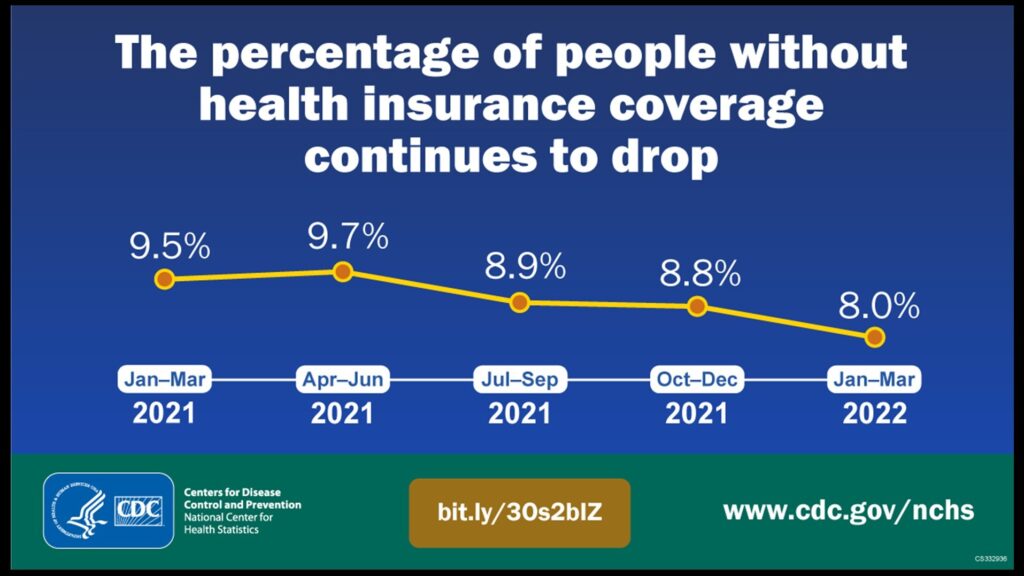
The first full-year 2009 numbers about health insurance coverage from the NCHS’ National Health Interview Survey have been released. The notable numbers:

  • 58.5 million Americans were insured for at least part of the previous year
  • 46.3 million were without insurance at the time they were interviewed
  • 32.6 million had been uninsured for more than a year

The numbers are sliced and diced a number of ways. I’ve included a visualization of one of the livelier categories: The number of people getting their health coverage from public or private sources.

nchs

HHS: $3,700 out-of-pocket for employer coverage

Jun. 23rd, 2009 by Andrew Van Dam · Leave a Comment
Filed under: Government, Hot Health Headline, Studies 

Health and Human Services Secretary Kathleen Sebelius announced the results of a study which found that, on average, Americans pay more than $3,700 per year for employer health coverage.

employercoverage

Photo by kfisto via Flickr

Sebelius set her agency’s reform-supporting agenda straight from the start, titling the report: “Hidden Costs of Health Care: Why Americans are Paying More but Getting Less.”

A few highlights:

  • Out-of-pocket expenses for employer-based coverage rose 30 percent from 2001 to 2006.
  • At $12,680 a year, premiums for such coverage have doubled from 2000 to 2008.
  • “In 2004, only one in five people with health insurance through an employer had a co-payment of more than $25, but by 2008 the number jumped to one in three.”