MMWR: Mass. reform narrowed insurance gap
Filed under: Health care reform, Health data, Studies
Studying data from the Massachusetts Behavioral Risk Factor Surveillance System has led researchers to conclude that health care legislation in that state has narrowed the gap in insurance coverage for underserved populations. The data did show that “some groups continue to experience lower rates of annual checkup and less access to a personal care provider.”
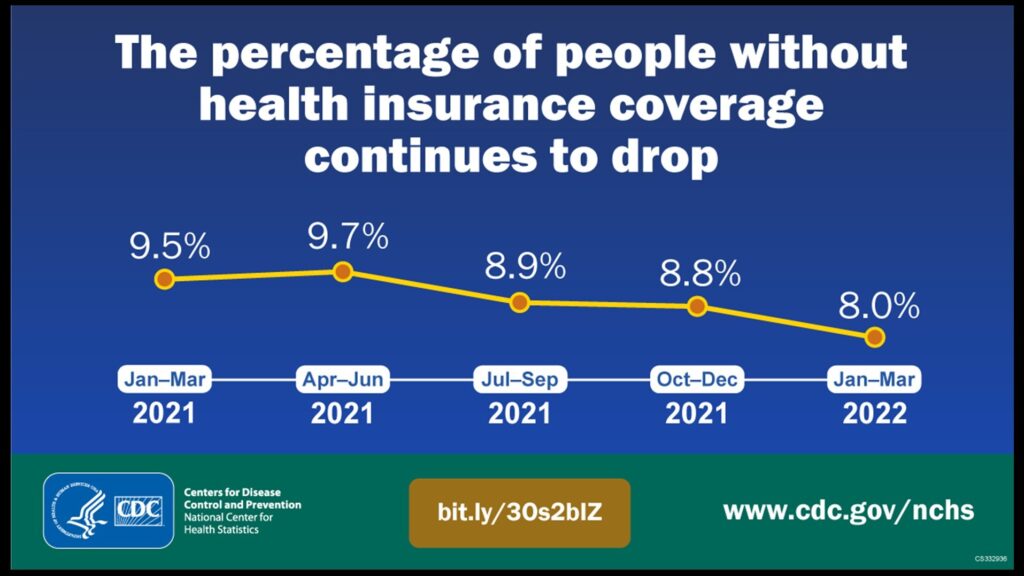
The percentage of respondents who reported having health insurance rose 5.5%, from 91.3% in the pre-law period to 96.3% in the post-law period.
The report, “Short-Term Effects of Health-Care Coverage Legislation — Massachusetts, 2008″ is in the March 12 issue of the CDC’s Morbidity and Mortality Weekly Report.
Are insurers to blame for rising costs?
The San Francisco Chronicle’s Carolyn Lochhead and Victoria Colliver use the recent furor over insurer Anthem’s rate hikes to explore just how much of the blame for rising health care costs should be shouldered by insurers. The reporters find that, in the end, insurers are just another one of the cartels (others include device makers and providers) and operate inside the opaque world of medical pricing and snag hefty cuts for themselves. Lochead and Colliver put it thus:
While the Anthem case has raised a political storm, the underlying surge in costs gets far less scrutiny. But each sector of the health industry points fingers at the other for driving up prices, and all are raking in money.
Insurers blame hospitals and doctors, doctors blame insurers, and hospitals blame doctors and medical devicemakers in what academics call an inscrutable medical-industrial complex that rivals anything the defense industry ever invented. All these groups are combining into what many experts describe as cartels.
The reporters write that, despite their best efforts, they weren’t able to get many folks on the record. When they did find someone who was willing to talk, it was often a source we’ve seen before in other cost stories. It’s a tough theme to get quotes on, as nobody wants to burn bridges with their professional suppliers and everybody’s got some sort of skin in the game. They did, however, manage to find a local source who offered an original and illuminating anecdote:
Christina Bernstein, a medical-device engineer and independent sales representative based in San Francisco, sells disposable surgical tools made mostly out of plastic that she estimates are manufactured for about $40 each. These are marked up and sold to hospitals for as much as $350, she said, for a single use in a surgery on a patient.
“But if you were to get a detailed bill of what the hospital was charging the insurance company for the insured patient, those things get marked up to something like $1,200,” Bernstein said. “It’s ridiculous. There’s no open competition.”
(Hat tip to AHCJ Immediate Past President Trudy Lieberman, who wrote a column on CJR.org praising the Chronicle’s story.)
Open government directive bears fruit, databases
Filed under: Government, Health data, Hospitals, Hot Health Headline, Public records, Tools
In December, 2009 Peter Orszag, director of the White House’s Office of Management and Budget, issued an Open Government Directive (original PDF here) requiring a number of agencies to “identify and publish online in an open format at least three high-value data sets” on Data.gov within 45 days. That deadline came on Jan. 22, and the resulting data sets have all been posted online. The beefiest and most immediately useful are those from the Department of Veterans Affairs, but we’ve also included other sets which could prove useful for health care journalists. Descriptions are taken directly from Data.gov.
Department of Veterans Affairs
Veterans hospital report cards and safety reports
The VA has divided report cards (11 categories) and safety reports (4 categories) into topic-specific files, from Infrastructure to Nosocomial Infections. The best way to find what you’re looking for is to visit the Open Government Directive site and then scroll down to “Department of Veterans Affairs.”
FY08 Veterans Compensation and Pension by County
The Compensation and Pension by County dataset is a count of the number of veterans receiving disability compensation or pension payments from the Department of Veterans Affairs. The data is reported at the county level, by age group and by % disability rating.
Social Security disability claims
SSA Disability Claim Data
The dataset includes fiscal year data for initial claims for SSA disability benefits that were referred to a state agency for a disability determination. Specific data elements for each year and state include receipts, determinations, eligible population, and favorable determination rates.
SSA State Agency Workload Data
The dataset includes monthly data from October 2000 onwards concerning initial claims for SSA disability benefits that were referred to a state agency for a disability determination.
USDA nutrition data
MyPyramid Food Raw Data
MyPyramid Food Data provides information on the total calories; calories from solid fats, added sugars, and alcohol (extras); MyPyramid food group and subgroup amounts; and saturated fat content of over 1,000 commonly eaten foods with corresponding commonly used portion amounts.
USDA National Nutrient Database for Standard Reference
The USDA Nutrient Database for Standard Reference, Release 22 (SR22) is the major source of food composition data in the United States and provides the foundation for most public and private sector databases. SR22 contains nutrient data for over 7,500 food items for up to 143 food components, such as vitamins, minerals, amino acids, and fatty acids.
Medicare
CY 2009 MTM Contact List
CMS approved contact list of Part D Sponsors in Medication Therapy Management Program (MTMP) which is in their plans’ benefit structure.
Office of Medicare Hearings and Appeals Claims Listed by State
Total count of Claims received by Region, State and fiscal year. Appeals can be found here.
Part B National Summary Data File
The Medicare Part B National datasets are summarized by meaningful Health Care Common Procedure Coding/Current Procedural Terminology, (HCPC/CPT), code ranges. Each dataset displays the allowed services, allowed charges and payment amounts by HCPC/CPT codes and prominent modifiers.
Other
OSHA Data Initiative - Establishment Specific Injury and Illness Rates
Each year the Occupational Safety and Health Administration (OSHA) collects work-related injury and illness data from employers within specific industry and employment size specifications. This data collection is called the OSHA Data Initiative or ODI. The data provided is used by OSHA to calculate establishment specific injury and illness incidence rates.
What else is there?
The “Tools” section of the site includes widgets and data-mining and extraction tools, applications, and other services to “provide the public with simple, application-driven access to Federal data with hyperlinks.” The “Geodata” section includes federal geospatial data with metadata and links to more detailed Federal Geographic Data Committee (FGDC) metadata information.
The site is soliciting comments about what datasets should be made available, so you can suggest more datasets here. The site also offers a tutorial.
How health reform lost popular support
Filed under: Government, Health care reform, Health policy
Kaiser Health News staff writers, including Jordan Rau, Mary Agnes Carey, Julie Appleby and Phil Galewitz, teamed up to figure out why Americans are so disenchanted with health care reform. After talking to an analyst who admitted that politicians “can do everything right and still fail in health reform,” the reporters set out to figure out what, if anything, went wrong.
The reporters divided the administration’s missteps (and, to a lesser degree, those of lawmakers) into four categories: helping individuals understand how reform tangibly benefited them, threatening Medicare, proposing a number of confusing tax increases, and the lengthy and frustrated deal-making process that preceded the reform bills now under consideration.
Myth surrounds reform’s ‘Safeway Amendment’
Filed under: Government, Health care reform, Health policy
Throughout the health care reform process, politicians have held up Safeway’s health incentive program as a model for future government health plans. The supermarket chain’s program requires employees who fail basic health screenings for blood pressure, weight, and cholesterol to pay higher health insurance premiums. 
Safeway maintains that this policy encourages its employees to make healthy lifestyle changes to in turn lower their health care costs. The Washington Post’s David Hilzenrath looked into the grocer’s impact on proposed health reform plans. Hilzenrath reports on how misconceptions about Safeway’s wellness program could impact public health policy in the U.S. Senate’s proposed Safeway Amendment.
Under a regulation advanced during George W. Bush’s administration, incentives conditioned on meeting wellness targets are limited to 20 percent of the premium – including employer and employee contributions to the premium. The Safeway Amendment would allow employers to increase the stakes to 30 percent, and it would give federal officials license to raise the limit to 50 percent. It would also allow insurers to use the same approach – initially in 10 states and potentially in others.
Employers and insurers would be required to make exceptions for people with extenuating medical circumstances.
Supporters of the amendment maintain that it will encourage private-sector employees to monitor and improve their health. Dissenting organizations, including the American Heart Association and the American Cancer Society, suggest that the legislation will unhinge a central tenet of health reform: That an individual’s health status will no longer impact premiums.
Safeway credits its internal health plan for keeping the company’s health care costs nearly steady between 2005 and 2009. An external survey of 1,700 employers revealed that companies’ health care costs increased by 30 percent in the same time period, on average.
Hilzenrath reports that “a review of Safeway documents and interviews with company officials show that the company did not keep health-care costs flat for four years. Those costs did drop in 2006 – by 12.5 percent. That was when the company overhauled its benefits, according to Safeway Senior Vice President Ken Shachmut.”
Reform bills would benefit Indian Health Service
Filed under: Government, Health care reform, Health policy
Mark Trahant, writing for InvestigateWest, points out that, because it’s in both the House and Senate versions of the bill and thus safe in conference committee, the reauthorization and extension of the Indian Health Care Improvement Act will pass as long as the larger reform package does.
The Parker Indian Health Services Hospital in Parker, Ariz. Photo by churl via Flickr.Originally enacted in 1976, the IHCIA has, in various iterations, been the primary vehicle for the delivery of health care to the country’s American Indians and Alaska Natives.
The latest version of the bill would adjust the Indian Health Service budget to account for medical inflation and population growth, increase efforts to recruit and retain health care professionals, introduce coverage for long-term care, improve youth suicide prevention programs and encourage innovation that will help provide easier access to health facilities.
Medical tourism expected to continue growth
Filed under: Health care reform, Hot Health Headline
The San Francisco Chronicle’s Carolyn Lochhead writes that the draw of medical tourism lies with both transparency and affordability and implies that its success shows the need for an overhaul of the U.S. medical system.
She also notes that the reform efforts don’t seem likely to change those two central systematic problems, and thus medical tourism is likely to be here to stay, at least in the foreseeable future. The piece also explores the consumer side of medical tourism, profiling an Oklahoma surgeon who competes on price and transparency.
The article also cites an executive who advises that the economics of going overseas for treatment start making sense when the American price tag for a procedure reaches about $15,000.
Resources
- Controversy follows medical tourism’s top couple
- Story examines risks, rewards for medical tourists
- Self-insured groups may encourage medical tourism
- Tip Sheet - Medical tourism: Trend or aberration
- Article - Health Journalism 2008: Medical tourism - trend or aberration?
- Role of the Internet in medical tourism
- Tip Sheet - Medical Tourism Takes Flight
MPR builds health-reform impact calculator
Filed under: Health care reform, Hot Health Headline
As part of her series on the effects of health care reform on small businesses, Minnesota Public Radio’s Elizabeth Stawicki and Bob Collins created an online calculator/quiz for employers wondering if reforms will apply to them.
It’s a simple way to use the Web to personalize health care reform and test the effects of reform.
Tip: If you’re just looking to put the tool through its paces, try the “will you be assessed under pay or play” option. It’s the most fully realized of the four.
Health care reform for the young and healthy
Filed under: Health care reform, Hot Health Headline
As part of the ProPublica Eye on Health Care Reform blog’s ongoing “What Health Care Reform Means For…” series, reporters Sabrina Shankman and Olga Pierce considered how the Senate and House reform bills would effect young, healthy, independent Americans. Here are a few highlights from their piece:
- They’ll no longer have the option of going without insurance (unless they’re willing to incur a penalty).
- They’ll get to ride their parents coverage until age 26 or 27, depending on which version you’re looking at. At present, it doesn’t last much past 19.
- The poorest may be eligible for Medicaid, even if they don’t have kids.
- In the Senate version, they’d also have the option of bare-bones coverage until age 30.
Health care bill moves forward
Following the Senate vote on the health care bill, reporters have rushed to cover the latest developments. Here is just a bit of the coverage:
Ricardo Alonso-Zaldivar and Erica Warner of The Associated Press have a point-by-point comparison of the Senate and House health care bills. Werner also has an interesting look at the winners and losers in the bill, including the residents of Libby, Mont., many of whom suffer from asbestos-related illnesses from a now-closed mineral mining operation.
On The Wall Street Journal’s health blog, Jacob Goldstein reports on the Congressional Budget Office’s estimates on the Senate bill with the “public option lite” - with private plans overseen by a government agency.
Reuters’ Donna Smith offers an overview of the Senate health care bill in a Q&A format.
Scott Hensley of NPR’s Shots blog notes the weekend’s key development that led to the bill moving forward and he looks ahead to reconciliation.
In a piece that appears in USA Today, Phil Galewitz of Kaiser Health News points out that mandates, such as requiring all Americans to have health insurance, do not guarantee compliance. His article explains the mandate and the penalties for those who choose to go uninsured.
In the Los Angeles Times, Kim Geiger and James Oliphant also look at the mandate: why its in the bill, how it can cover people with expensive illnesses and “age rating.”
Plenty more coverage is emerging by the minute. Here is the bill.