Barlett & Steele uncover chaos, peril of global drug industry

In Vanity Fair, Donald Barlett and James Steele have devoted more than 6,000 words to chronicling the gaping holes in the global pharmaceutical industry, particularly as pertains to the globalization of clinical trials. Even if you’re familiar with many of the specific incidents covered, their cumulative effect, driven home with forceful and authoritative prose, is brutal. Each paragraph holds another tale of trials gone wrong, children killed and bad results that somehow never came to the attention of American regulators.

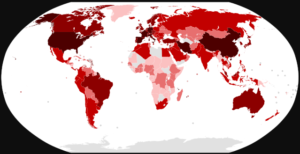
globePhoto by amyvdh via Flickr

It used to be that clinical trials were done mostly by academic researchers in universities and teaching hospitals, a system that, however imperfect, generally entailed certain minimum standards. The free market has changed all that. Today it is mainly independent contractors who recruit potential patients both in the U.S. and—increasingly—overseas.

They devise the rules for the clinical trials, conduct the trials themselves, prepare reports on the results, ghostwrite technical articles for medical journals, and create promotional campaigns. The people doing the work on the front lines are not independent scientists. They are wage-earning technicians who are paid to gather a certain number of human beings; sometimes sequester and feed them; administer certain chemical inputs; and collect samples of urine and blood at regular intervals. The work looks like agribusiness, not research.

After neatly setting up each pin with demonstrations of how international the pharmaceutical industry has become, then proceed to knock them all down with examples of industry impunity and FDA weakness.

The F.D.A., the federal agency charged with oversight of the food and drugs that Americans consume, is rife with conflicts of interest. Doctors who insist the drug you take is perfectly safe may be collecting hundreds of thousands of dollars from the company selling the drug. … Quite often, the F.D.A. never bothers to check for interlocking financial interests. In one study, the agency failed to document the financial interests of applicants in 31 percent of applications for new-drug approval. Even when the agency or the company knew of a potential conflict of interest, neither acted to guard against bias in the test results.

Related

WikiLeaks cables: Pfizer used dirty tricks to avoid clinical trial payout in Nigeria

Professor: Research, training can improve South African health journalism

Nov. 10th, 2010 by Andrew Van Dam · 1 Comment
Filed under: Health journalism, Hot Health Headline 

In discussing a large grant his university has received and the center for health journalism that it will fund, South African professor Guy Berger (bio) has unleashed a scathing critique of African health journalism, and of the profession as a whole.

rhodes
Rhodes University, Grahamstown, South Africa. Photo by Pierre Nel via Flickr

Berger says South African health journalists don’t look hard enough for real news, don’t know enough about health care, and aren’t even that good at telling the stories that they do uncover.

It’s a dire picture, of course, but Berger’s overall message is one of hope. He implies that there’s a lot of great work to be done on health and the health care industry in in South Africa and the new center, he says, could help make health journalism the “healthiest trend-setter for the whole family of journalism.”

The “Discovery Centre for Health Journalism” will be funded by a $2 million grant from South African insurer Discovery Health. It will offer an honors program, six annual scholarships and an “annual symposium for working health journalists and stakeholders.” Berger also writes that it will “enjoy full academic freedom.”

For more on the center and African health journalism, see Issa Sikiti da Silva’s related post on bizcommunity.com.

GAO evaluates FDA’s overseas inspectors

A couple of new GAO reports are seeking to shed some light on the FDA’s overseas regulatory efforts. The first is part overview, part progress report (52-page PDF). It’ll answer your basic questions.

September 18, 2007: An FDA chemist is shown conducting a rapid screening using an automated immunoassay instrument to detect cell surface antigens of Salmonella on food products. Photo by Black Star/Michael Falco for FDA

An FDA chemist tests food for antigens of Salmonella. (Photo: Black Star/Michael Falco for FDA)

In 2008 and 2009, the FDA sent 42 staffers overseas to establish foreign offices. The staff are on two-year overseas rotations, though it’s been difficult to find qualified workers for certain locations, especially since some of them had to take a pay cut. There’s a map of all 11 offices on the 12th page of the PDF.

According to the GAO, what do FDA overseas offices do?

  • Build relationships with foreign regulators and stakeholders, and with other U.S. agencies that are overseas
  • Gather information about regulated products
  • Inspect overseas facilities which are exporting to the U.S. (China and India only)
  • Train foreign stakeholders to better understand FDA regulations and systems

The second report is focused specifically upon inspections of overseas drug manufacturers producing for the U.S. market. The FDA has prioritized a list of such facilities that it would like its inspectors to visit, and the overseas agents managed to check off 11 percent of that list last year. At that rate, it will take about nine years for them to cover everything. For domestic facilities, that turnover rate is about 2.5 years.

Is America’s high health spending linked to short lifespans?

The United States lags behind other developed nations in life expectancy, yet spends far more on health care than any other nation. This is not news. Now if someone could definitively tell us why, that would be news. Life expectancy’s a dangerously blunt measure of the efficacy of a nation’s health care system, as there more confounding factors than anyone can possibly account for.

Neverthless, Columbia-affiliated public health researchers publishing in the latest edition of Health Affairs (free to AHCJ members!) have taken a stab at it, doing their best to tease out the biggest confounds and determine why Americans don’t live as long as their counterparts in the other 12 large, historically developed nations, all of which happen to provide universal health care of one variety or another. The paper looked at 15-year survival rates for 45- and 65-year-olds, in order to avoid the confusion introduced into life-span statistics by each country’s different reproductive (and end-of-life) policies. It’s a little complicated, so I’ll let the authors explain:

In this paper we explore changes in fifteen-year survival at middle and older ages, alongside per capita health care spending, in the United States and twelve other wealthy nations. We then examine the extent to which the survival and cost variations over time among these nations can be explained by demographics, obesity, smoking, or mortality events that are not closely related to health care, such as traffic accidents and homicide. By comparing health system costs and mortality rates over time, it is possible to assess whether trends in risk factors for health or causes of death can explain the observed relative decline in broad health outcomes among American men and women over the past thirty years.

As it turns out, those risk factors don’t appear to explain anything. In the 30 years between 1975 and 2005, the American system has weakened relative to equivalent countries despite the fact that smoking rates declined, obesity rates grew more slowly than they did overall in the other 12 nations and accident and homicide rates remained the same. So, while risk factors stayed steady (or improved), America continued spending more and getting less in return.

The researchers didn’t come up with a perfect explanation, of course, but they have their suspicions. On the Health Affairs blog, Chris Fleming summarizes their conclusion:

Rising health spending itself, the authors conclude, might be responsible for the relative decline in survival. They cite three consequences of rising health spending: an increase in the number of people with inadequate health insurance; the inability to allocate financial resources to life-saving programs; and unregulated fee-for-service reimbursement and an emphasis on specialty care that leads to unneeded procedures and fragmented care. As a result, they conclude, “meaningful reform may not only save money over the long term: it may also save lives.”

Aussie researchers find value in health reporters

Sep. 15th, 2010 by Andrew Van Dam · 1 Comment
Filed under: Health journalism 

In Croakey, Melissa Sweet explains a new study about coverage of avian flu by Australian media and how it demonstrates the benefits of using specialized beat reporters to cover health stories. The study approaches the coverage from a public health communication angle, and addresses head-on concerns that the media has been a menace to public health with its reckless disregard for actual evidence.

Among other things, it notes that reporters seem to be genuinely dedicated to honest and effective reporting, which often puts them at loggerheads with editors and producers, groups which must be cognizant of what the report euphemistically calls “economic and structural imperatives.”

See Sweet’s post for more details but here are some of the highlights:

  • reporters shared the same concerns as health professionals about the depth, accuracy and social impact of their reporting.
  • specialist health and medical reporters had much greater capacity to produce better quality health stories.
  • specialist reporters had a significant gatekeeper role for letting stories in, and keeping them out, of the paper. As one newspaper medical reporter said:If all I’ve done all day long is keep three really crap stories out of the paper then I consider I’ve done a good day’s work. And sometimes that can be quite a lot of work if somebody higher up than me has got “themselves all ignited about something. Then there’s a lot of work to do to hose people down and to bring these things round.”

Croakey is, of course, the health blog of Crikey, an Australian online magazine based in Melbourne.

In another study of health journalism, just published in PLoS Medicine, researchers found that stories written by health journalists were “superior to those written by other groups.” This study also looked at stories from news organizations in Australia.

The researches point out that, given economic considerations, editors might be tempted to use stories from wire services, foreign media outlets or other news organizations for their health coverage, however, they caution that editors should choose carefully because AP achieved fairly high and consistent ratings, whereas AFP had significantly lower average scores.

The real challenge for Italian health care

Sep. 13th, 2010 by Pia Christensen · Leave a Comment
Filed under: Government, Health policy 

Changes are on tap for the Italian health care system. Standard health care costs will be defined, which means determining the amount necessary to keep Italians healthy, starting with what “virtuous regions” spend, (meaning those regions with their balance sheets in order: Emilia-Romagna, Lombardy, Tuscany and Veneto). A saving on standard costs of at least 4 billion euro is expected.

Gianluca Bruttomesso

Gianluca Bruttomesso

Right now, Italy spends less on health care than 15 other European nations, which allocate 9.2 percent of their GDP compared with Italy’s 8.7 percent. This figure is even less than the Organization for Economic Cooperation and Development average (8.9 percent). The Italian public health care system is ranked second worldwide, according to the WHO.

However, AHCJ member Gianluca Bruttomesso raises some questions about why the system should be subjected to limits and  deceleration in development. Read more …

Initiative to help reporters cover European health

Aug. 25th, 2010 by Pia Christensen · Leave a Comment
Filed under: Europe, Health journalism 

AHCJ has launched an effort to help reporters understand and cover health issues in Europe.

This new resource includes a series of web pages devoted to European issues and resources, as well as a listserv to allow journalists to share information, ask questions, join a debate, open fresh debates or post requests and queries similar to what happens on AHCJ’s main discussion list.europe-page

There is substantial health news in Europe that is certainly relevant there, but understanding those issues may help reporters everywhere put their reporting on in a global context. European countries are seeing proposals for cross-border health care, issues around the movement of health professionals and the drain of qualified staff from the world’s poorest countries to Europe, the United States and Australia.

Trudy Lieberman, AHCJ’s immediate past president, is coordinating the effort.

“For many years we have wanted to enlarge the reach of AHCJ to help journalists in Europe tell the stories of their own health care systems,” Lieberman said. “We believe that American journalists can learn from their counterparts overseas and vice versa, especially when it comes to covering infectious diseases, new drugs and treatments, access to care and what it costs. This new resource now allows them to do that. We look forward to our new trans-Atlantic dialogue.”

John Lister

Lister

AHCJ Executive Director Len Bruzzese says John Lister, a veteran health journalist in England and a senior lecturer at Coventry University, has agreed to serve as the European web coordinator. He will help identify issues and bring together resources from across Europe that will  improve the quality of health and medical journalism and enhance its professional standing. On these pages, you will find some discussion points and background on some emerging issues in Europe, as well as a resource page, identifying useful sources of official and alternative information on topics in the news.

“John is excited about finding contributors from other European nations who can feed into the website and start some cross-border discussions – and perhaps collaborations,” Bruzzese said.

Study: Foreign training doesn’t affect care

A Health Affairs study evaluating the relative quality of care provided by international medical graduates practicing in the United States has attracted attention from all quarters and reignited the discussion about medical licensing in this country.

First, a few background statistics pulled from Pauline Chen’s commentary in The New York Times.

  • About 25 percent of all practicing physicians in the U.S. graduated from international schools (Canada is not considered international in this context)
  • 20 percent of those are Americans who studied medicine abroad, usually in the Caribbean
  • 30 percent of the nation’s primary care doctors graduate from international med schools

Chen, again:

… it turns out that contrary to certain individuals’ worst fears, accent or nationality did not affect patient outcomes. Rather, the main factor was being board-certified: completing a full residency at an accredited training program, passing written and, depending on the specialty, oral examinations, and having proof of experience with a defined set of clinical problems and technical procedures.

There was, however, one key difference, and it came in primary care. Patients of foreign-born primary care doctors fared better than patients of American primary care doctors. “The foreign international medical graduates are some of the smartest kids from around the world,” said John J. Norcini, lead author of the study . “When they come over, they tend to fill in where the U.S. medical school graduates don’t necessarily go.”

If you’re looking for further background on the international component of America’s physician workforce, I recommend the AMA’s 2010 profile of international medical graduates. As you can see below, 20 countries taught more than 70 percent of the international medical graduates in the United States.

imgchart

Remember, free access to Health Affairs is one of many perks enjoyed by AHCJ members.

Tracking Canada’s asbestos funding

Aug. 5th, 2010 by Andrew Van Dam · 1 Comment
Filed under: Health data, Hot Health Headline 

Fallout from Dangers in the Dust, the mammoth asbestos investigation by the BBC and the Center for Public Integrity/International Consortium of Investigative Journalists, continues. On the ICIJ Global Muckracker blog, Jim Morris details the Canadian Public Health Association’s ongoing effort to detail the financial relationship between a powerful Quebec asbestos lobby and Canada’s Ministry of Natural Resources.

The CPHA’s policy director, James Chauvin, told ICIJ that the institute was “polite” in its responses to inquiries and did send “a pile of technical manuals.” But the manuals shed no light on how C$20 million in federal funds has been spent over the past quarter-century, Chauvin said, and the information wasn’t available on the ministry’s website.

The lobbyists, Montreal’s Chrysotile Institute, have earned Canada the title of “primary booster” of the global asbestos trade. The institute receives both government and industry funds, though the numbers are still fuzzy for both.

If you’ve somehow missed Dangers in the Dust thus far, head over immediately. The infographics alone are worth the price of admission. At the very least, read Brenda Wilson’s summary on the NPR health blog.

Foreign trial data used in 4/5 of approved drugs

FairWarning’s Lea Yu and The New York Times‘ Gardiner Harris drew our attention to a report from the HHS Office of Inspector General which reviewed 2008 data and found that “Eighty percent of approved marketing applications for drugs and biologics contained data from foreign clinical trials.” Furthermore, the OIG found, “Over half of clinical trial subjects and sites were located outside the United States.”

The OIG expects the trend to grow in the future, writing that “Western Europe accounted for most foreign clinical trial subjects and sites; however, Central and South America had the highest average number of subjects per site.”

The FDA only inspected a minuscule percentage of these foreign test sites, but says it has taken the OIG’s advice and is stepping up efforts to put together agreements with its foreign counterparts and to figure out other methods to standardize and evaluate these foreign trials.

Next Page »