Leaded aviation fuel a threat to public health, children
Filed under: Children, Health data, Hot Health Headline, Public health, Public records
KUOW’s John Ryan used federal data and a few key sources to delve deep into issues surrounding one of the few remaining sources of airborne lead in the United States, a leaded aviation fuel known as “avgas.” In the process, he reveals damage that even low levels of lead exposure could be doing to children.
Avgas accounts for less than 1 percent of the nation’s liquid fuel use. Yet enough piston–engine planes fly enough miles on avgas to belch out half of all the lead going into the nation’s air.
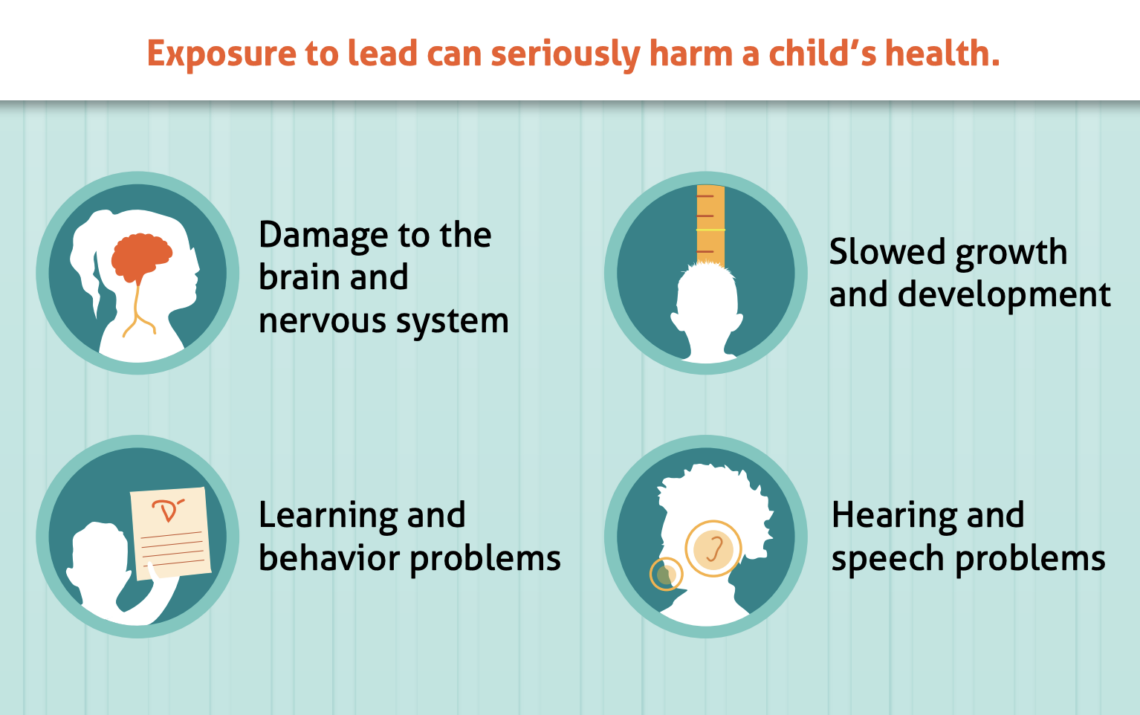
Lead paint in old buildings remains a bigger threat, but even low levels of childhood exposure, one source tells Ryan, can manifest itself in “Decreases in IQ, changes in test scores, changes in attention, hearing threshold, all sorts of things like that.”
Earlier this month (January), an expert panel advising the Centers for Disease Control and Prevention cut in half the levels of lead in children that should alarm parents or doctors. Researchers have yet to find any level of lead exposure that doesn’t cause harm.
Michael Kosnett, a medical toxicologist at the University of Colorado, told Ryan, “In any one child, it’s not something that’s going to necessarily cause them to display any kind of signs and symptoms. But if you can lower the lead exposure of a population of children, you’re going to give that population more of an opportunity to have gifted children and to have children who have higher IQs, and that’s certainly a desirable public health goal.”
Marie Lynn Miranda, an environmental health scientist and a dean at the University of Michigan, points out that “Living close to an airport can increase your blood lead level anywhere from 2 to 4 percent,” acknowledging that is a small amount but that evidence indicates even small amounts of lead are bad. She also notes that “lead is especially a problem for the low–income families that are most likely to live near airports.”
Pilots who still use avgas say their businesses would be dead in the water if they couldn’t get the leaded fuel, an argument Ryan contrasts with quotes from a Europe-based lead-free avgas producer, who sells it for 40 cents less a gallon, but hasn’t been able to break into the U.S. market “Because no one thinks that there will be demand for an unleaded–grade aviation gasoline.”
The federal database Ryan used, The National Emissions Inventory, is posted online by the EPA.
Lead poisoning hurts Detroit kids’ academics
Detroit Free Press reporters Tina Lam and Kristi Tanner-White report that data compiled by the city shows that “More than half of the students tested in Detroit Public Schools have a history of lead poisoning, which affects brain function for life.” Lead poisoning is bad news, but it gets much worse:
Now, a landmark study by the city health department and Detroit Public Schools of lead data and test scores shows that the higher the lead level, the worse a student’s scores on the Michigan Educational Assessment Program exam, or MEAP.
Overall, 58% of roughly 39,000 DPS students tested – 22,755 children – had a history of lead poisoning, according to the study.
Perhaps more startling: Of the 39,199 students tested as young children, only 23 had no lead in their bodies.
There are confounding factors, of course, but this chart shows the correlation between lead exposure and weaker academic skills. It’s yet another blow for a school district whose students were already some of the worst performing in the nation.
The story ran with an excellent graphic on lead poisoning levels throughout the city over time, as well as a school-by-school database of lead poisoning statistics.
CDC used flawed data on lead in drinking water
Filed under: Hot Health Headline, Member news, Public health, Studies
The Washington Post’s Carol Leonnig reports that an investigation by the House Committee on Science and Technology’s Subcommittee on Investigations and Oversight has confirmed what The Washington Post first reported last year, namely:
Photo by blandm via Flickr“The nation’s premier public health agency knowingly used flawed data to claim that high lead levels in the District’s drinking water did not pose a health risk to the public… And, investigators determined, the agency has not publicized more thorough internal research showing that the problem harmed children across the city and continues to endanger thousands of D.C. residents.” Those who need a refresher on the issue can refer to the Post’s timeline and story archive.
The larger issue here is that the committee and the Government Accountability Office are looking into how the CDC’s National Center for Environmental Health/Agency for Toxic Substances and Disease Registry evaluates public health issues.
Subcommittee Chairman Brad Miller (D-NC) had some harsh words for the department:
“We need more honesty and transparency and less attitude from these offices. When you work at a public health science agency and the words most frequently used are ‘haphazard,’ ‘hit-or-miss’ and ‘ad hoc,’ maybe you should pause and reflect.”
Health spending in stimulus plan called ‘wasteful’
Congressional Republican leaders have outlined what they think are “wasteful provisions in the Senate version of the nearly $900 billion stimulus bill that is being debated.”
Several health-related proposals are among those “wasteful” expenditures:
- $400 million for the Centers for Disease Control to screen and prevent STD’s.
- $75 million for “smoking cessation activities.”
- $25 million for tribal alcohol and substance abuse reduction.
- $88 million for renovating the headquarters of the Public Health Service.
- $412 million for CDC buildings and property.
- $500 million for building and repairing National Institutes of Health facilities in Bethesda, Md.
- $100 million for reducing the hazard of lead-based paint.