Spotlight on health care quality, measures

Apr. 7th, 2011 by Pia Christensen · Leave a Comment
Filed under: Health policy, Public health, Studies 

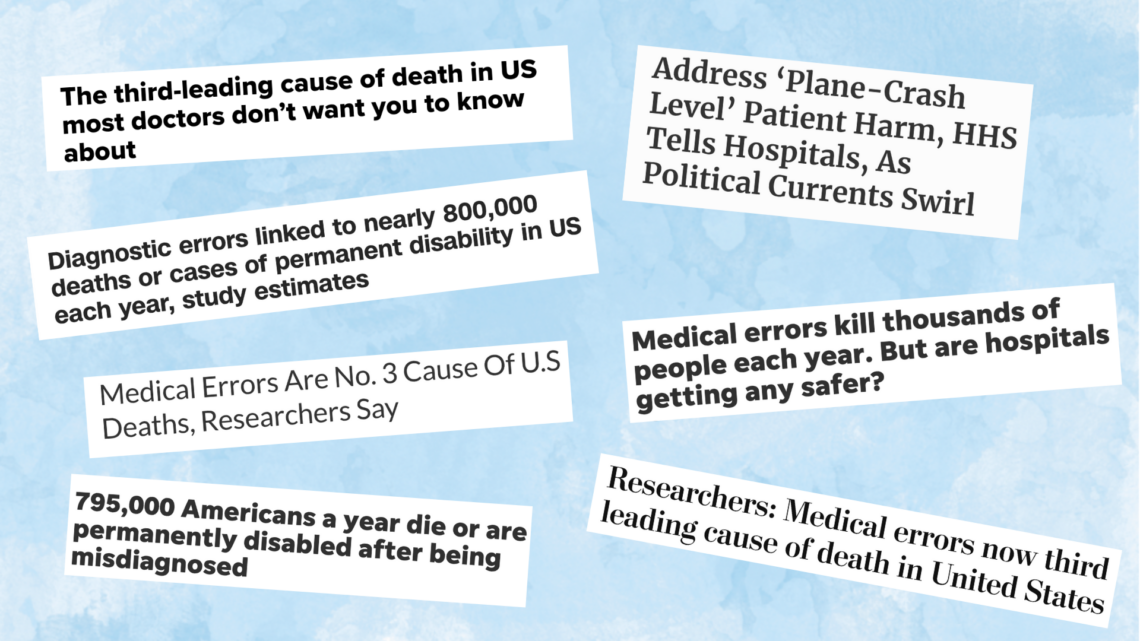
The April issue of Health Affairs focuses on the quality of health care in the United States. Some highlights of the issue, which was sponsored by the Robert Wood Johnson Foundation:

  • analysis and commentary on improving performance measures
  • research that found the methods currently used to gauge patient safety actually missed 90 percent of the adverse events
  • the cost of errors and adverse events
  • research on measuring quality
  • lessons to be learned from other countries
  • how pay-for-performance has affected quality
  • several case studies of how quality has improved in specific institutions

Those of you who attended Health Journalism 2010 might be particularly interested in an update from Peter J. Pronovost, M.D., who was the keynote speaker at last year’s conference. In this issue of Health Affairs, Pronovost writes about the advances in reducing central line-associated bloodstream infections – which he discussed at last year’s talk.

Remember, AHCJ members receive free access to Health Affairs. If you haven’t already signed up for access, be sure you take advantage of that benefit.

Allen looks at present, future of Nev. transparency

Writing for the Las Vegas Sun, reporter Marshall Allen put a fitting cap on an award-winning investigative run at the paper with a story rounding up the state’s first steps toward transparency in medical error reporting. Through the lens of former Beth Israel Deaconess chief, transparency pioneer and blogger Paul Levy, Allen demonstrates just how much transparency in Nevada could benefit both hospitals and their patients. It’s potential that was created, in no small part, through the reporting that Allen and Alex Richards have done.

Over the course of the Sun’s two-year investigation, most Las Vegas hospitals refused to discuss patient safety issues. The Nevada Hospital Association has since 2002 lobbied against mandated public reporting of patient harm. But since the Sun’s investigation, and with legislation pending, the association has said it will begin posting patient injury and infection data on its hospital quality website.

Throughout the piece, Allen paints a sunny picture of a more transparent future, and uses examples from Massachusetts to dissolve any reservations readers might have.

Dr. Tejal Gandhi, Partners’ director of patient safety, said at first there was panic over posting on the hospitals’ websites the infections and injuries suffered by patients. People worried there would be a media frenzy or a rise in malpractice lawsuits, she said.

When the information became public, in 2009, The Boston Globe published one story but there was little other reaction, she said.

The hospitals have seen no increase in malpractice lawsuits. But it has brought a new focus on reducing certain infections and injuries, including the formation of task forces and establishment of standardized safety protocols.

Allen, who recently took a job with ProPublica, completed part of this series while on an AHCJ Media Fellowship on Health Performance, supported by the Commonwealth Fund. The series, which was reported with Richards, won a 2010 Award for Excellence in Health Care Journalism, the investigative reporting category in the 2010 Scripps Howard Awards, best in show for the print category of the National Headliner Awards and the 2011 Goldsmith Prize for Investigative Reporting.

Las Vegas Sun’s Allen a finalist for Goldsmith Prize

Feb. 8th, 2011 by Pia Christensen · 1 Comment
Filed under: Health journalism, Member news 

AHCJ member Marshall Allen, with Alex Richards, is a finalist for the 2011 Goldsmith Prize for Investigative Reporting for their two-year investigation into preventable infections and injuries in Las Vegas hospitals.

Marshall Allen

Marshall Allen

The Las Vegas Sun reporters reviewed 2.9 million records for the reporting of “Do No Harm: Hospital Care in Las Vegas.”

Allen recently wrote an article for AHCJ members about making some of those inspection reports available for readers to see, using DocumentCloud. The technology allows readers to see the breadth of inspectors’ findings, including those that may not grab headlines but are just as important to the public.

Allen reports on health care for the Las Vegas Sun. As a member of the inaugural class of AHCJ Media Fellowships on Health Performance, he is exploring whether transparency about hospital quality improves the quality of care for patients. He has won Awards for Excellence in Health Care Journalism for his body of work in 2007, in the limited report and medium newspaper categories in 2008 and for his body of work in 2009. He was a member of the 2009 AHCJ-CDC Health Journalism Fellowship Program.

Las Vegas Sun caps series by showing solutions

Jan. 5th, 2011 by Andrew Van Dam · Leave a Comment
Filed under: Hospitals, Hot Health Headline 

In the Las Vegas Sun reporter Marshall Allen wraps up his wide-ranging Do No Harm series on hospital quality by showing how Nevada hospitals could be approaching medical errors differently.

lasvegassunHis focus is the Seven Pillars program at the University of Illinois at Chicago, which should be familiar to Covering Health readers. The key to the program is a commitment to admitting errors and discussing them with patients, an approach that improves the patient experience and reduces the risk of malpractice suits.

To cap off the series, the Las Vegas Sun included the thoughts of Allen’s boss, Publisher and Editor Brian Greenspun.

Related

The Chicago chapter of AHCJ recently hosted a discussion about medical errors and transparency, which included David Mayer, M.D., who, with Tim McDonald, M.D., has co-founded an organization dedicated to the prevention of patient harm. Most recently, McDonald and Mayer were awarded a $3 million federal grant to implement and evaluate patient safety efforts on a larger scale. AHCJ members can read about the discussion and listen to Mayer’s comments.

Editor’s note:

Allen completed part of this series while on an AHCJ Media Fellowship on Health Performance, supported by the Commonwealth Fund

Report projects 134,000 hospital patients a month experience adverse events

Nov. 16th, 2010 by Pia Christensen · 1 Comment
Filed under: Hospitals, Studies 

More than 13 percent of hospitalized Medicare beneficiaries were harmed during a hospital stay, according to a study released by the HHS Office of the Inspector General (PDF, 81 pages).

The report is based on a review of a nationally representative sample of 780 patients in October 2008. Based on the sample, the report projects that 134,000 Medicare patients a month experience at least one adverse event during their hospitalization. About 1.5 percent died as a result of those adverse events, which projects to 15,000 patients in a single month.

From a financial standpoint, the report says the hospital care associated with those events cost Medicare an estimated $324 million in that month.

Adverse events, identified through a review of medical records, included the National Quality Forum Serious Reportable Events; Medicare hospital-acquired conditions; and events resulting in prolonged hospital stays, permanent harm, life-sustaining intervention, or death.

The reviewers found that 44 percent of the events were preventable, prompting the OIG’s office to recommend that the Agency for Healthcare Research and Quality and the Centers for Medicare and Medicaid Services “broaden patient safety efforts to include all types of adverse events and enhance efforts to identify events” and for CMS to “provide further incentives for hospitals to reduce adverse events through its payment and oversight functions, including strengthening the Medicare hospital-acquired conditions policy and holding hospitals accountable for adopting evidence-based practices.”

Related

More about patient safety