

Tag

Deaths from drug overdose in 2017 alone exceeded the total number of Americans who died during the entire Vietnam War,…
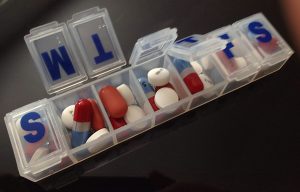
Experts on aging are sounding the alarm about another U.S. drug crisis: Too many older adults taking too many medications.…

There is no cure for dementia, a devastating group of diseases that eventually rob people of their memory, personality and…

•
How can older adults save money on the high cost of prescription medication? It could be as simple as talking…
•
The average price of brand-name prescription drugs rose almost 130 times faster than inflation in 2015 — 15.5 percent compared…
•
Medications — including many over-the-counter drugs — are among the greatest contributors to accelerated cognitive decline in older adults, according…

•
A new report from the The United Hospital Fund and AARP Public Policy Institute finds that spouses who act as…
•
It was worth the wait to attend one of the last sessions on the last day of Health Journalism 2013.…
•
The 2007 National Home and Hospice Care Survey (NHHCS ) Medication Public-Use File and Documentation are now available for downloading.…

•
Jean Mikle of the Asbury Park Press chronicled medication errors at Ancora Psychiatric Hospital, New Jersey’s largest such institution. Mikle…