Updated hospital data allows reporters to identify ongoing problems
Filed under: Health data, Hospitals, Public records
The release this month of federal data on hospital quality is a good reminder for reporters to give their local hospitals a checkup.
Now that CMS has been reporting information on mortality and readmissions for several years, it’s possible to use the data to identify hospitals that repeatedly excel and those that have ongoing problems. While some journalists may have a been-there-done-that reaction to yet another round of data, the latest release has important information for your readers, viewers and listeners. After several years, a surprising number of hospitals can’t seem to improve — and an elite group has been able to maintain its excellence.
AHCJ not only offers the data in easy-to-analyze formats; we also offer tip sheets on using spreadsheets to analyze health data. To give you a head start, Charles Ornstein, senior reporter at ProPublica and AHCJ’s president, has done some preliminary analysis and points out states in which hospitals fared well and the states where hospitals did poorly. He also identifies the best and worst in the country based on mortality rates for patients suffering heart attacks, heart failure and pneumonia.
America suffers from maternal mortality disparities
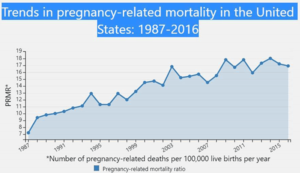
RaceWire’s Michelle Chen took the time recently to remind readers that, while we are celebrating the decline of infant and childbirth-related mortality worldwide, there are still huge disparities in maternal mortality within the United States. For example, according to 1999-2004 NCHS numbers, top-ranked Maine loses only 1.3 mothers per 100,000 live births; that number is 34.9 in bottom-ranked D.C. and 20.5 in Georgia.
(New York City) Health officials found that of the 161 mothers who died of pregnancy-related causes between 2001 and 2005, Black women were seven times more likely to die than white women. The death rates for Asian and Latina women were twice as high compared to whites. While some affluent neighborhoods like Manhattan’s Chelsea were untouched by maternal mortality, the highest death rates were in enclaves associated with low-income communities of color, like Bed-Stuy, Crown Heights, and Jamaica.
Chen writes that the disparities may be caused by a number of socioeconomic factors, including the lack of health insurance and the impact of health factors like obesity that affect blacks disproportionately.
RaceWire is the blog of ColorLines, which bills itself as “the national magazine on race and politics.”
Calif. maternal death on rise, according to report
Filed under: Government, Hot Health Headline, Public health
Citing investigators who wrote a yet-to-be-released report, Nathanael Johnson of California Watch reports that the “mortality rate of California women who die from causes directly related to pregnancy has nearly tripled in the past decade.”
The state’s Department of Public Health has held the report without releasing it for the past seven months, according to Johnson.
In a Sentinel Event Alert sent to hospitals nationwide last month, the Joint Commission advised doctors to be aware of medical conditions that contribute to maternal death, including pre-pregnancy obesity, diabetes and high blood pressure. Johnson writes that the alert may signal that the problem is national.
The California report was presented to the American College of Obstetricians and Gynecologists in 2007 - to gasps from the audience, Johnson reports.
The state of California has yet to share the report with the public. Researchers say that, after reviewing the report in 2008, officials in the Department of Public Health asked for technical clarifications. Revisions were complete and approved in the first half of 2009, according to [Shabbir Ahmad, the scientist in California’s Department of Public Health who organized the statewide review].