Tax documents show CEO pay exceeds charity care at some Calif. nonprofit hospitals

Jul. 14th, 2010 by Andrew Van Dam · 1 Comment
Filed under: Health data, Health journalism, Hospitals 

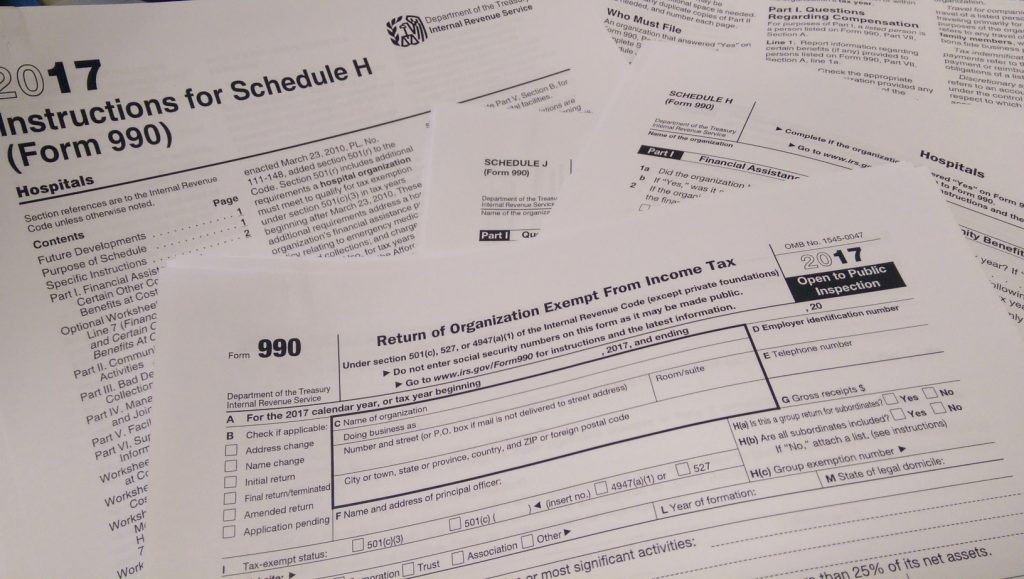
Ron Shinkman, editor of the trade newsletter Payers & Providers, spent four months reviewing tax documents filed by 120 nonprofit California hospitals in 2007 and 2008. He found that base CEO compensation was somewhere around $517,123 in that period, which is more than double national numbers from a survey published in 2001.

To add perspective to the numbers, California Watch’s Christina Jewett looked at Shinkman’s research – especially the sentence that mentioned “11 hospital executives whose compensation exceeded the cost of the charity care provided by their hospitals during the reporting year” – and evaluated it in terms of the national debate over the amount of charity care provided by nonprofit hospitals.

Shinkman is charging for full copies of his work and the resulting white paper, but between Jewett’s coverage and the brief version Shinkman has posted, readers should be able to get a pretty good idea of where the story is going and, perhaps more importantly, how to report on CEO pay at your local nonprofit hospitals.

For more help covering nonprofit hospitals:

Free online training:
Course teaches how to report on hospital finance

Covering Hospitals online training

This free innovative simulation, “On the Beat: Covering Hospitals,” guides you through the sources and resources you need to tackle the beat.

You’ll tap into the same tools that you’ll use on the job, and you’ll have a virtual mentor to walk you through the maze of reports, statistics and sources. One story line teaches you about how to report on hospital finances.

Start today to hone your critical-thinking skills and gain the beat-specific knowledge needed to cover the hospitals in your community.

This online training module combines the reporting expertise of AHCJ with NewsU’s innovative e-learning experience and is made possible through a grant from the John S. and James L. Knight Foundation.

New IRS rules reveal hospital conflict disclosures

The new IRS disclosure rules for nonprofit hospitals seemed to promise some interesting revelations, and now that they’re public, the Pittsburgh Tribune-Review’s Walter Roche has taken full advantage of the new disclosures. Roche checked out fiscal 2009 filings from the nonprofit hospitals in his area and found a big handful of conflicts ($10 million at one firm alone), all of which the nonprofits say are entirely above board.

Jennifer Chandler of the National Association of Nonprofits said it is not unusual or improper for nonprofits to have business dealings with board members as long as IRS disclosure requirements are followed.

“It has to be managed correctly,” she said.

The meat of Roche’s story is made up of a laundry list of disclosed conflicts, which include commercial dealings with board members and relatives.

When quality matters to boards, hospitals do better

Nov. 19th, 2009 by Andrew Van Dam · Leave a Comment
Filed under: Hot Health Headline, Studies 

In Health Affairs, Ashish K. Jha and Arnold M. Epstein have released a study in which they found a link between hospital boards that focused on quality of care and hospital quality ratings. They also found that quality isn’t a top priority for most hospital boards. The researchers hope their findings will help those who want to improve hospital quality by demonstrating just how much influence a hospital board can have.

Jha and Epstein surveyed 1,000 board chairs from a wide sample of not-for-profit acute-care hospitals in the United States. For quality ratings, they relied on the Hospital Quality Alliance.

Related

AHCJ President Charles Ornstein, whose hospital quality coverage has earned national recognition, recently updated his comprehensive “Road map for covering your local hospital’s quality” tip sheet.

AHCJ article: Making sense of hospital quality reports

Book: Covering the Quality of Health Care: A Resource Guide for Journalists

Slim guide: Covering Hospitals: Using Tools on the Web

Free online training

On the Beat: Covering Hospitals: An innovative simulation guides you through the sources and resources you need to tackle the beat. You’ll tap into the same tools that you’ll use on the job, and you’ll have a virtual mentor to walk you through the maze of reports, statistics and sources. One story line teaches you about reporting on hospital quality

Data

Investigating hospitals: Find stories with ready-to-use Hospital Compare data: AHCJ has made it easier for journalists to compare hospitals in their regions by generating spreadsheet files from the HHS database, allowing members to compare more than a few hospitals at a time, using spreadsheet or database software. AHCJ provides key documentation and explanatory material to help you understand the data possibilities and limits.

Tip sheets

Reports

Hot Health Headlines

Evaluation of nonprofits’ charity care continues

Sep. 29th, 2009 by Andrew Van Dam · 1 Comment
Filed under: Health care reform, Hospitals 

If you’re keeping a list of issues that have been rejuvenated through inclusion in the Baucus bill, you can safely add Iowa Sen. Chuck Grassley’s crusade to keep nonprofit hospitals accountable for the provision of adequate amounts of charity care. According to the Chicago Tribune’s Bruce Japsen, the proposed bill includes Grassley’s provision to “improve the community service, transparency and billing practices of nonprofit hospitals.”

From Japsen’s story:

“For now, there’s no minimum percentage requirement for charity care and community benefit,” Grassley said in a statement on Baucus’ proposal. But Grassley is not ruling out a required level in the future, saying it needs “more study.”

“I agree with groups that take their charitable mission seriously … that a percentage payout requirement would become a ceiling, not a floor, like the private foundation payout of generally five percent,” Grassley said in a memo Thursday. “Instead, we need a formula that would maximize expenditures for charitable purposes.”

The Washington Post’s Kathleen Day, meanwhile, reported on the results of a Grassley-backed Senate investigation into the charity care provided by nonprofit hospitals:

The investigators found that while federal law requires charity care in exchange for tax-exempt status, a 37-year-old IRS rule implementing the law is so vague that nonprofit hospitals have been able to exploit it by offering some free services but often little aid to the poorest people in their communities.

Nonprofits frequently charged higher prices to poorer people with no health insurance than they did to better-off patients who had coverage, researchers found. At the same time, many of the hospitals’ top executives enjoyed generous perks such as paid country club memberships and stays at expensive hotels.

Reporter digs up Seattle hospital salaries

Jul. 13th, 2009 by Andrew Van Dam · Leave a Comment
Filed under: Health data, Hot Health Headline 

John Ryan of KUOW News in Seattle used publicly available data and records requests to localize the national debate on nonprofit compensation with a piece on top earners at Seattle-area hospitals. Ryan details his information-gathering process here and shares his list of top local earners.

AHCJ resources

Tip sheet

Digging Into Hospital Finances:
Five key documents for reporters and recent trends

Previous coverage

Ryan used a mix of local and national sources, getting explanations from some of the top earners (and perspective from some of the bottom earners) and quotes from those who believe nonprofit workers should not be earning that much money. He also included the thoughts of those who believe nonprofit hospitals need to pay competitive salaries in order to bring competitive talent.

Another story looks at the role of charity care and how much of it is provided: “Only three of the nonprofit hospitals in central Puget Sound give away more than 2 percent of their care to the poor: Providence Regional in Everett, Saint Clare in Lakewood, and Saint Francis in Federal Way. The Washington Department of Health tracks those figures.”

For some hospitals, tax breaks outstrip charity care

A story by Boston Globe reporters Scott Allen and Marcella Bombardieri questions the provision of nonprofit status for hospitals and the tax breaks that come with it, vestiges of a time when hospitals needed financial incentives to treat the nation’s poor.

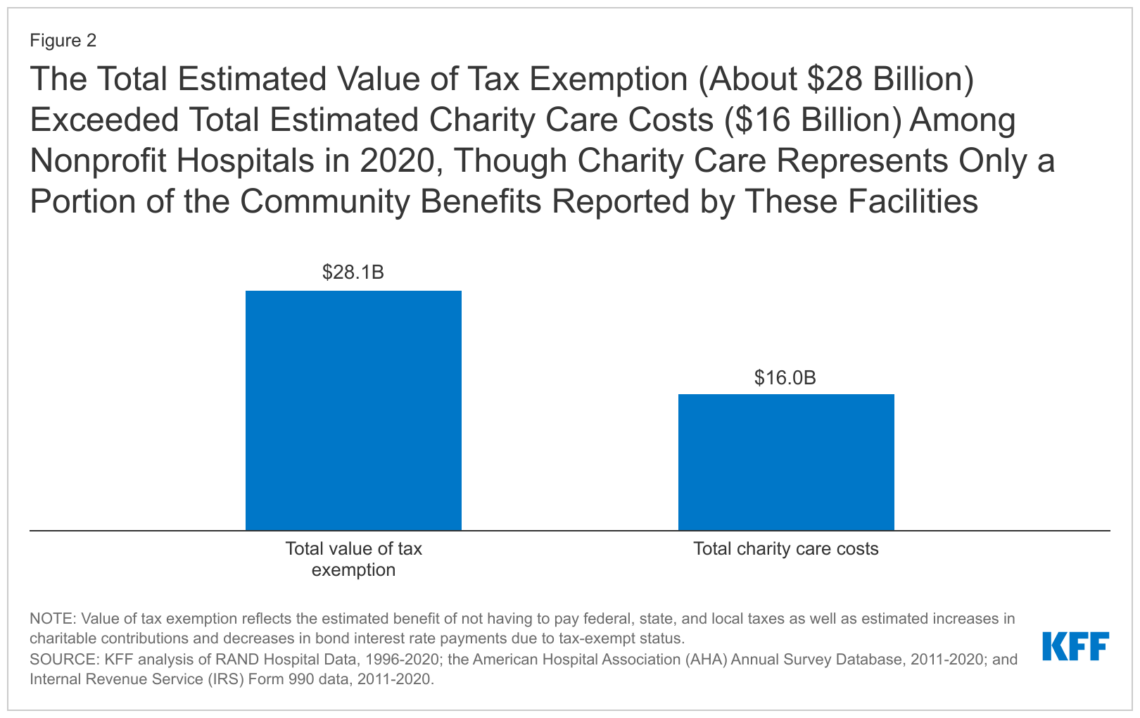
They look at Massachusetts hospitals pulling in billions of research dollars and making liberal use of their tax incentives. An intensive review of relevant records revealed that the value of these tax breaks far exceeds the value of the free care the hospitals provide for the poor, the reporters say.

The 10 leading hospital companies benefited from an estimated $638 million in federal, state, and local tax breaks as well as state discounts on borrowing in 2007, the latest year for which complete data are available. More than half of that goes to two large and growing companies, Partners and Children’s Hospital. Overall, the 10 hospital companies’ tax breaks and other benefits were worth $264 million more than the value of the “community benefits” - care for the poor and other charity work - they reported to the state attorney general that year.

The reporters also note that Massachusetts health care reform has helped increase the gap; hospitals now provide half as much free care as they did before reforms were instituted (Today, about 1 percent of patients don’t have to pay). In the midst of a climate of tight budgets and potential reforms, a group of politicians led by Republican Sen. Charles Grassley of Iowa is calling for rules holding nonprofit hospitals to higher standards of charity work than their for-profit peers.

The in-depth story digs deeper into potential reforms and issues and paints a detailed financial picture of the impact the nonprofit status of major hospitals is currently having on the state’s budget.