Failing Fla. transplant program misled media, employees, patients
Filed under: Health journalism, Hospitals, Public records
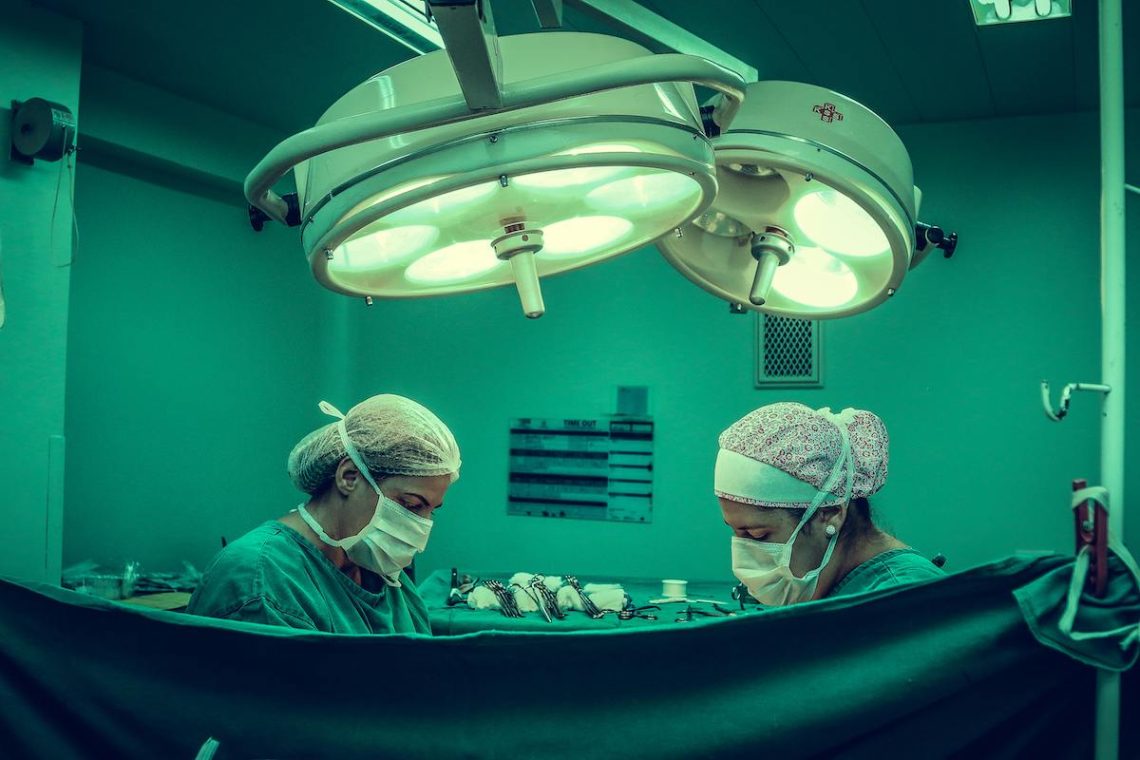
Writing in the The Florida Times-Union, reporter Jeremy Cox used public records requests to find that a kidney transplant program at a local safety net hospital had been at risk of closure by federal regulators prior to its abrupt closure in January. It had “failed to meet six of 12 federal standards.”
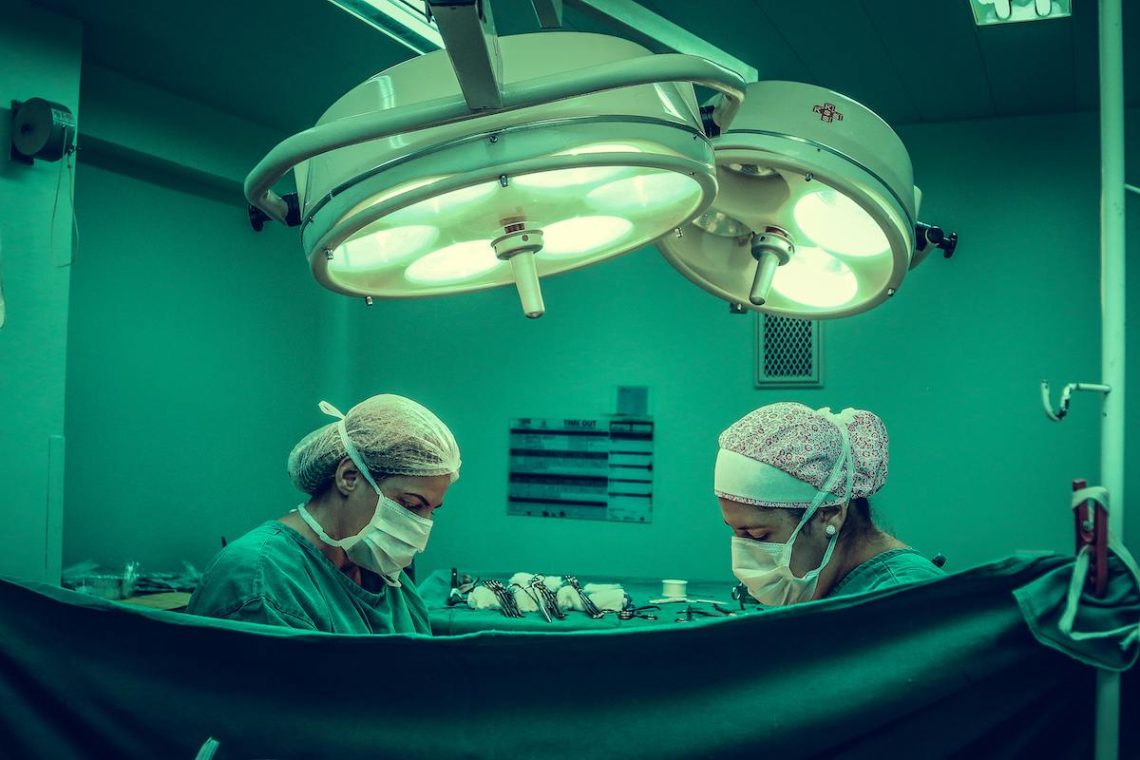
Image from Wikimedia Commons
Furthermore, Cox writes, the records revealed “that hospital officials intentionally misled local media outlets about the full extent of the program’s breakdown. In a memo to Shands spokesman Dan Leveton about how to address the media, Steven Blumberg, vice president of planning and business development, said, ‘If asked, we will say that a program with low volumes is not economical to operate and that quality can be ensured with higher volumes.’” That statement, of course, makes no mention of looming federal intervention or a failure to meet basic quality standards.
Cox’s writeup should serve local reporters well as a sort of “anatomy of a failed transplant program,” as he delves into the regulatory process and exactly where the hospital went wrong.
For those of you who were, like myself, unfamiliar with the institution, Cox writes that “Shands is run by a private not-for-profit company, but it is widely seen as Northeast Florida’s safety-net hospital. The city of Jacksonville gives the facility about $23 million a year to care for the city’s poor, and it gets millions more from the state.”
Report: Kosovo crime ring executed prisoners, harvested their organs
According to a draft report from the Council of Europe, a criminal network in Kosovo executed prisoners and sold their organs on the black market within the past decade. The network is linked to Kosovo’s current prime minister and victims likely included Kosovo Serb civilians. We learned about the story through Michael Montgomery and Altin Raxhimi of the Center for Investigative Reporting.
The report alleges the organ trafficking was part of a broader web of organized criminal activity including assassinations and drug dealing. The “boss” of the criminal network, according to the report, was Hashim Thaci, Kosovo’s current prime minister and the former political director of the Kosovo Liberation Army.
…
The recent case of illegal transplants conducted at the Medicus clinic in Pristina is not an isolated episode. “We believe that there are sufficiently serious and substantial indications to demonstrate that this form of trafficking long pre-dates the Medicus case, and that certain KLA leaders and affiliates have been implicated in it previously,” the report states.
According to a former U.N. war crimes prosecutor interviewed by CIR, an international investigation will be needed because of the breadth and complexity of the case.
Related
For more European health news, see AHCJ’s Covering Europe initiative.
Kidney swap connects six in small Mo. town
Filed under: Health journalism, Hospitals, Hot Health Headline
Joy Robertson of KOLR-Springfield, Mo., tells the story of the coincidences and generosity that led to six residents of Licking, Mo., (population 1,471) swapping kidneys in a St. Louis hospital. Here’s a quick timeline, to give you an idea of how it all came together.
- Licking resident Stephanie Hood needed a kidney.
- Friends Randy and Melissa Lewis wanted to donate one for her, but neither was a match.
- Randy decided to donate his kidney anyway.
- Carrie Goforth, a 29-year-old Licking mother on dialysis, was a match for Randy.
- Meanwhile, Melissa Lewis decided to donate her kidney as well.
- Hers went to Gern Beasley, another Licking resident.
- Finally, Stephanie Hood, the patient who started it all, also got the kidney she needed. Her donor? Her cousin Diane. From Licking.
Reporting on kidney donation
Josephine Marcotty of the Minneapolis Star Tribune recently wrote a series addressing the increasing demand for kidneys, a need spurred by an aging population, increases in diabetes, obesity and high-blood pressure. In a recent AHCJ article, she explained how the story came together and how other reporters can follow in her footsteps and expand upon her work.
Coincidence leads to remarkable transplant story
Last month, Salt Lake Tribune reporter Heather May was following a family as they waited for the liver donation that would ensure their 13-month-old daughter’s survival. The infant’s mother, Liz Badger, struggled with the unavoidable fact that the donor her daughter so desperately needed would likely be somebody else’s dead child.
At the same time her co-worker, Erin Alberty, was reporting on a 12-year-old girl, Ashley Maynard, on life support. That child’s mother hoped she would slip away in such a manner that her organs could go on to save as many other children as possible.
That’s when, as the reporters watched from the sidelines, the two stories came together. It’s a deep look at transplants, donors and ethics made possible by luck and thorough reporting. For an inside-the-newsroom look at how it all came together, I e-mailed May. Here’s her response:
After reading Liz Badger’s blog, I wanted to write a story about one family’s experience waiting for a transplant, never imagining the story we would get.
I started following the Badger family Jan. 5 — which happened to be the day that Ashley was struck by a car, though of course we didn’t know that until later. So I was with Liz as she spoke about waiting for another child to die as Ashley was in the hospital.
I was with the Badgers during their weekly doctor’s appointment while Ashley was literally down the hall on the same floor in the hospital, again, unknown to us.
On Jan. 14: Liz called me to say they were headed to the hospital for the transplant. Hours later, Ashley’s father called our newsroom to tell Erin Alberty that his daughter was going to be taken off life support and would become an organ donor. Erin had not been following the family, but the paper had written a brief about Ashley having been hit a week earlier while waiting for the bus. Her father called to update the paper about her condition.
At that point, the paper figured that Ashley was going to be LuLu’s donor, but we couldn’t ethically link the two families. I considered attending the funeral with Liz and James with their permission. But after consulting with an ethicist at Poynter, the paper decided I shouldn’t go: We couldn’t tell Ashley’s family that the reason we wanted to attend was because we thought Ashley was likely LuLu’s donor and that we wanted to watch as the families met.
Later, I got permission from Camie to talk to Ashley’s doctors about Ashley’s care. I recreated the hospital and funeral scenes from interviews. I was there when Camie met LuLu for the first time.
‘Kidney pirates,’ organized crime and health care
In a recent episode of HDNet’s Dan Rather reports, the journalist criss-crossed the globe alongside an academic/activist and others trying to trace the international black market for human kidneys (PDF transcript).
Rather and his crew pieced together the path a kidney would have taken, all the way from a tiny, desperate Moldovan village (where furious villagers once attempted to lynch the woman who’d lured about 40 young men to Turkey with promises of work, then sent them home minus a kidney) to brokers like Levy-Izhak Rosenbaum, the New Yorker arrested for his alleged role in matching live donors to ailing patients.
While hard numbers are difficult to pin down in the ‘kidney pirate’ universe, Rather says black-market transplants like these are a growing problem, citing anecdotal evidence and a 2005 WHO report that found that a tenth of kidney transplants were arranged through the black market. Another reason for the black-market organ boom, Rather finds, is the emergence of new anti-rejection drugs that make it possible for almost anyone to give a kidney to anyone else.
Image from Wikimedia Commons
With more than 83,000 people waiting for kidneys in the United States alone, the potential benefit to patients is evident (though far from guaranteed, as Rather makes clear in the second half of the piece). The benefit to the donors is much more questionable.
While buyers spend up to $200,000 for a kidney, most of the money goes to a web of middlemen. Everyone from brokers to rogue surgeons, to bribed police and corrupt customs and border officials… all the average seller gets out of the deal, if he’s lucky, is about $3,000… and a tell-tale scar.”
For more on the price paid by the donors, Rather talked to well-known University of Pennsylvania bioethicist Arthur Caplan, Ph.D., who advocates criminal penalties for doctors who turn a blind eye to donors with dubious backgrounds as long as it saves their patient’s life.
If you say you are going to sell a kidney, coming from a poor village or a poor nation, nobody looks out for your health or your interest once that kidney’s out of your body. They toss you aside like an old piece of Kleenex. They don’t care. So you’re getting infections, you’re getting bleeds. You’ve got all kinds of problems going on, it’d be pretty easy to manage if you were getting followed post donation in an American or European hospital or in a developed country. You go back as a poor person who has sold their kidney, you’re in trouble.
The web of organized criminals matching donor to patient often centers in Istanbul, an international hub for illicit donations. The Turkish organ donation racket was pioneered by Yusuf Sonmez, a talented surgeon with questionable ethics and a knack for avoiding punishment. Somnez has recently been driven out of Turkey, but word on the street is that he’s still operating with impunity out of Azerbaijan.
There are signs in Istanbul that police are finally cracking down. … Turkish police rounded up more than 40 alleged kidney traffickers, but authorities here are still fighting an uphill battle against an insatiable global demand for kidneys. And it’s not just Turkish doctors. Rather even cites a recent incident in which a donor and patient hooked up through Craigslist, went to a Los Angeles hospital for the transplant, and apparently exchanged $25,000 in a restroom or hallway after the operation.
In the course of the story, Rather also visits Israel, another organ trafficking hotbed, and examines the toll the trade is taking up on patients as well as donors.
Related
Addressing the growing demand for kidneys
Josephine Marcotty of the Minneapolis Star Tribune recently wrote a series addressing the increasing demand for kidneys, a need spurred by an aging population, increases in diabetes, obesity and high-blood pressure.
She found that it is a public health crisis that costs the nation $33.6 billion a year, and there is no end in sight.
Marcotty covered one woman’s search for a kidney, the ethics of paired donations and how the medical center decided who would get organs.
In this article for AHCJ members, she shares what she learned about kidney donation and how she reported the story.
KQED profiles those who live with disease, injury
This month’s edition of Health Dialogues, part of KQED’s California Report, focuses on living with disease. In the report, KQED reporters talk to folks living with chronic disease, the effects of traumatic injury and other conditions that can have lasting effects on a person’s quality of life.
To provide insight into the life and routine of someone coping with chronic disease, reporters profile a music programmer ‘coping’ with diabetes, an activist who stumbled upon a forgotten childhood diagnosis of hepatitis B and a cellist with multiple sclerosis. They also talk to a couple dealing with cancer and two sisters on opposite ends of an organ donation chain.
In addition to cancer and disease, KQED reporters also explore how the lasting effects of traumatic injury can shape your life. Pieces include a KPBS reporter talking about his own traumatic brain injury and the story of a surfing-based physical therapy program for veterans.
Why aren’t some on dialysis referred for transplants?
Filed under: Conflicts of interest, Health journalism, Hospitals, Hot Health Headline
Pittsburgh Tribune-Review reporters Andrew Conte and Luis Fabregas have released the results of an extensive investigation into kidney transplant and dialysis. Conte and Fabregas found that some dialysis patients hadn’t been told that kidney transplant is an option, even though the procedure, for which patients should get on waiting lists as soon as possible, could add years to their lives. Last year, the duo claimed a top AHCJ award for their work on a similar topic, liver transplants.
The financial consequences of their findings are particularly timely. Kidney conditions account for a fifth of Medicare spending, and “a new kidney costs the federal Medicare program $50,000 less per patient than conventional dialysis,” Conte and Fabregas report.
More than 32,000 of the 105,653 people who started treatment for kidney failure in 2006 were not informed about the option of kidney transplantation, according to the latest available information reported to the Centers for Medicare & Medicaid Services.
Nearly 44 percent of the uninformed simply were not assessed for transplant, the data show. In other cases, patients were deemed to be medically or psychologically unfit for a transplant, or unsuitable because of age.
Private insurers keep dialysis clinics humming
The reporters found that these issues, which have existed for decades, are at least partly attributable to the “inertia” of a system in which dialysis centers need to pull in new patients with private insurance in order to offset the cost of providing dialysis to Medicare and Medicate patients, whose government reimbursements do not cover the full cost of the procedures.
Some doctors say the payment system creates unhealthy incentives for providers to focus on filling their clinics when they should be primarily concerned with making sure patients receive information about transplantation as soon as possible.
Kidney transplants can extend lives by 10 years or more
In this story, Conte and Fabregas continue to build their case. Now that they’ve shown the financial impact of not referring dialysis patients for transplantation, they move on to the human impact. They use numbers, experts and analysis to show why transplantation is a far better decision, healthwise.
Experts: Crucial to get on waiting list as soon as possible
Finally, reporters bring everything together by showing that informing a patient of the possibility of the transplant and getting them on a waiting list is key to ensuring their continuing health.
Related
Washington Post videojournalist Pierre Kattar Jr. tells the story of joining an eight-person kidney donation chain in order to overcome incompatible blood types and donate a kidney to his ailing father, 61-year-old Pierre Kattar Sr. (Hat Tip to kobreGUIDE)
For more on kidney donation chains, see Mat Dowling’s NJ.com multimedia series covering a six-person chain in New York and New Jersey.
Man claims he sold kidney for $20,000
Associated Press reporters Carla K. Johnson and Adam Goldman report on a man who says he was paid $20,000 for his kidney.
The reporters write that much of his story can be confirmed. The man who received his kidney calls the alleged $20,000 payment “an embellishment.” Nick Rosen, the man who gave up his kidney, made a video that shows him on a bed with what he says is $20,000.
Johnson and Goldman tell the tale while also looking at some of the larger issues of selling organs and the screening that transplant centers do.
Related
- Organ network looks to address regional disparities
- In a package for the Los Angeles Times, Charles Ornstein and Tracy Weber looked at UNOS oversight failures and what distinguished the best organ transplant centers from their less-successful peers. Here, the duo tell AHCJ members how they put the project together (includes tips on accessing and using UNOS and other transplant data).
- GAO report on correcting deficiencies at transplant oversight agencies
Organ network looks to address regional disparities
Filed under: Conflicts of interest, Health care reform, Hot Health Headline
American Medical News‘ Kevin O’Reilly writes that, spurred on by attention paid to Apple boss Steve Jobs’ trip to Tennessee to take advantage of shorter liver transplant waiting lists, the United Network for Organ Sharing (which has a government contract to run the country’s Organ Procurement and Transplantation Network) will meet in the spring of 2010 to address socioeconomic and regional variations in access to donated organs (see a graph of regional waiting list sizes here).
Jobs did not break any rules, experts say, but he did use his resources to take advantage of an imperfect system. One of the biggest problems? Multiple listings, in which one wealthy patient hops on waiting lists across the country and plays the odds to get the fastest-possible transplant. In what may be an obstacle to reform, some argue that multiple listing is a reasonable practice used by rich and poor alike. Additionally, others say that regional differences in transplant wait times reflect more than just differences in access to health care; they also reflect the high cost of transporting live organs and differing regional success rates in encouraging new donors and standards for harvesting organs.
Related
- In a package for the Los Angeles Times, Charles Ornstein and Tracy Weber looked at UNOS oversight failures and what distinguished the best organ transplant centers from their less-successful peers. Here, the duo tell AHCJ members how they put the project together (includes tips on accessing and using UNOS and other transplant data).
- GAO report on correcting deficiencies at transplant oversight agencies