Reporter explores ‘dying peacefully in his sleep’

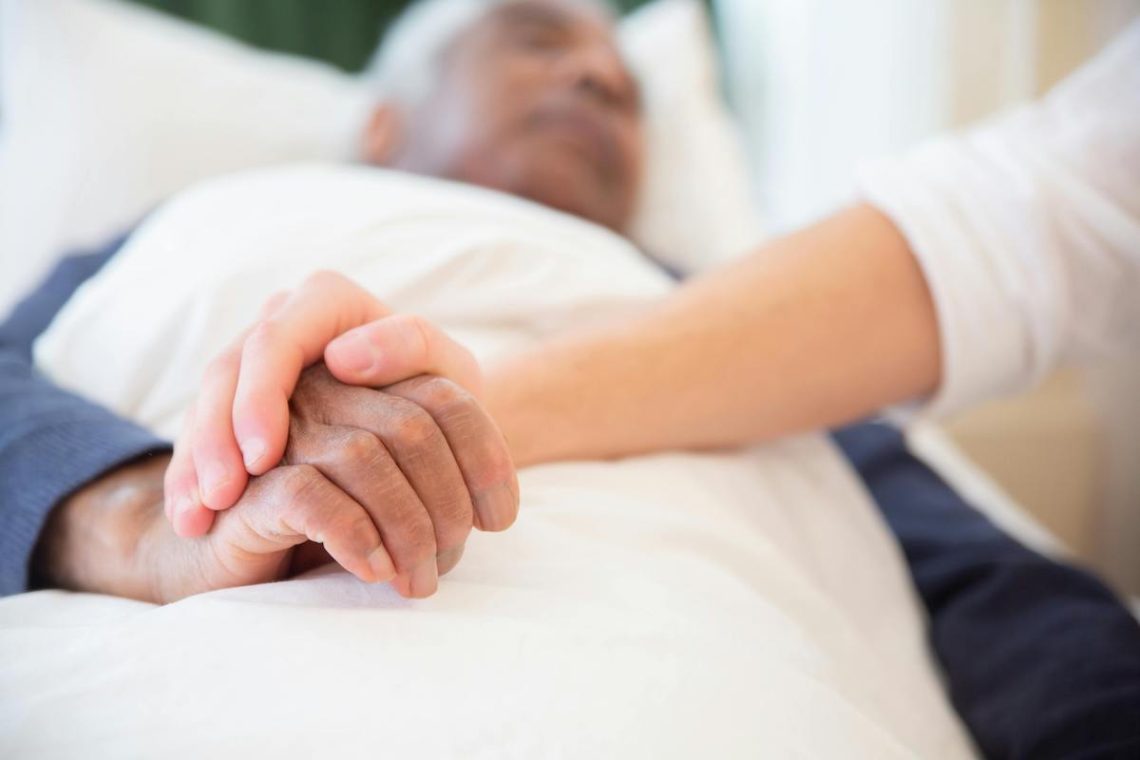
Spurred by the unenviable task of writing a very personal obituary to look beyond the stock phrases so common in those pieces, Virginian-Pilot reporter Elizabeth Simpson set out to find exactly what she was saying when she wrote that her 88-year-old father “died peacefully in his sleep.” She started with two simple questions.

What is it you die of when you don’t wake up in the morning?

And, is it the peaceful death everyone assumes?

She learned from a coroner that most common culprit for these deaths, including her father’s, is a cardiac arrhythmia, but that bit of knowledge raises more questions than it answers. She gained more insight from a post on AHCJ’s electronic discussion list (members can sign up for free!), where reporters shared both professional experiences and personal insights so compelling that Simpson included them in the story (you’ll find quotes about a third of the way down the page, under the “I posed the subject” subheading).

Simpson’s investigation takes her through the worlds of hard-nosed medical description, hospice and palliative care, life support and even sudden infant death syndrome, but ultimately ends up back where she started: “peacefully.”

Bush explained that sometimes you can die in your sleep during a massive stroke or a ruptured aneurysm. But in those cases, a person usually will have complained earlier about symptoms like a headache or other pain. A heart attack or pulmonary embolism usually will cause enough pain to lead the person to wake and go to an emergency room.

But death during sleep with no symptoms at all is likely due to the heartbeat going haywire. In Bush’s opinion, it is the way to go.

Peaceful? She thinks so.

Sometimes, she said, such a person will be curled up in a sleeping position, the blankets tucked around them, no evidence of thrashing about. Their faces are serene, their eyes closed. By contrast, in cases where death comes while not sleeping, there’s a 50-50 chance the eyes will be open.

CBC, grad students cover palliative care and death in Canada

The CBC’s new series on dying has a unique provenance: The stories are the work of 16 graduate students at The University of Western Ontario, as well as that of CBC health reporters, and are the final product of a unique journalism course focused on reporting on death and dying. gooddeathThe collaboration seems to have started with a definition of its title, “A Good Death.” In this case, it means one that is “peaceful, loving and comfortable.” Access to such an end, the journalists found, varied widely depending on economic, geographic and cultural circumstances.

The introduction to the package has wonderful descriptions of all the stories that went into it but they don’t link to the pieces. I’ve taken the liberty of adding relevant links, then copying and pasting that section below.

Where you are determines your end-of-life care

Nov. 19th, 2010 by Andrew Van Dam · Leave a Comment
Filed under: Health data, Studies 

As you’ve likely noticed, the Dartmouth Atlas team has now focused its lens on end-of-life care and found, not surprisingly, what amounts to “more of the same.” Kaiser Health News’ Jordan Rau has the nuts and bolts, while Joanne Kenen, writing for Miller-McCune Magazine,  takes a long view on the story, putting it into the context of popular Dartmouth Atlas pieces (think McAllen, Texas) and end-of-life outliers (La Crosse, Wis.). While you’ll have to check out her story for the in-depth version, here’s Kenen’s summary of the report:

Overall 1 in 3 of these patients died in the hospital, sometimes in the ICU and sometimes on life support, but there was significant variation from one region or even one hospital to another. Six percent of the patients received chemotherapy in the last two weeks of life, but in some regions and academic medical centers the rate went above 10 percent. Half got hospice but often for just a few days, too little for them and their families to fully benefit from the medical and psychosocial assistance and comfort hospice can offer.

If you’re looking for caveats, be sure to hit the second half of Rau’s story.

How the system rewards end-of-life intervention

Jul. 26th, 2010 by Andrew Van Dam · Leave a Comment
Filed under: Hot Health Headline 

Caitlan Carroll of American Public Media’s Marketplace tries to explain why, even though “80 percent of patients say they don’t want to be hospitalized or given intensive care during the last phase of their lives,” so many people get intensive medical intervention at the end anyway.

In the end, Carroll finds that family and friends don’t want to lose a loved one, doctors don’t want to lose a patient, and doctors aren’t compensated for hospice and palliative care the same way they are for aggressive intervention.

Carroll’s report is the first installment of a two-part series funded by a California Endowment Health Journalism Fellowship.

Reporter covers patient ‘dumping’ from inside

The Philadelphia Inquirer’s Michael Vitez has been given free reign for several months now to explore and report on Abington Memorial Hospital as an embedded reporter.

The result has been a mix of deep, wonderfully chosen anecdotes accompanied by quotes and hospital introspection that go far beyond what you often see in “look what went wrong at the local hospital!” stories.

His latest installment explores the effect of patient “dumping” on hospitals through the story of an 83-year-old illegal immigrant from Korea whose family dropped her off at Abington out of desperation and had no intention of picking her up on her discharge date. Vitez’ report is distinguished by his honest, thoughtful approach to both patient and caregiver.

In previous dispatches, he has chronicled how Abington is working to prevent with hospital-acquired infections and, as Covering Health has covered previously, palliative care.

Grand Rounds points to end-of-life posts

Mar. 3rd, 2010 by Pia Christensen · Leave a Comment
Filed under: Health journalism 

AHCJ member Larry Beresford hosts the Palliative Care Grand Rounds this month and has compiled an impressive roundup of end-of-life blogs and related posts.

Highlighted sites include a blog from the American Academy of Hospices and Palliative Medicine, a blog that’s looking for hospice and palliative care professionals to become guest bloggers, one - irreverantly named “Death Club for Cuties” - for nurses who care for patients and families at the end of life, posts about do-not-resuscitate orders and more.

See Beresford’s post for all the links and details.

Palliative care piece launches embedded dispatches

Mar. 2nd, 2010 by Pia Christensen · Leave a Comment
Filed under: Hot Health Headline 

Philadelphia Inquirer staff writer Michael Vitez has been embedded with Abington Memorial Hospital in suburban Montgomery County, Pa. Karl Stark, the Inquirer’s health and science editor, writes that “means he went there for an extended period and reported what he saw with almost no restrictions.”

Here’s how Vitez describes the series, which will be published over the next few months:

My goal is to spend a year at Abington, writing stories that show how one hospital deals with the biggest issues in health care today and also the changes that are coming fast and furious - regardless of what Congress and the President do - to hospitals and health care.

This first story looks at how the palliative care movement is medicine’s response to the dismal way people have died. I try to show, up close, how the team works, the agony that families feel, the immense costs involved.

In future stories, I’m going to look at how a hospital struggles to bring down infection rates, how it handles patients who have nowhere to go, the madness of one Medicare rule, the impact of the uninsured, and more. I hope in the end readers will get a bedside view of how things work, how things are changing, and I hope a great appreciation for our common humanity.

Vitez’s first report is a very readable and nuanced account of palliative care, something he looks at from the perspective of a patient’s family as well as that of the medical professionals.

What really happened at Memorial after Katrina?

In a story that is being co-published by The New York Times Magazine and ProPublica, Sheri Fink, M.D., painstakingly reconstructed the hectic, troubling events that transpired at Memorial Medical Center in New Orleans in the days after Hurricane Katrina swept through the city. In that time, 45 patients died at the center – more than at any comparable hospital in the area – and, although a grand jury did not issue any indictments in relation to the deaths, there are indications that some of the deceased patients may have been euthanized.

Fink “obtained previously unavailable records and interviewed dozens of people who were involved in the events at Memorial and the investigation that followed.” She writes that more medical professionals and more patients were involved than previously thought and that “Several were almost certainly not near death when they were injected, according to medical professionals who treated them at Memorial and an internist’s review of their charts and autopsies that was commissioned by investigators but never made public.”

In addition to the doctors, nurses and patients involved in the controversial deaths, Fink also tells the story of the coroner and investigators charged with untangling the post-Katrina events at Memorial Medical Center and how they struggled to administer justice while taking into account the extraordinary circumstances that followed the hurricane.

The extensive package includes a video interview with Fink about how her background as a physician, humanitarian aid workers and previous reporting on medical care in wartime conditions helped her report this story.

Story documents end of life for woman and family

Mar. 24th, 2009 by Pia Christensen · Leave a Comment
Filed under: Hot Health Headline 

In “The Final Journey” in Cure magazine, contributing photographer Beatriz Terrazas and Cure editor-at-large Kathy LaTour document the final six months of 64-year-old Judy Abernathy’s life.

Abernathy invited CURE to join her family as they began moving toward the end of her life from metastatic lung cancer.

They follow Abernathy’s visits to a palliative care physician, report on her decision to stop a clinical trial so she could continue to be part of her family, describe the effect her illness has had on the family and document the steps she takes in hospice care.

“I have tried to stay on top of everything because when you go to sleep you don’t know if you are going to wake up,” Judy says lightly. It’s clear she is trying to begin the final discussions she wants to have with her children.

The Web site includes a eulogy written by Abernathy’s granddaughter - a journalism student - and features about hospice and palliative care and an article about controlling pain in cancer patients.