Third-party PubMed video tutorials in plain English

Jan. 14th, 2010 by Andrew Van Dam · 1 Comment
Filed under: Public records, Studies, Tools 

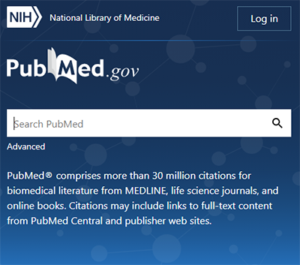
PubMed’s fantastic, but it can also be mighty frustrating. Maintained by the National Library of Medicine, it’s the interface through which folks can search or browse their way through NIH’s vast repository of health-related research articles.

Unfortunately, it’s also not quite like the user-friendly search engines most of us have come to know and love. That’s where third-party tutorials come in.

If you’re looking for a strong distillation of the basics, head straight for AHCJ’s tip sheet. If you prefer more technical info and less hands-on guidance, see Wikipedia. But if you’re looking for an in-depth, easy-to-follow introduction broken into easily digestible chunks, head for this nine-part video tutorial created by an Indiana University medical librarian.

She uses accessible language, analogies and well-paced demonstrations to peel back the layers of the labyrinth and help viewers understand the purpose and relevant applications of the interface’s features. Here’s the first installment:

full-screen-modeNote that on Screenjelly webcasts, such as this one, you can click on the “full-screen” icon in the bottom-right corner of the player. Screenjelly looks much better in the full-screen mode than most players.

  • PubMed Tutorial #1: Main PubMed page layout, differences from old PubMed layout
  • PubMed Tutorial #2: From a citation to the full text: Single Citation Matcher and PubMed search box
  • PubMed Tutorial #3: Parts of a PubMed record–order of retrieval, citation information, journal abbreviations, and non-English citations
  • PubMed Tutorial #4: Controlled Vocabulary Part 1: general explanation. Controlled v. natural language, Hierarchical tree structure
  • PubMed Tutorial #5: Controlled Vocab Part 2: Mesh Part 1, medical examples of entry terms and tree structure, how to get from PubMed to MeSH
  • PubMed Tutorial #6: Mesh Part 2: searching for MeSH terms to then search PubMed
  • PubMed Tutorial #7: MeSH terms to search in PubMed, PubMed Display and Send To features
  • PubMed Tutorial #8: Advanced search: Search History, Details, Limits, Additional Fields
  • PubMed Tutorial #9: Topic-Specific Queries–How to Find them, the specific ones for Public Health, demonstrates Health Services Research Queries and Health Disparities
  • (Hat tip to Eagle Dawg)

    Open access to research recognized this week

    It’s Open Access week! Time to honor the principle that scientific research should be made available for free online immediately upon publication, a principle that’s served health journalists pretty well over the past few years. Universities, government organizations and other groups around the world will celebrate by opening up more information and drawing attention to the principles that drive the open access movement.

    Open Access flagship reaches milestone

    On Oct. 19, PLoS Medicine, openaccessa prominent and pioneering open-access journal published by the Public Library of Science, turned five. The Public Library of Science is a nonprofit funded by charging authors publication fees, and by private donors. In addition to PLoS Medicine, it publishes six other journals covering biology and medical science.

    PubMed goes Canadian

    One of the greatest triumphs of open access has been PubMed Central, in which all NIH-funded research is made available for free, usually within 12 months of publication. Both the U.S. and U.K. have their own PubMed systems, and now Canada’s getting one too. PubMed Central Canada, created by the Canadian Institutes of Health Research, the National Research Council’s Canada Institute for Scientific and Technical Information, and the U.S. National Library of Medicine, will take its first steps, launching its manuscript submission system as part of the week’s festivities.