Panel of science, health journalists will discuss government transparency in webcast panel

A panel at the National Press Club this afternoon, which will be webcast, will look at government transparency when it comes to science news.

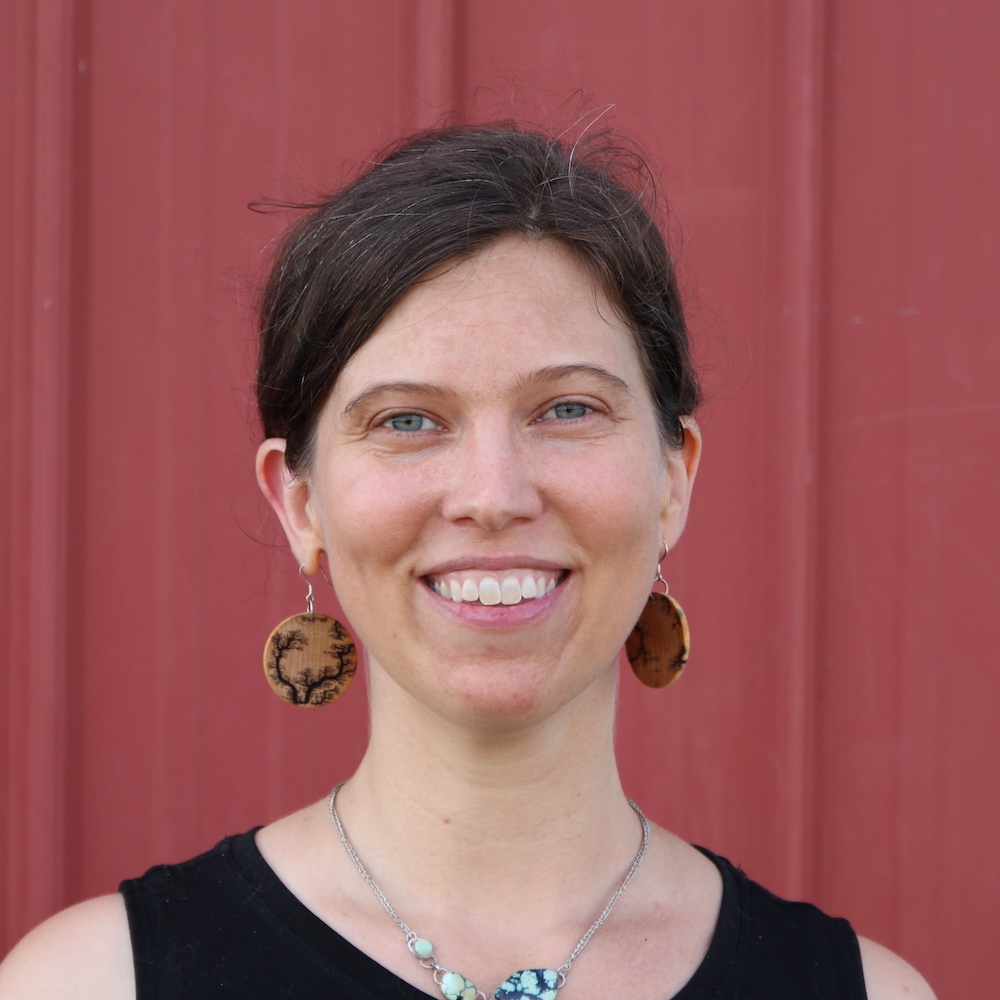
Six journalists, including AHCJ board member Felice Freyer, will take part. Representatives of the Environmental Protection Agency, the Department of Health and Human Services and the White House Office of Science and Technology Policy have been invited.

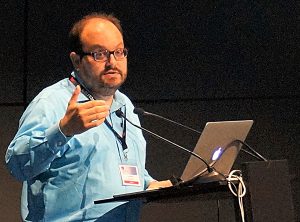
The moderator is Seth Borenstein, science reporter for The Associated Press. The other speakers include Curtis Brainard, CJR’s science editor; Joseph Davis, Society of Environmental Journalists;  Darren Samuelsohn, Politico’s senior energy and environment reporter and Clothilde Le Coz, Reporters Without Borders.

The panel will be webcast at 3 p.m. ET.

From the event description:

Access Denied: Science News and Government Transparency

Has the Obama administration lived up to its promise to make science more transparent and accessible to the public? An investigation in the current issue of Columbia Journalism Review finds that despite President Obama’s early promise to create an open government, the nation’s science reporters feel there has been little to no progress since the Bush administration.

The panel discussion is free and open to the public. It is cosponsored by the National Press Club, CJR, SEJ, and Reporters Without Borders. A cash-bar reception will follow.

Journalist compares U.K. science writers, American health reporters

Jul. 5th, 2011 by Andrew Van Dam · 1 Comment
Filed under: Europe, Health journalism, Member news 

When the Association of British Science Writers announced the nominees for their 2011 Science Writers’ Awards, Guardian science blogger Martin Robbins noted a familiar pattern.

Of the 12 places on the shortlists for science writing, 6 went to New Scientist, 1 each to Nature and the BMJ, and 1 each to the Guardian and the Independent The final two places went to a freelancer and the website SciDev.Net. That means that newspapers combined took just two spots, while specialist science publications took eight. Meanwhile, the TV shortlist was occupied by BBC 3, BBC 4, and BBC 2, while the radio shortlist featured BBC Radio 4, BBC Radio 4 again, and, yes, BBC Radio 4.

A lists of nominees from earlier in the decade reveals a similar pattern of “Near-dominance of broadcast science by the BBC, while specialist publications competing with a dwindling group of broadsheet newspapers for the literary prizes,” Robbins writes. To better understand this apparent one-sidedness, Robbins talked to ABSW chair Connie St. Louis, who suggested that U.K. newspapers have succumbed to a form of churnalism and “communication,” because they simply don’t have the resources for in-depth work like that which occurs at the BBC or the specialty outlets. Here’s St. Louis:

I have this thesis which is… science journalists have forgotten how to be journalists. They’re actually science communicators, and they go into the job and… the job was to tell you what science was doing and help you understand science, and I think that’s an incredibly important function, but don’t call yourself a science journalist if that’s what you’re doing, call yourself a science blogger, call yourself a science communicator, but if you’re going to call yourself a journalist then behave like a journalist, dig for stories, ask questions of science, ask questions of scientists, look at numbers, look at figures, and do what journalism does.

St. Louis then goes on to compare U.K. science journalism (somewhat unfavorably) to the relatively higher level of scrutiny faced by American health journalists, scrutiny brought about thanks in part to a few key thought leaders.

We’re always explaining new cures, explaining new science, but where are the guys who are really digging down, where are our Ivan Oranskys, where are our Gary Schweitzers [sic], we don’t have them. It’s all very much “here’s a new cancer drug”, and I’m not knocking that, it’s really important, but actually we’re in a very deficit model of journalism at the moment.

Related

Finding balance between daily reporting, narratives

Mar. 1st, 2011 by Andrew Van Dam · 1 Comment
Filed under: Health journalism 

Still basking in the glow of her AAAS Kavli Science Journalism Award, PLoS blogger and independent journalist Hillary Rosner returned from the AAAS annual meeting with some ruminations on preserving and expanding diversity in the science news ecosystem. She notes that she and many of her fellow award-winners earned their spots because publications gave them the time and space to create long-form narratives, pieces which she points out are powerful anecdotes to the quick-turn-around-no-follow-up churning so lamented by John Rennie in his recent (and justifiably well-circulated) column.

Rosner seeks to balance this apparent narrative supremacy with Charlie Petit’s assertion, over at the Knight Science Journalism Tracker, that the profession is suffering because so few publications can afford to send reporters to conferences like AAAS from which they can file fast-breaking reports. It’s an issue Petit called “the abandonment of daily science reporting. esp. when it requires expense account, by all but a handful of US newspapers.”

It’s a point Rosner acknowledges, but she’s not willing to concede that all is lost, especially if the decline in daily reporting frees up resources for long-term narrative work.

I agree about the general trend. But I’m not sure I agree that there’s anything bad about fewer reports from a conference where scientists are often presenting general findings as opposed to new research. Just because a scientist says something at a session or at a news conference doesn’t make it news. (And while I’m not a daily-news kind of journalist, I like to think I still have a sense of what’s newsworthy.)

Science journalism needs a mix of really well-done daily deadline reporting and longer, thought-out, exhaustively reported narrative stories. The two are completely different beasts occupying different niches, and we should make every effort to protect them both, by ensuring that there’s habitat to sustain them.

ScienceBlogs reverses course, evicts Pepsi blog

PZ Myers of the Pharyngula blog on ScienceBlogs reports that Seed CEO and editor-in-chief Adam Bly has sent a letter to its bloggers saying that the PepsiCo blog that caused a number of high-profile bloggers to flee the site has been removed.

Myers quotes from the e-mail:

We apologize for what some of you viewed as a violation of your immense trust in ScienceBlogs. Although we (and many of you) believe strongly in the need to engage industry in pursuit of science-driven social change, this was clearly not the right way.

Bly continues, asking questions about how to better include industry-funded scientists in social media and the ongoing public health discussions that take place in the online community.

Earlier:

PepsiCo sparks controversy on ScienceBlogs

British article unleashes debate on science coverage

Jun. 14th, 2010 by Pia Christensen · 1 Comment
Filed under: Europe, Health journalism 

Highlighting good science journalism would contribute to improving coverage, according to Ed Yong, writing for Discover Magazine’s Not Exactly Rocket Science blog.

newspapers

Photo by Alex Barth via Flickr

He writes that a lack of accountability fuels frustration with poor science journalism, as it does in the case of a story in the UK’s Observer newspaper that was critiqued by the Guardian’s Ben Goldacre and has now been removed from the Web site.

The episode has triggered a number of pieces about whether such critiques are helpful or whether science journalists are unfairly criticized, including “an opinion piece from the Independent’s health editor Jeremy Laurence criticising Goldacre, a response from Goldacre criticising Laurance, and a defence of Laurance from Fiona Fox of the Science Media Centre.”

Yong also points readers to an amusing – and angry – post by Martin Robbins at the Lay Scientist, who says, “Robust criticism is a vital part of science, and it should be a vital part of journalism.”

Robbins also points out, in more colorful language, that journalists who don’t do simple fact checking are making themselves irrelevant.

Best science blogs, Dartmouth Atlas, more care

Jun. 4th, 2010 by Pia Christensen · Leave a Comment
Filed under: Health journalism 

Expect some short posts today – I’m at our Rural Health Journalism Workshop in Kansas City and I hope to post some about that. In the meantime, here are some links of interest:

Decline in science journalism hurts health reporting

In The Nation, Chris Mooney and Sheril Kirshenbaum assess the state of science journalism and seek to answer “how did it come to this?” and “what happens next?” Their sober and engaging account takes readers from the glory days of moon landings and Carl Sagan’s wildly popular Cosmos series to today, when science journalism has become a niche market served by specialized outlets and polemic-driven blogs. While The Nation as a whole embraces a certain political position, the report comes across as forceful but even-handed.

Their evidence includes observations like “From 1989 to 2005, the number of US papers featuring weekly science-related sections shrank from ninety-five to thirty-four” and “Just one minute out of every 300 on cable news is devoted to science and technology, or one-third of 1 percent.”

Part of the problem, Mooney and Kirshenbaum say, is that today’s relatively inexperienced journalists (the experienced ones were too expensive for the tastes of profit-driven media conglomerates) chase from one hot new story to the next without contextualizing anything, leaving readers rudderless, confused and exasperated. Likewise, the writers say, in an attempt to be impartial (and perhaps as a result of a lack of prior knowledge in the field), reporters inject balance where it may not be necessary, giving equal time to contradictory and widely discredited opinions.

Journal spotlights science journalism

Jul. 1st, 2009 by Andrew Van Dam · 1 Comment
Filed under: Health journalism, Studies 

The latest issue of Nature explores the present and future of the relationship between media and science. Coverage includes balanced and constructive critiques of social media and journalists who aren’t themselves scientists as well as some obligatory questioning of the future of journalism as an industry.

In one article, Geoff Brumfiel details the rising role of Twitter-style social media in chronicling and commenting upon scientific conferences, saying that while providing for open and easy exchange of information, it also blurs the line between scientist and journalist. Additionally, the instantaneous and far-reaching broadcast of ideas makes competitive researchers even warier of revealing groundbreaking findings at conferences, on the grounds that they may then be snatched by any rival with Web access.

In another piece, journalist Toby Murcott questions the efficacy of press release-based science journalism and calls for reporters learn the expertise necessary to understand the fields on which they are reporting, and for journals to publish review comments that will provide more context for each article.

In a more focused editorial, Nature calls attention to tuberculosis and suggests that TB sufferers and researchers need to follow the example of AIDS and “capture the world’s imagination and support” by reaching out and finding “highly effective champions.” Globally, 9 million people develop active cases of TB each year.

Other pieces that may be of interest to health journalists: