Prof: Mammogram debate is data vs. anecdotes
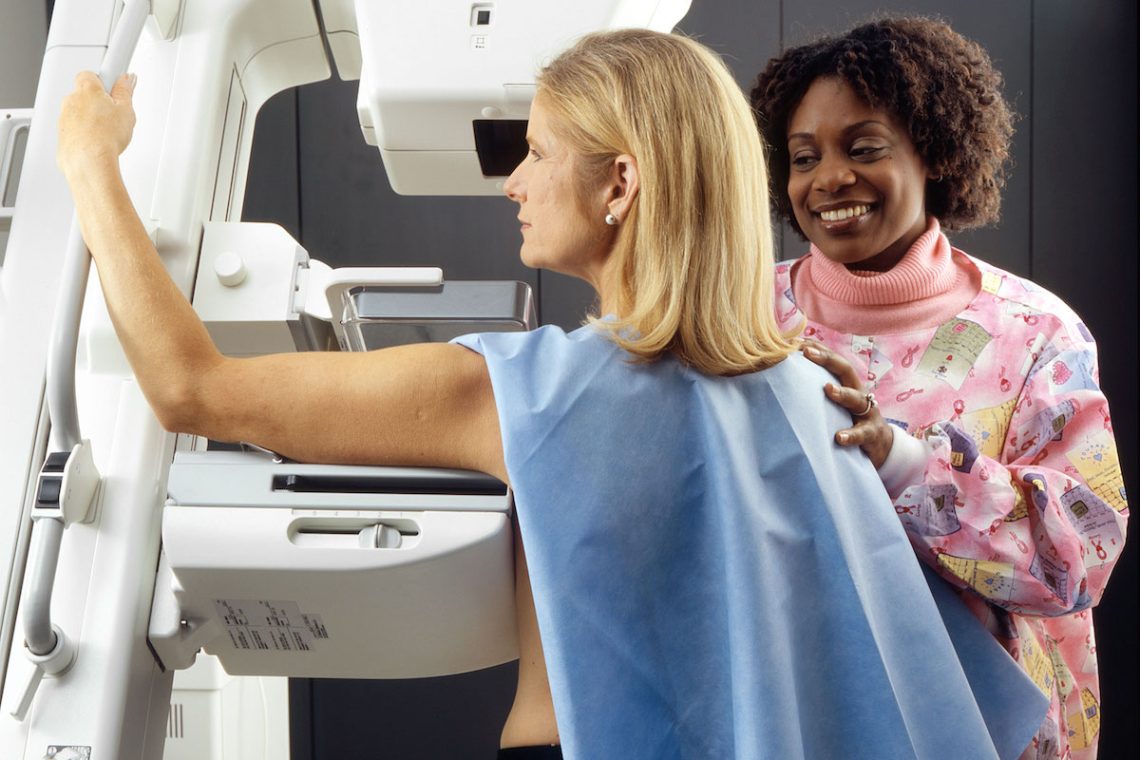
When it comes to the recent news that a government task force opposes routine mammograms for women under 50, the public must balance research with anecdotal evidence, according to a professor who studies how breast cancer is portrayed in the media.
Cynthia Ryan, Ph.D., an associate professor of English at the University of Alabama at Birmingham, says the media is doing a “decent” job of covering the debate between the new guidelines from the U.S. Preventive Services Task Force and individuals who are advising that women continue to start having mammograms at age 40.
The professor, who has a book coming out about “the rhetoric of breast cancer in popular women’s magazines,” explains why consumers are torn:
Ryan says that when confronted with extreme representations, there is a part of the human brain that wants to go with scientific study “because we figure it must be credible and rational,” she says. “But another part of our brain embraces anecdotal advice that links the message with a face.
Business pushes screenings despite guidelines
Jeff Baillon, a reporter for KMSP-Minneapolis/St. Paul, saw Life Line’s ubiquitous mailers (here’s the one AHCJ’s Gary Schwitzer received) in which former Olympian Peggy Fleming urges people to go in for medical screening and decided to take a closer look at the company. Ohio-based Life Line sends a van to local neighborhoods and offers a variety of tests for a few hundred dollars.
Baillon and his crew, who went undercover for the occasion, found that the Life Line scans were so quick (as short as four minutes) that they wouldn’t yield good pictures, and would be more likely to turn up false positives and miss real problems. They also covered scans, like carotid artery scans, that guidelines generally advise against, and made no mention of government guidelines when scanning patients, even when prompted. For its part, Life Line, a for-profit business which screens about a million people every year and suggests tests even for low-risk groups, says they don’t “trick” customers and, in fact, actually help save lives.
Baillon’s piece:
Researcher: Screening could save young athletes
Writing for Time, Eben Harrell looks into whether athletes should be screened for cardiac problems in an effort to prevent sudden cardiac death (SCD). The condition, in which the heart suddenly stops working, is more likely to strike down athletes than it is their couch-potato counterparts.
There is evidence that screening, including the electrocardiogram, can prevent most cases of SCD.
Analyzing data from 42,000 athletes in the northeastern Veneto region of the country between 1979 and 2004, Italian researchers found that ECG screening resulted in an almost 90% drop in sudden cardiac deaths. Incidence of SCD among the unscreened non-athletic population did not change significantly during that time.
Noting the ECG’s shortcomings – it costs about $500 and produces false positives 7 percent of the time – Harrell adds that there is some evidence that a simple physical examination could be equally effective.
Related
Find tips about reporting on the health of student athletes and links to a number of articles, tip sheets, journal articles and other resources in AHCJ’s new “Reporting on sports injuries in school-age children” tip sheet.
Urological group pushes PSA screenings
Filed under: Conflicts of interest, Hot Health Headline
The Cancer Letter’s Paul Goldberg reports that the American Urological Association released a list of best practices that included beginning prostate screening at age 40 (see page 3 of this PDF for the announcement).
It came, Goldberg reports, “Less than a month after the New England Journal of Medicine published trial results that point to overdiagnosis and low or no benefit from screening men over the age of 50.” The American Cancer Society says it “does not support routine testing for prostate cancer in men at average risk at this time.”
Meanwhile, Cancerwise’s Julie Penne looked at the American Urological Association’s partnership with the NFL and a Houston event at which partnering doctors screened 37 men between the ages of 31 and 77.”
Recently, M. D. Anderson and the American Urological Association (AUA) teamed up to screen 37 NFL retirees from the Houston area as part of a 10-city series that the NFL Player Care Foundation initiated to address the medical needs of retired players. The M. D. Anderson screening… was the seventh site in the year-long tour that has held screening events in Kansas City, Atlanta, Dallas, Tampa Bay, Washington, D.C., and Canton, Ohio, the home of the NFL Hall of Fame.
Other than a UPI story and the aforementioned blog post, the initiative doesn’t seem to have attracted much attention, though University of Minnesota professor and AHCJ member Gary Schwitzer posted his reaction. Unfortunately, overshadowed by H1N1, the AUA’s new guidelines and the controversy surrounding them have gotten little attention as well. The Los Angeles Times‘ Shari Roan offers a roundup of the issues.
Prenatal thyroid testing fuels screening debate
The New York Times‘ Ingfei Chen reported on the debate over the screening of pregnant women for thyroid disorders that may endanger the fetuses they are carrying. The pregnancy-related consequences of various thyroid disorders may include increased risk of miscarriage, retardation of fetal brain development and premature birth, among other hazards.
… because thyroid problems can easily go undiagnosed, the hazards have also set off a debate over whether every woman who is pregnant or planning to be should have a blood test to check her thyroid. That test measures for thyroid-stimulating hormone, or T.S.H., which spurs the gland’s hormone production.
Most doctors’ groups have not endorsed universal prenatal thyroid screening, citing uncertainties over whether it would yield health benefits justifying the expense of testing in roughly 6.4 million pregnancies each year and educating doctors to read results that are tricky to interpret.
Even selective screening of at-risk patients, endorsed by many professionals, may not be effective enough, Chen found.
A British study found that such testing missed 30 percent of those with hypothyroidism and 69 percent of those with hyperthyroidism.
For now, until there is confirmation that treatment truly helps, Dr. Stagnaro-Green said he still favored selective thyroid screening. But he added, “My belief is that data will be forthcoming that will push us towards universal screening.”
Studies underway will track mothers with thyroid disorders and the effect of the disorders and, in some cases, medication to remedy them, and their cumulative effect on the IQ of the children born to those mothers once they reach 5 years of age.
This week, at the Research Summit and Spring Symposium of the American Thyroid Association, members will discuss “Thyroid Hormone in Pregnancy and Development” and “Thyroid Dysfunction and Pregnancy: Miscarriage, Preterm Delivery and Decreased IQ.” Find the Association’s Fact Sheet on the Thyroid and Pregnancy here.
The debate over prenatal thyroid testing is just starting to heat up. Those involved would do well to look at more developed testing debates, such as bone density, cancers, turmors and anormalities, and even the growing field of DNA testing.
Related
Earlier posts about debate about screenings.