Two counties illustrate health care disparities

Aug. 17th, 2009 by Pia Christensen · Leave a Comment
Filed under: Health data, Hot Health Headline 

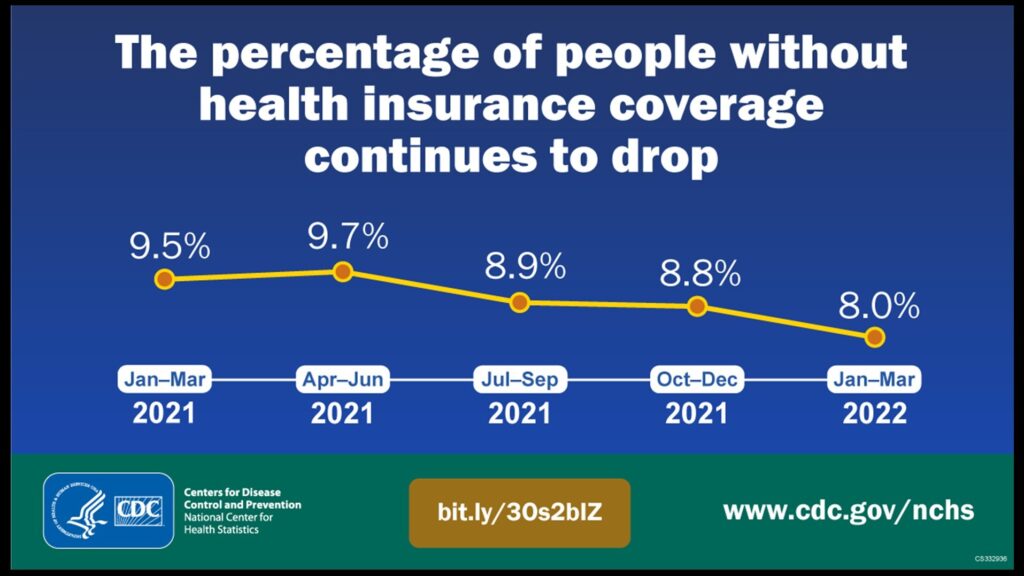
Anna Tong and Phillip Reese of The Sacramento Bee write about health care disparities. They use two local counties to explain many of the issues that are central to the debate over changing the nation’s health care system.

In Yolo County, where many people are uninsured, the residents are diverse in occupation and age. Placer County’s “demographics makes it one of the best for insurance coverage: wealthier, older residents employed by large companies.”

Tong and Reese explain the ties between being uninsured and health outcomes, as well as the cost to society. They also look at the types of businesses that dominate the two counties and point out that employers in Yolo County, where many people are work in agriculture, service and food industries, are less likely to offer insurance than in Placer County, where many people work in the financial industry, professional and business services and high tech.

Other factors they look at include the links between income, ethnicity, age and insurance coverage.

The package includes an interactive graphic that shows California’s counties and how many people in each are uninsured and a series of graphics that breaks down the number of uninsured based on race, income, age, education, employment status and place of birth.

Underinsured face higher bills, bankruptcy

In Time, Karen Tumulty used the story of her brother’s kidney problems and resulting medical bills to look into the plight of the nation’s underinsured, who she said may be even more vulnerable than the uninsured because, “until a health catastrophe hits, they’re often blind to the danger they’re in.”

In a 2005 Harvard University study of more than 1,700 bankruptcies across the country, researchers found that medical problems were behind half of them — and three-quarters of those bankrupt people actually had health insurance.

Tumulty’s brother, Patrick Tumulty, renewed a short-term private policy for about six years. When his kidneys failed, his insurance company refused coverage because his problems were, in terms of his latest six-month short-term plan, a pre-existing condition. Even with the help of a country program for the uninsured, Patrick struggled to pay the resulting bills.

A paradox of medical costs is that people who can least afford them — the uninsured — end up being charged the most. Insurance companies, with large numbers of customers, have the financial muscle to negotiate low rates from health-care providers; individuals do not. Whereas insured patients would have been charged about $900 by the hospital that performed Pat’s biopsy (and pay only a small fraction of that out of their own pocket), Pat’s bill was $7,756. For lab work — and there was a lot of it — he was being charged as much as six times the price an insurance company would pay.

Related

Talking Health: Covering the Underinsured - This webcast explores the growing problem of the underinsured.

The program, moderated by AHCJ board president Trudy Lieberman, features Read more

Subsidized programs struggle to attract uninsured

Lori Aratani reported in The Washington Post on the difficulties officials face when working to draw the uninsured into subsidized health insurance programs. Aratani gives examples from Maryland, Arkansas and Massachusetts and cites a national study (conducted by a nonprofit group underwritten partly by insurers) that found that “about 12 million non-elderly uninsured Americans — about one in four — were eligible for existing state or federal health programs but weren’t enrolled.”

“Even when low-cost health coverage is offered, many people fail to take advantage of it. People don’t think they need coverage, don’t know programs exist or don’t have the money to afford even comparatively inexpensive, subsidized programs.”

Aratani reports that many voluntary health-care programs have struggled to bring in qualified participants and implies that this traditional obstacle may increase the difficulty faced by the Obama administration as it aims to make good on the president’s pledge to extend health coverage to more Americans.