Hot pipes lead reporter to radioactive aquifer
Filed under: Government, Health data, Hot Health Headline, Public health, Public records
Mark Greenblatt, reporter for KHOU-Houston, reports that officials in Central Texas have been alarmed to discover high levels of radiation in the pipes and related systems that provide much of the region’s drinking water.
According to local officials, the contamination comes from years of exposure to drinking water that already tests over federal legal limits for radioactive radium. Of even more concern, they say, is that any water quality testing is done before the water runs through the contaminated pipes that could be adding even more radiation.
Almost as remarkable as the waterborne radiation itself? The fact that it was only discovered when city workers dug up old piping, brought it to the recycling center and were rejected because they were “too radioactive” to recycle.
Through his sources, Greenblatt knew the documents and tests proving the connection between a radioactive aquifer and “hot” pipes existed, but getting his hands on them was a different matter.
The call (with sources) was prompted by internal documents from the Texas Commission on Environmental Quality, which identified a main source of the region’s water as radium contaminated. The TCEQ had initially refused to release the paper after a public-records request, and only did so under order from the Attorney General of Texas.
Greenblatt’s story runs much deeper, and it’s worth taking the time to appreciate the scope of his dense, document-rich investigation.
U.S. global health policy focus of guide
In recognition of the major role global health issues now play in even the most local stories, the Kaiser Family Foundation has released a 41-page “Reporter’s Guide to U.S. Global Health Policy” (PDF).
The guide devotes sections to diseases/issues (HIV/AIDS, Malaria, Tuberculosis, Neglected Tropical Diseases, Maternal and Child Health, Water-Related Diseases, Food Insecurity), U.S. funding of global health efforts (Obama’s Global Health Initiative), relevant policy issues and policymaking. It also catalogues and explains related multinational and NGO efforts and lists news-making events.
NYT: Millions drink contaminated water
Having exposed the nation’s toxic waters, The New York Times‘ Charles Duhigg has now turned his attention to the Safe Drinking Water Act. Duhigg has found that “since 2004, the water provided to more than 49 million people has contained illegal concentrations of chemicals like arsenic or radioactive substances like uranium, as well as dangerous bacteria often found in sewage.”
Furthermore, Duhigg found that only 6 percent of violators were ever fined or punished.
Duhigg used EPA data on Safe Drinking Water Act violations as well as other parts of the massive Toxic Waters database.
Related
- Paper’s investigation reveals contaminated drinking water
- Reporter finds efforts to monitor groundwater contamination leave much to be desired
- Overwhelmed sewage systems spread pathogens
AP finds contaminated water in schools
The Associated Press has analyzed a decade of Environmental Protection Agency data and found that tests at thousands of American schools had shown the drinking water to be contaminated, with the water at some schools hitting unsafe levels in as many as 20 separate inspections. As part of the investigation, the AP provided an interactive map with which you can search and sort violations in your area. Although some children have become sick and some schools have resorted to bottled water, the AP found that the contaminants are generally not present in levels that would harm adults.
(Hat tip to Poynter’s Al Tompkins)
Related
- Leah Beth Ward of the Yakima Herald-Republic explains how she reported the “Hidden wells, dirty water” series.
- Greg Barnes of the Fayetteville Observer gives a behind-the-scenes look at the award-winning “What lies beneath” series that revealed contaminated drinking water in the Fayetteville area.
- NYT investigates Clean Water Act violations
- Herbicide levels high in many water supplies
- NYT’s Toxic Waters series takes on ag polluters
- Abandoned mercury mines taint water, fish
CNN looks into link between Lejuene water, cancer
CNN’s Abbie Boudreau and Scott Bronstein investigated a possible link between male breast cancer and contaminated drinking water provided at the Marine training base at Camp Lejeune between the ’60s and the mid-’80s. Twenty male Marines with breast cancer have found that the only thing they have in common is drinking the water at Lejeune, but, Boudreau and Bronstein report, “two independent studies have found no link between water contamination and later illnesses, according to the Marine Corps.”
The reports talked to seven of the cancer-afflicted men, finding that neither the VA nor the Marine Corps will pay for their cancer treatments, citing in at least one case that the cancer “neither occurred in nor was caused by service.”
The men with breast cancer are among about 1,600 retired Marines and Camp Lejeune residents who have filed claims against the federal government. According to congressional investigators, they are seeking nearly $34 billion in compensation for health problems they say stemmed from drinking water at the base that was contaminated with several toxic chemicals, including some the federal government has classified as known or potential cancer-causing agents.
In a blog post about the piece, Boudreau discusses questions raised by her research on unproven links between Lejuene water and cancer, openly wondering if the connection will ever be conclusively proven to be either true or false.
Abandoned mercury mines taint water, fish
As The New York Times‘ Toxic Waters captures attention across the country, the Associated Press has released its own story about government oversight failing to stop massive contamination, this time from abandoned mercury mines in California.

Creek near an abandoned mercury mine in the California ghost town of New Idria. Photo by mlhradio via Flickr
The AP’s Jason Dearen found that the government has only tried to clean up a handful of the hundreds of abandoned mercury mines in California’s coastal mountains.
According to Dearen, “mercury mines are the biggest sources of the pollution in San Francisco Bay and the Sacramento-San Joaquin River Delta, the largest estuary on the Pacific Coast.” At least 100,000 impoverished people are eating fish tainted with levels of toxins beyond EPA guidelines, Dearen found.
“Records and interviews show that federal regulators have conducted about 10 cleanups at major mercury mines with mixed results, while dozens of sites still foul the air, soil and water.”
Herbicide levels high in many water supplies
Filed under: Health journalism, Hot Health Headline
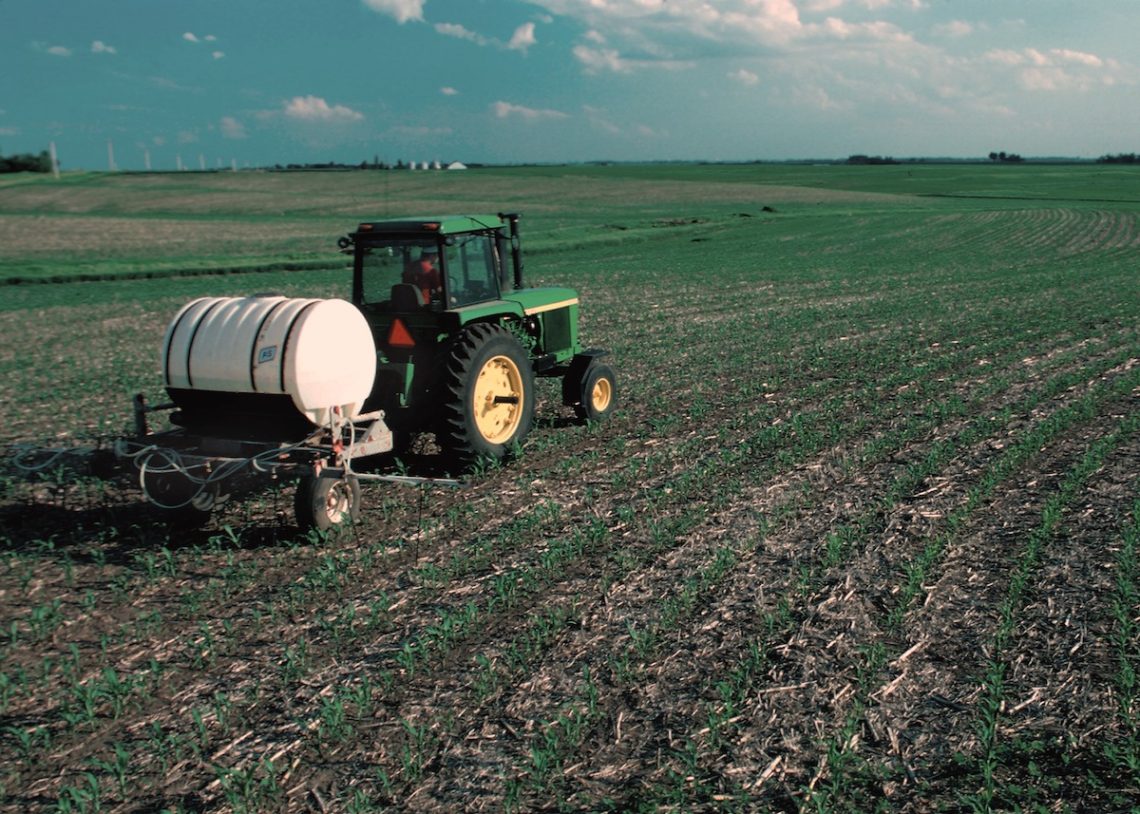
Recent reports indicate that current federal standards may allow dangerous levels of the herbicide atrazine into water supplies, especially in central states. According to The New York Times‘ Charles Duhigg, fetuses appear to be the highest-risk group: “recent studies suggest that, even at concentrations meeting current federal standards, the chemical may be associated with birth defects, low birth weights and menstrual problems.”
Duhigg also found that, because some localities don’t check atrazine levels frequently enough, dangerous spikes the levels of the herbicide found in water supplies may go undetected.
Duhigg also notes an interesting local wrinkle: “Forty-three water systems in six states — Illinois, Indiana, Iowa, Kansas, Mississippi and Ohio — recently sued atrazine’s manufacturers to force them to pay for removing the chemical from drinking water.” On a national level, new EPA administrator Lisa Jackson has promised to take a closer look at the regulation of atrazine and similar chemicals.
Related
The Natural Resources Defense Council’s “Poisoning the Well” report on the dangers and prevalence of atrazine
Leah Beth Ward tells how the Yakima Herald-Republic reported the “Hidden wells, dirty water” series. Greg Barnes of the Fayetteville Observer gives a behind-the-scenes look at how he reported the award-winning “What lies beneath” series that revealed contaminated drinking water in the Fayetteville area. Both AHCJ pieces also provide advice and resources for reporters looking to do similar stories in their own areas.
Fact sheet on atrazine from the Agency for Toxic Substances and Disease Registry circa 2003.